28 November 2025
AI AND INCLUSIVE EDUCATION: HOW EKU IS SHAPING THE WORKFORCE OF THE FUTURE
On November 28, 2025, the Vice Minister of Science and Higher Education of the Republic of Kazakhstan, Gulzat Kobenova, familiarized herself with the key digital, educational, and scientific-innovative projects of Sarsen Amanzholov East Kazakhstan University.
The Head of State, Kassym-Jomart Tokayev, has emphasized that the development of artificial intelligence technologies and the training of qualified professionals are strategic priorities that determine the country’s competitiveness and sustainable future. Sarsen Amanzholov East Kazakhstan University is successfully implementing these national objectives through concrete projects and modern infrastructure.
The development of human capital in the digital era and the integration of artificial intelligence into the educational process are clearly illustrated by the activities of the “AI Center Amanzholov University.”
The Vice Minister was presented with the implementation of the national project “AI-Sana,” student developments, and innovative services. Among them were the intelligent agent AI-Ustaz, which assists teachers in preparing educational materials and content, as well as the social Telegram bot “AntiBullying,” providing anonymous support to students. Technical solutions, such as a hybrid system for assessing the quality of Python code, demonstrate the university’s active efforts to develop digital competencies and foster engineering thinking.
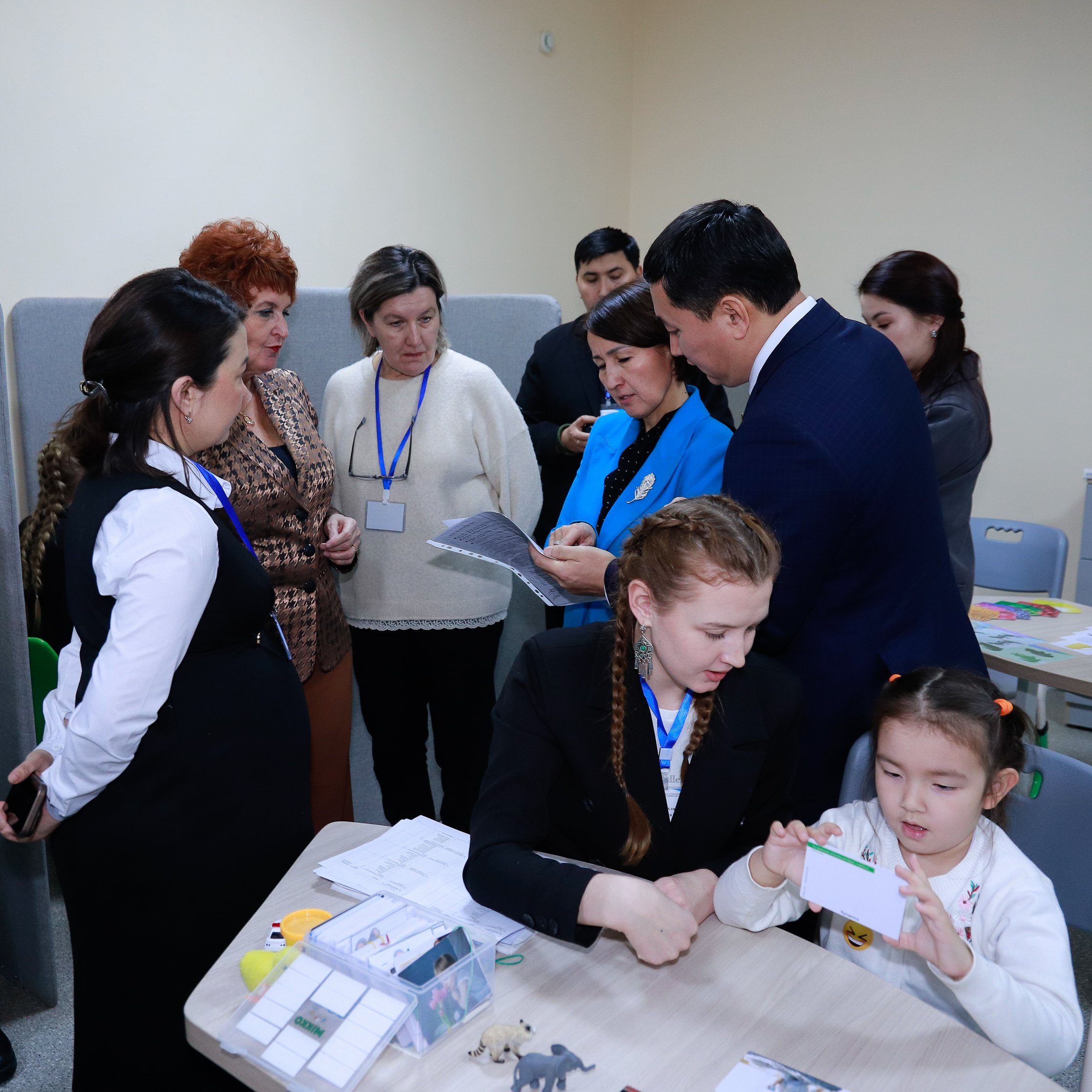
The Center for Continuous and Inclusive Education “Dana Bala” was also presented, offering domestic developments to support children with special educational needs. For example, third-year students of the Sarsen Amanzholov Higher College developed an educational website with artificial intelligence integration. It features a modern interface, includes interactive games, useful guidelines and instructions, information about the center, opportunities for quick feedback, and integration with a Telegram bot, enabling prompt access to materials and recommendations on inclusive education.
“Inclusive education is not just a requirement of the times, but a marker of the maturity of our society. Today’s youth are developing high-quality digital solutions that turn into tangible results. Their work helps improve the lives not only of children, but also of their families,” Gulzat Kobenova noted.
The “Dana Bala” center effectively combines pedagogical approaches, digital technologies, and scientific research, offering adapted furniture, corrective equipment, digital services, and proprietary methodologies. The student startups “Dana Bala Box” and “Dana Bala Triangular World” attracted particular interest as practical solutions aimed at improving the quality of inclusive education.
The presentation of the university’s innovative potential continued at the “Shygys Bastau” technopark. Here, the Vice Minister became acquainted with engineering, laboratory, and digital initiatives of students and scientists. In the laboratory of digital technologies and modeling, special attention was paid to research on forecasting flood risks and soil moisture using big data, satellite imagery, and artificial intelligence methods. These projects demonstrate the importance of such solutions for the agricultural sector, risk management, and the environmental sustainability of the region.
In addition, the Vice Minister visited the National Scientific Laboratory and the Research Center “Surface Engineering and Tribology.” Modern equipment and relevant research in the fields of materials science, mechanical engineering, and chemistry confirm the university’s high scientific potential and its readiness to address applied challenges for industry.
“We will continue to develop steadily, strengthening our scientific potential and opening new opportunities for students and young researchers. One of the university’s key objectives is to create conditions for the emergence of new knowledge and technologies. Contributing to the development of the future of Kazakhstan and giving impetus to science and education is a great honor and an important mission for us,” the rector of the university noted.
The Vice Minister also emphasized that the university’s projects fully correspond to the strategic objectives of building human capital in the context of the country’s digital transformation. From inclusive platforms to intelligent services, engineering and environmental solutions, the presented initiatives demonstrate the university’s strong innovation ecosystem.