26 December 2025
AN EDUCATIONAL SEMINAR “FEATURES AND OPPORTUNITIES OF TEACHING HUMANITIES AT THE PRESENT STAGE” WAS HELD AT AMANZHOLY UNIVERSITY
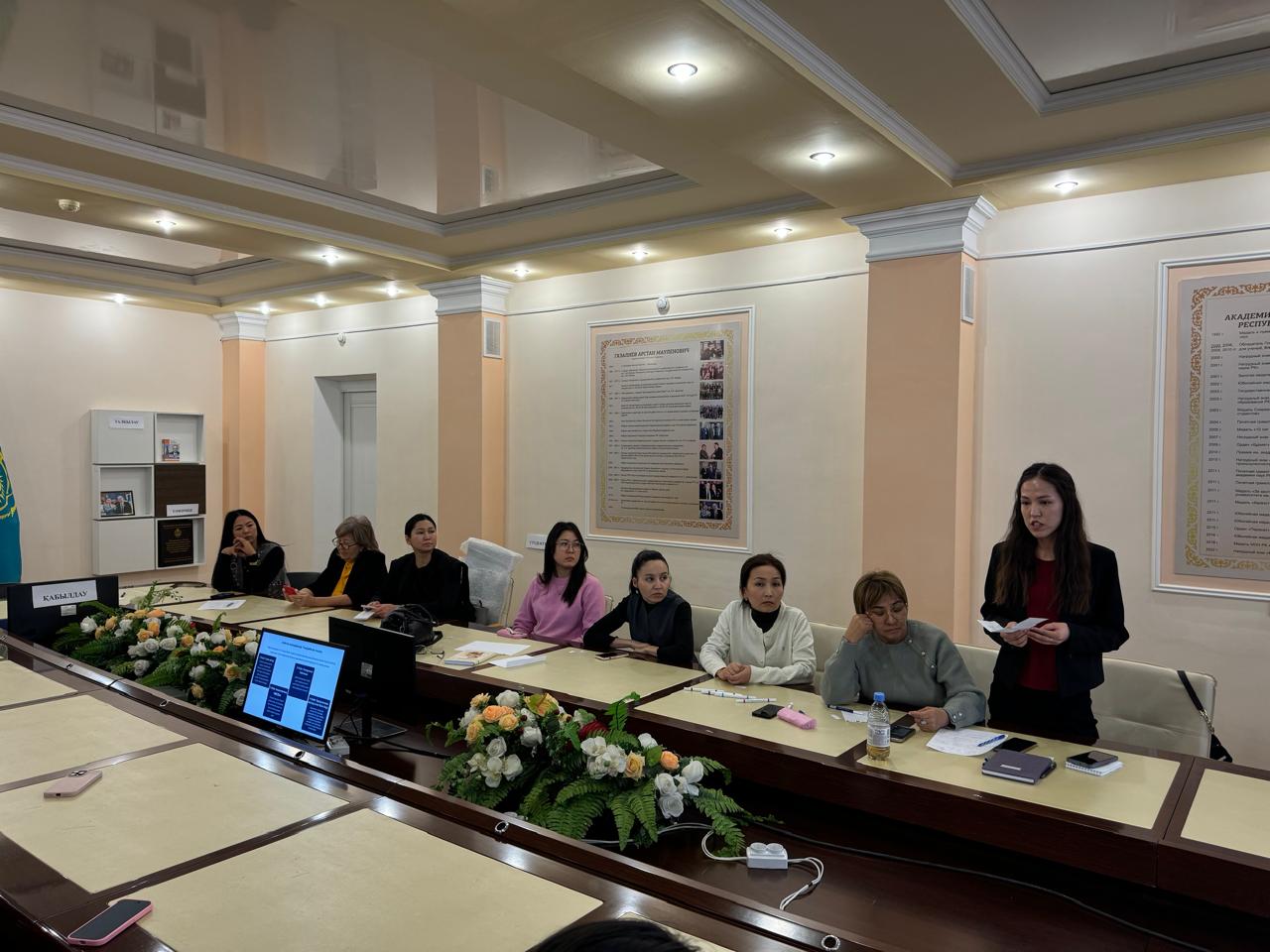
At Sarsen Amanzholov East Kazakhstan University, within the framework of a series of methodological seminars organized by the Department for the Organization of Educational and Methodological Work, a training seminar entitled “Features and Opportunities of Teaching Humanities at the Present Stage” was held.
The main purpose of the event was to analyze current trends in teaching humanities, identify new opportunities in the educational process, and demonstrate ways of their effective application in the professional activities of educators. In addition, the seminar focused on enhancing the personal, educational, and worldview potential of humanities education.
The speakers at the seminar were Galym Nurzhainat, a lecturer at the Department of History of Kazakhstan and Social and Humanitarian Disciplines, and Karagoz Nursapanova, a history teacher and educational psychologist at the Azov Secondary School of the Ulan District. In their presentations, the speakers shared insightful reflections on modern requirements for teaching humanities, methodological innovations, and practical experience.
During the seminar, considerable attention was paid to the impact of humanities disciplines on the personal development of learners. In particular, it was noted that these subjects contribute to the development of students’ critical thinking, the strengthening of civic awareness, the assimilation of national and universal values, and the improvement of communicative culture. Special emphasis was placed on the social responsibility and educational significance of humanities education in society.
The seminar also addressed the key features of teaching humanities. Particular attention was given to learner-centered instruction, value-oriented education, the use of interactive teaching methods, and the implementation of interdisciplinary connections. Debates, case-based tasks, role-playing activities, project work, and research activities were proposed as effective tools for increasing student engagement.
In addition, the seminar explored opportunities for the use of digital technologies. Approaches to applying online educational platforms, integrating video materials and virtual resources into the learning process, and developing media and information literacy were discussed. Special attention was paid to students’ ability to critically analyze information and to the observance of the principles of academic integrity.
At the conclusion of the seminar, the importance of teaching humanities in accordance with contemporary requirements to improve the quality of education was emphasized, and participants’ proposals and opinions were voiced. The event served as an effective platform for enhancing teachers’ professional experience, developing new methodological approaches, and expanding the possibilities of humanities education.