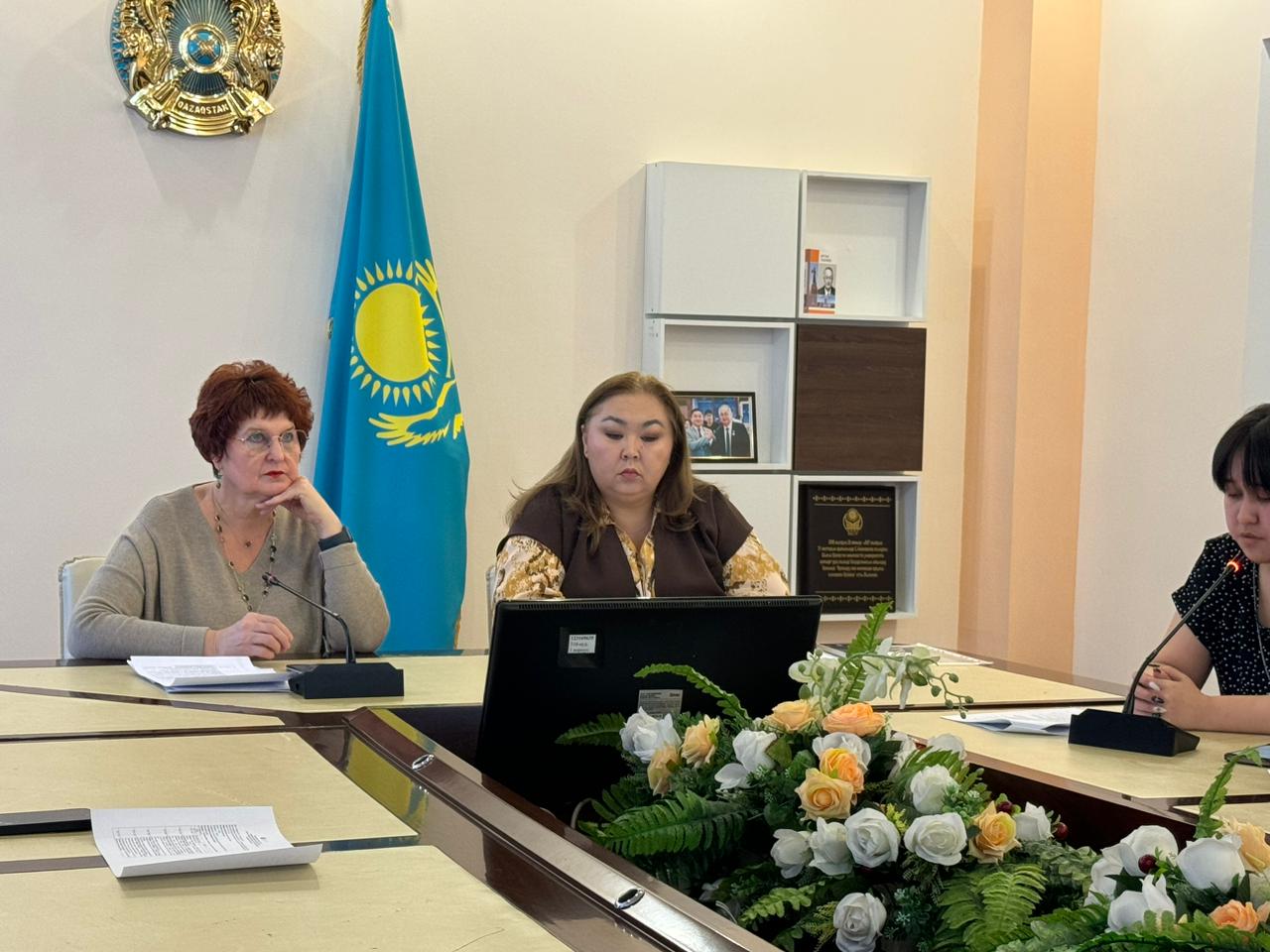
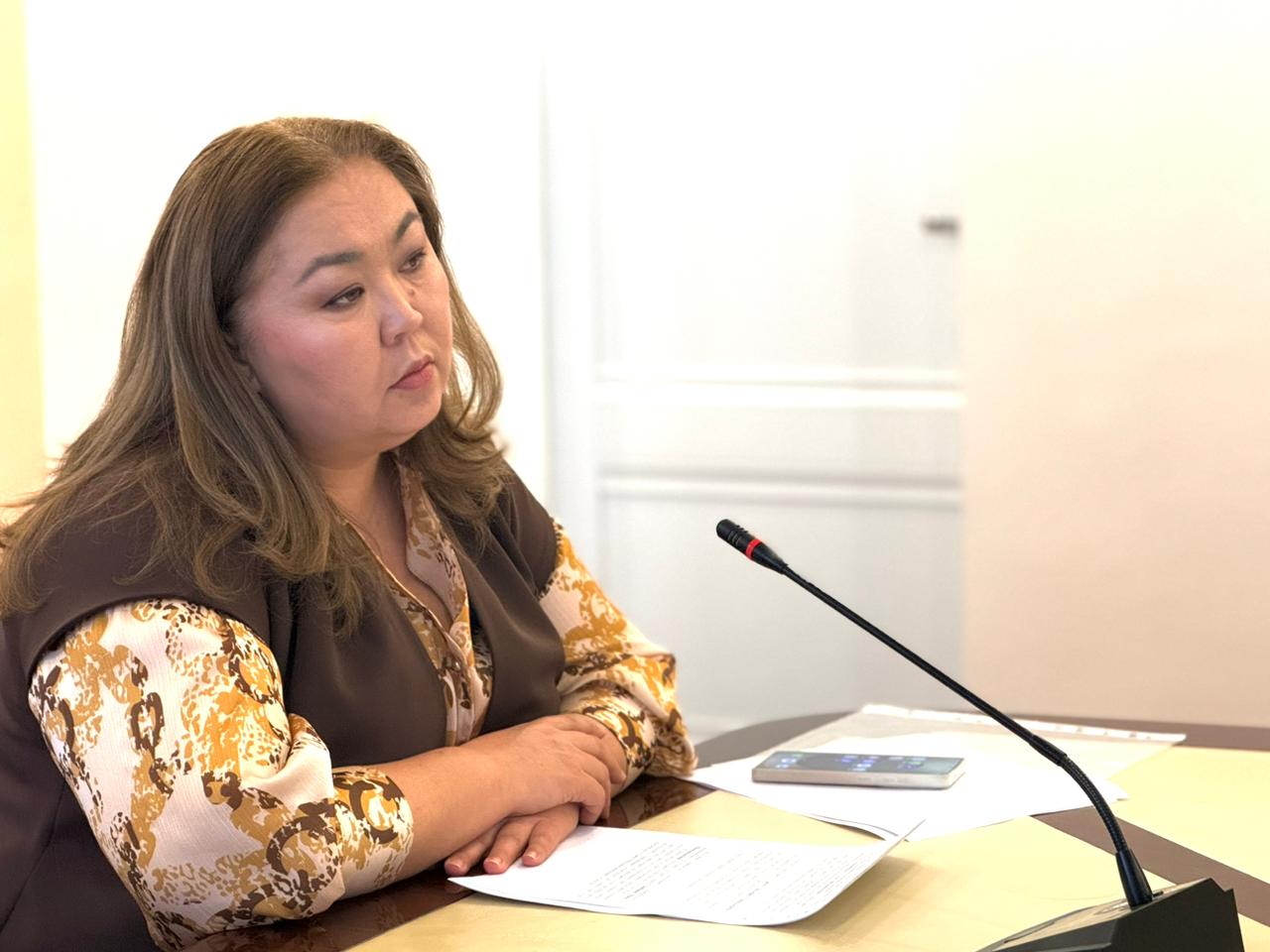
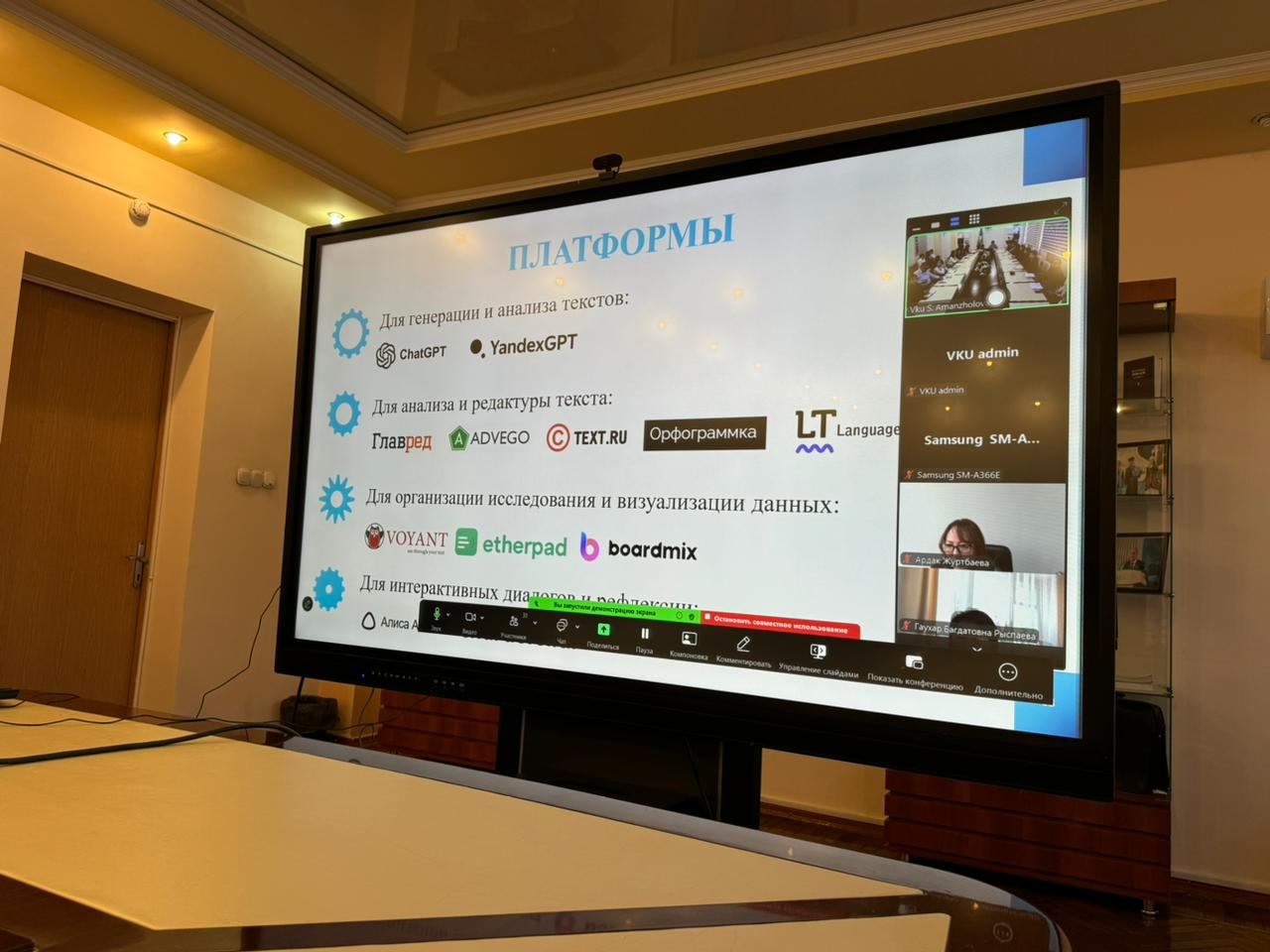
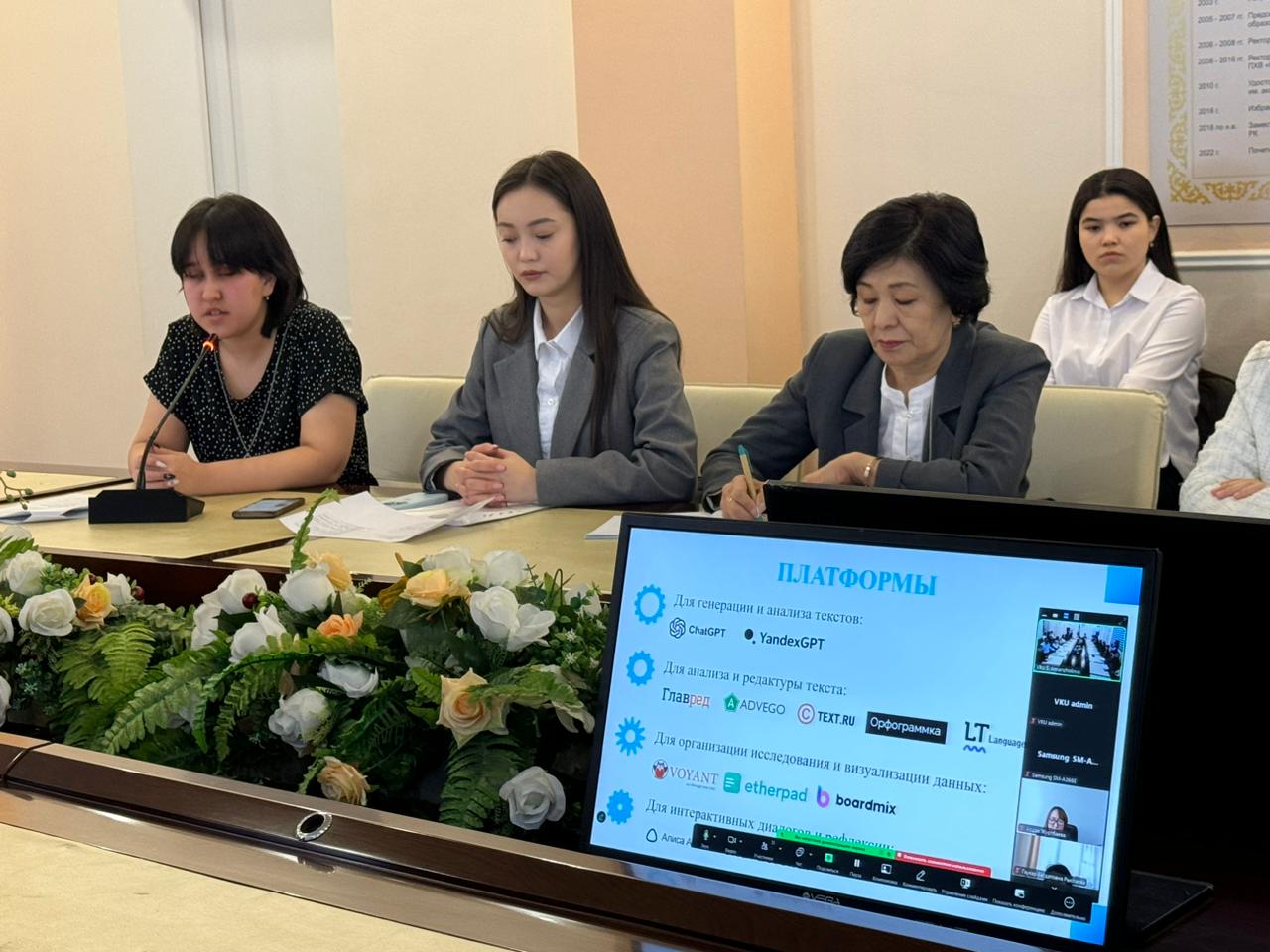
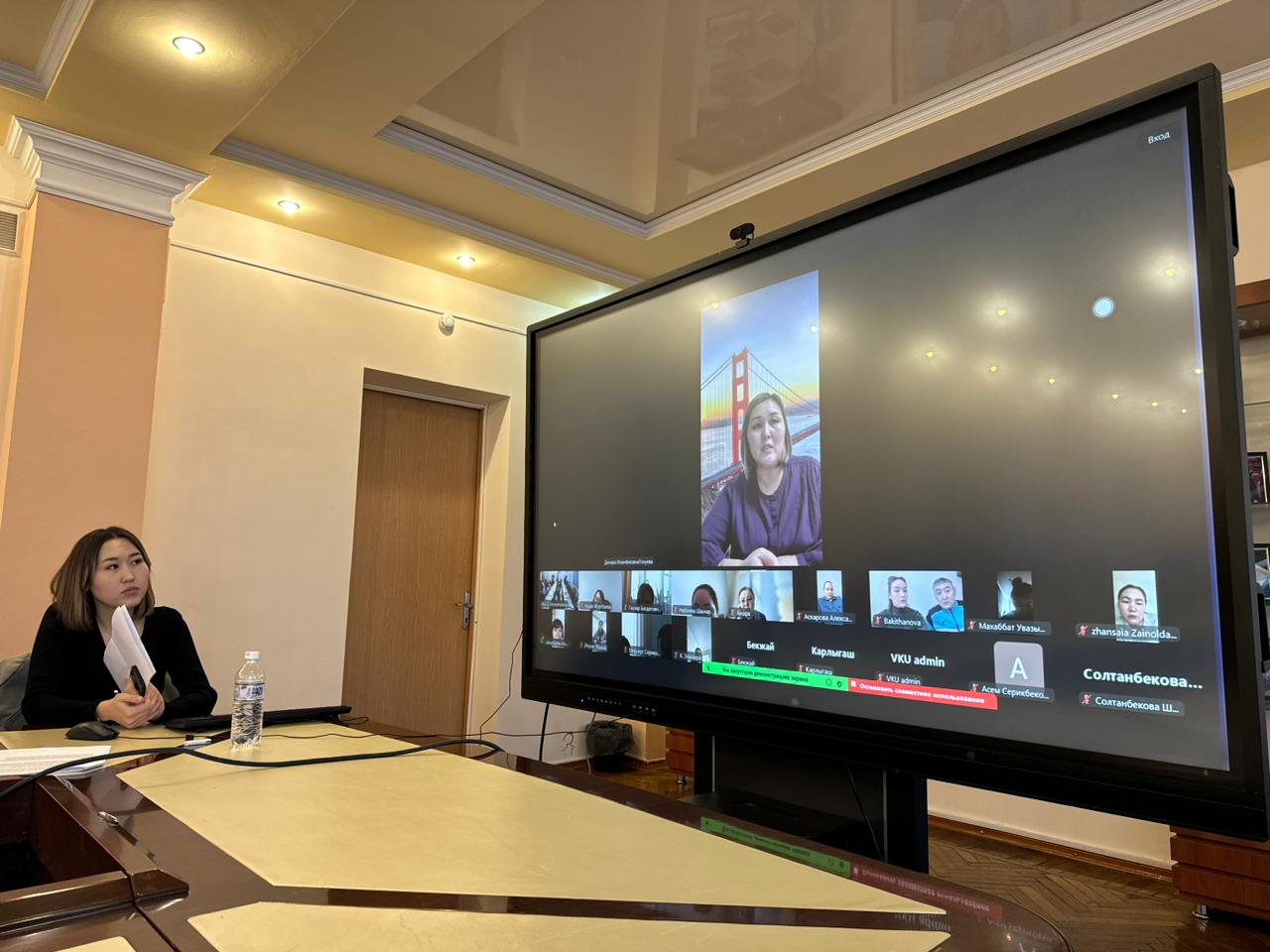
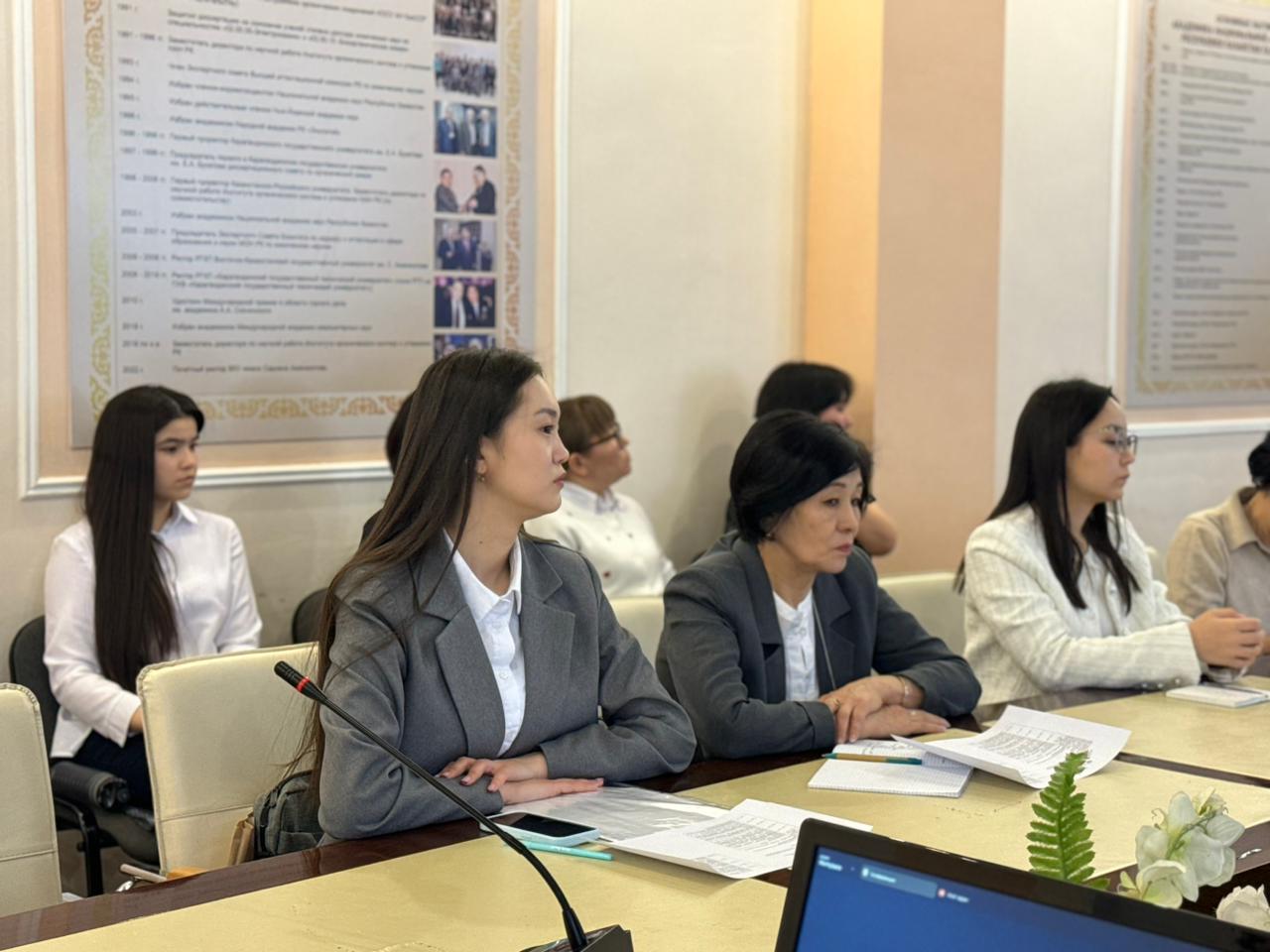
An international round table entitled “Artificial Intelligence in the Educational Process: Opportunities and Risks” was held at the Higher College of Sarsen Amanzholov East Kazakhstan University. The main purpose of the event was to discuss the practice of integrating artificial intelligence (AI) technologies into the education system, identify their pedagogical potential and possible risks, and develop practical recommendations for the effective, ethical, and safe use of AI in the educational environment.
Irina Rovnyakova, Deputy Chair of the Board – Vice-Rector for Strategic Development and International Cooperation, delivered a welcoming address. In her speech, she emphasized the relevance of digitalization in education and the importance of a responsible approach to the use of intelligent technologies in academic activities.
Representatives of the following institutions took part in the round table:
– Irkutsk State University (Russian Federation);
– Bishkek Innovation College;
– Zhansugurov College of I. Zhansugurov Zhetysu University;
– Higher College of Sarsen Amanzholov East Kazakhstan University.
During the discussion, participants comprehensively examined key aspects of implementing artificial intelligence in the educational environment. They explored the potential of AI in teaching, knowledge assessment, personalization of learning trajectories, and automation of pedagogical processes.
Special attention was paid to the potential risks associated with the use of neural network technologies. In particular, issues of academic integrity, information security, personal data protection, and ethical aspects of AI application were addressed.
Speakers presented practical examples of using AI tools in teaching and methodological work and shared approaches to developing students’ digital literacy.
At the conclusion of the meeting, participants noted that artificial intelligence is becoming an important resource in the modern education system. At the same time, its application requires the development of clear regulatory and methodological guidelines, enhancement of educators’ competencies, and the formation of a culture of responsible technology use among students.
The round table served as an effective platform for professional dialogue, strengthening international cooperation, and exchanging experience in the digital transformation of education.
The Higher College expressed gratitude to all participants for their active involvement and substantive presentations and voiced hope for further development of partnerships and joint initiatives.