
Department of ecology and geography
Academic building No. 4, rooms 6, 8
Ust-Kamenogorsk, Kalikhan-Yskak street, 2a
+7 7232 78 28 52
In 1962, a new department “Geography” was opened within the Faculty of Natural Sciences. In April 2001, the Department of “Geography and Ecology” was renamed the Department of “Ecology and Geography.”
In 1968, the unified Department of Geography was divided into the Departments of Physical Geography and Economic Geography. The Department of Physical Geography was headed by Popov Valentin Egorovich, and the Department of Economic Geography by Khukhareva Serafima Nikolaevna.
By the decision of the Academic Council of East Kazakhstan State University named after Sarsen Amanzholov (Protocol No. 1 dated August 31, 2012), the Department of Geography was merged with the Department of Ecology and Life Safety and renamed the Department of Ecology and Geography. The Head of the Department was appointed Seitkan Ainur Seitkanovna, Candidate of Technical Sciences; from 2016 to 2018 — Idrisheva Zhanat Kabylbekovna, Candidate of Technical Sciences, Associate Professor; from 2018 to 2021 — Dakiyeva Kulzipa Zhusupovna, Doctor of Biological Sciences, Professor; from 2021 to 2025 — Zhensikbayeva Nazgul Zhanybekovna, PhD, Associate Professor. Currently, the Head of the Department is Aitkozhina Saltanat Kairatovna.
In 2008, a new specialty 050731 “Life Safety and Environmental Protection” was introduced. In 2023, a new innovative educational program “Hydroecology, Management and Transboundary Water Security” was launched.
The faculty members conduct scientific and methodological research and develop учебные and teaching materials for students.
In 2023, the Department successfully passed accreditation by the Independent Agency for Accreditation and Rating (IAAR/NAAR).
Results of IAAR accreditation in 2024.
According to the Independent Ranking of Demand for Higher Education Institutions of the Republic of Kazakhstan – 2024, the university demonstrated high performance across a number of educational programs. Overall, across the university: 2 programs ranked 1st, 16 programs ranked 2nd, and 26 programs ranked 3rd.
In the areas related to the Department of Ecology and Geography, the following results were achieved:
Bachelor’s degree:
2nd place – 6B01506 “Geography”
2nd place – 6B01510 “Geography-History”
Master’s degree:
1st place – 7M11201 “Life Safety and Environmental Protection”
2nd place – 7M05202 “Ecology”
3rd place – 7M01506 “Geography”
Doctoral degree:
2nd place – 8D01506 “Geography”
In addition, in the national ranking of academic staff of the Republic of Kazakhstan, Professor Bauyrzhan Rakhadilov ranked 25th out of 50, which reflects the high scientific potential of the university and its academic staff.
IAAR accreditation results (2024).
Within the framework of international program accreditation conducted by the Independent Agency for Accreditation and Rating (IAAR), Sarsen Amanzholov East Kazakhstan University successfully confirmed the high quality of specialist training. The accreditation covered 40 educational programs at the bachelor’s, master’s, and doctoral levels, including key programs of the department: 6B05202 “Ecology”; 7M05202 “Ecology”; 6B11201 “Life Safety and Environmental Protection”; 7M05203 “Ecology”; 6B01517 “Geography (IP)”.
The successful accreditation confirms that the educational programs meet modern international academic standards and labor market requirements, and also demonstrates the development of the internal quality assurance system. This is an important step towards strengthening the university’s reputation and recognizing the high quality of graduate training at both national and international levels.
According to the results of the educational programs ranking conducted by the National Chamber of Entrepreneurs of the Republic of Kazakhstan «Atameken», the educational program 6B05201 “Geography” of Sarsen Amanzholov East Kazakhstan University ranked among the TOP-3 best educational programs. This result confirms the high quality of specialist training, the demand for graduates in the labor market, and the compliance of the program with modern employer requirements.

Aitkozhina Saltanat Kairatovna
Head of the Department of Ecology and Geography
Aitkozhina Saltanat Kairatovna
Head of the Department of Ecology and Geography
Nazgul Zhanybekovna Zhensikbaeva, born 09/21/1986. in the village of Alekseevka, East Kazakhstan region.
In 2003, she graduated from the Kalzhyr secondary school in the Kurchum district, after which she studied at the East Kazakhstan University named after S. Amanzholov, majoring in Geography.
In 2007, she graduated from the East Kazakhstan State University named after Sarsen Amanzholov with a bachelor's degree in Geography.
In 2009, she graduated with honors from the East Kazakhstan State University named after S. Amanzholov, majoring in “6N0609-Geography” and received a Master’s degree in Geography.
From 2015 to 2018, she studied at the doctoral program of the Eurasian National University named after L. N. Gumilyov at the Faculty of Natural Sciences in the target area, specialty 6D060900 - “Geography”.
On October 12, 2018, she defended her doctoral dissertation on the topic “Territorial and recreational potential and ways of development of Southern Altai” and on December 14 of the same year, by order No. 1990, by the decision of the Committee for Control in the Field of Education and Science of the Ministry of Education and Science of the Republic of Kazakhstan, the degree of Doctor of Philosophy (PhD) was awarded specialty 6D060900-"Geography". The total teaching experience is 16 years, at VKU – 14 years.
She began her career in 2007 as a geography teacher at Kazakh secondary school No. 1 named after Shakarim Kudaiberdiev in the city of Ust-Kamenogorsk.
In the 2019-2020 academic year, 21 students and 8 undergraduates took prizes in International and Republican Olympiads.
The results of research work over the past 5 years are reflected in more than 70 works published in various scientific publications, in international scientific and practical conferences organized in Kazakhstan, in the countries of the near and far abroad.
In 2022, in honor of the 70th anniversary of the VKU named after S. Amanzholov, students under the leadership of Zhensikbaeva N.Zh. received 2nd prize in the scientific START UP project.
Including, 6 articles in journals with a non-zero impact factor, Hirsch index 4, 15 articles published in journals recommended by the Committee for Control in Education and Science of the Ministry of Education and Science of the Republic of Kazakhstan and 20 reports at international conferences (Moscow, Tomsk, Barnaul), 1 monograph.
In 2016, she was awarded a 3rd degree diploma at the All-Russian Youth Conference with international participation “Geographical Research of Young Scientists in Asian Regions”, Barnaul.
Educational Programs of the Department of Ecology and Geography
Select a program to view full information
| № | Educational Programs (Bachelor's Degree) |
|---|---|
| 1 | 6В01506 Geography |
| 2 | 6В01517 Geography IP |
| 3 | 6В01510 / 6В01523 Geography-History |
| 4 | 6В05201 Geography |
| 5 | 6В05202 Ecology |
| 6 | 6В05203 Hydroecology, Management and Transboundary Water Security |
| 7 | 6В11201 Life Safety and Environmental Protection |
| № | Educational Programs (Master's Degree) |
|---|---|
| 8 | 7М01506 Geography |
| 9 | 7М05201 Geography |
| 10 | 7М05202 / 7М05203 Ecology |
| 11 | 7М11201 Life Safety and Environmental Protection |
| № | Educational Programs (Doctoral Degree) |
|---|---|
| 12 | 8D01506 Geography |
The Department of Ecology and Geography carries out active scientific, educational and public activities. One of the significant achievements of the department is the work of the “Zhasyl Tolqyn” environmental club, which involves students of the educational program 6B05202 – “Ecology”. Under the guidance of the department’s teaching staff, students conduct research on current environmental issues and actively participate in environmental volunteering, campaigns, scientific events and public initiatives.
In 2026, fourth-year students Maginova A., Ashirbekova A. and Lesbek B. became winners of the international project competition “The Best Young Scientist of the CIS”, held in Astana, and took 1st place. This victory confirms the active involvement of the department’s students in scientific and project activities, their research potential, initiative and ability to present the results of their work at the international level. Such achievements enhance the image of the department’s educational programs and strengthen the university’s position in the field of student science.
The achievements of the Department of Ecology and Geography also include the successful training of highly qualified scientific and pedagogical personnel. In 2025, Sanat Kumarbekuly, a doctoral student of S. Amanzholov East Kazakhstan University, successfully defended his dissertation for the degree of Doctor of Philosophy (PhD) in the educational program 8D0150 – “Geography” at the Dissertation Council of Abai Kazakh National Pedagogical University in the fields of 8D015 – “Training of Teachers in Natural Sciences” and 8D052 – “Environment”. The topic of his dissertation research was “A System-Activity Approach to the Development of Students’ Critical Thinking in Geography Lessons”. This achievement demonstrates the high level of scientific supervision, the relevance of the research being conducted and the department’s significant contribution to the development of geographical education and the training of qualified scientific personnel.
Associate Professor of the Department of Ecology and Geography, PhD Zhensikbayeva N.Zh., received grant funding for research by young scientists under the “Zhas Galym” program for 2025–2027. The topic of the scientific project is “Ways to Preserve the Ecosystems of Natural, Historical and Cultural Sites Using GIS Technologies for the Development of Tourism in East Kazakhstan Region”. This achievement reflects the high scientific potential of the department’s teaching staff, the relevance of the research being conducted and its practical significance for the region.
The project is aimed at preserving the natural, historical and cultural heritage of East Kazakhstan Region, applying modern GIS technologies in environmental research, and developing sustainable tourism. The implementation of this grant project contributes to strengthening the department’s research activities, increasing publication activity and involving young scientists and students in solving current environmental problems of the region.
In 2025, the “Zhasyl Tolqyn” environmental club took 2nd place in the “Best Student Club” competition held as part of the “Month of Science” for its active organization of student scientific work. The club supervisors are Zhaznayeva Zhanat Kadyrbekovna, Orsarinova Asem Oraldinovna and Daukenova Bibigul Serikkyzy. The chairperson of the club is Tolqyn Mavlyutova, a second-year student of the educational program 6B05202 – “Ecology”.
The department also actively participates in environmental campaigns and events aimed at developing environmental culture. On October 24, 2025, students of the “Zhasyl Tolqyn” environmental club took part in the “Green Yard with Baitaq” environmental campaign dedicated to Republic Day. During the campaign, students, together with city residents, planted trees and shrubs, landscaped the area and held awareness-raising conversations about the importance of environmental culture. As a result of the event, the Department of Ecology and Geography was awarded a Certificate of Honour by the “Baitaq” Party for its active environmental position and contribution to preserving the nature of the native land.
One of the important achievements of the department is the recognition of the scientific results of its teaching staff. In 2024, the Head of the Department of Ecology and Geography, Zhensikbayeva Nazgul Zhanybekovna, became the winner of the “Best Researcher” nomination at S. Amanzholov East Kazakhstan University and was awarded the special badge of the Ministry of Science and Higher Education of the Republic of Kazakhstan “For Merits in the Development of Science”. This confirms her significant contribution to the development of science, active research work and high publication activity in the international Scopus and Web of Science databases.
Students of the department also demonstrate high results in international and national competitions. In 2024, Damir Yergaliyev, a fourth-year student of the educational program 6B05202 – “Ecology”, became the winner of the international competition “BEST YOUNG RESEARCHER AWARD”, held in Astana, and was awarded a certificate of honour, a statuette and a special medal. His scientific article was published in the international scientific journal “Science and Education: New Time”.
In addition, students of the department successfully participate in subject Olympiads. In 2025, students of the educational program 6B11210 – “Environmental Protection and Life Safety”, Zhursin Abdeshov and Zhanzada Yerzhanova, participated in the XVII Republican Student Subject Olympiad in the discipline “Life Safety”, held at M. Auezov South Kazakhstan University in Shymkent. Among 14 teams from technical universities, the students of S. Amanzholov East Kazakhstan University took 2nd place.
The department also carries out active work to harmonize the content of its educational programs with similar educational programs of leading foreign and Kazakhstani educational organizations. Agreement No. 69 dated April 11, 2022 was concluded between the Non-Profit Joint Stock Company “East Kazakhstan State University” and the Federal State Budgetary Educational Institution of Higher Education “Altai State University” on the network form of implementing educational programs using online courses. Within the framework of this agreement, on September 20, 2022, an online course “Automatic Measurement Tools and Data Analysis Methods” was conducted for master’s students of the educational program “Environmental Protection and Life Safety”, and the university course “Environmental Monitoring Using GIS Technologies” was transferred and recognized. In the future, broader cooperation with foreign and Kazakhstani educational organizations is planned.
On August 31, 2021, Agreement No. 58 was concluded with the Federal State Budgetary Educational Institution of Higher Education “Altai State University” on the joint development and implementation of the educational program 20.04.01 – “Technosphere Safety”. In addition, on August 31, 2022, Agreement No. 72 on the network form of implementing educational programs using online courses was approved.
In the 2022–2023 academic year, students of the educational programs “Environmental Protection and Life Safety”, “Geography” and “Ecology” — Mеруерт Kurmanbek, Shyngys Sabit, Shyngyskhan Duisebay, Yertas Kambarov and Aikumis Gafiyatkyzy — became winners of the Start-Up project on the topic “The Need to Place Eco-Boxes at the University”. Scientific supervisor: PhD, Associate Professor Zhensikbayeva Nazgul Zhanybekovna.
In 2023, third-year students of the educational program 6B01506 – “Geography”, Duman Rakhimberdi and Meruert Kurmanbek, under the scientific supervision of Senior Lecturer and doctoral student Aitkozhina Saltanat Kairatkyzy, participated in the XV Republican Subject Olympiad among students of universities of the Republic of Kazakhstan in the group of educational programs for training geography teachers – B014, and took 1st place in the individual ranking. The Olympiad was held at A. Margulan Pedagogical University in Pavlodar.
In 2010–2011, teachers of the department became holders of the international scholarship of the President of the Republic of Kazakhstan “Bolashak”. In the specialty T 2.20 – “Ecology”, Seitkan A.S. was sent for a scientific internship at the University of Cambridge and then continued his PhD studies from 2011 to 2014. Senior lecturers Boluspayeva L.S. and Kambarova Zh.D. completed internships at Adam Mickiewicz University in Poznan. In the 2021–2022 academic year, doctoral student and Senior Lecturer of the department Sanat Kumarbekuly became a holder of the international “Bolashak” scholarship and completed a scientific internship in London.
In 2020, PhD, Associate Professor Zhensikbayeva Nazgul Zhanybekovna won the competition of the Ministry of Education and Science of the Republic of Kazakhstan “Best University Teacher – 2020”.
In 2019, the new educational program 7M01506 – “Geography” was opened. Currently, the department’s lecturers Kalelova G.Zh., Aitkozhina S.K. and Sabyrbayeva B.T. are studying in doctoral programs.
Educational work is an important component of the educational activities of the Department of Ecology and Geography. It is carried out not only during the academic process, but also outside classroom hours.
The main goal of educational work at the department is to develop students’ moral, spiritual and cultural values, ethical standards, and generally accepted rules of behavior in society.
At the department, educational work is carried out by curators in academic groups and is based on the implementation of the Concept of Education of the Younger Generation in the Republic of Kazakhstan, the plan of educational activities, as well as the development plan of NJSC “Sarsen Amanzholov East Kazakhstan University”.
Students of the department actively participate in all events organized by the department, the Higher School and the University. Throughout the entire period of study, curators maintain contact with students’ parents and carry out systematic work aimed at preventing offenses, promoting academic integrity, developing a responsible attitude toward learning, respect for university traditions, and a culture of behavior in society.
Special attention at the department is paid to the formation of environmental culture, civic responsibility and careful attitude toward the environment. Within the framework of the national program “Taza Kazakhstan”, the department’s teachers and students actively participate in clean-up days, environmental campaigns and events aimed at improving the territory of the university and the city. In particular, the work plan of the “Zhasyl Tolqyn” environmental club includes participation in the “Taza Kazakhstan” campaign, organization of clean-up days, cleaning of classrooms within the framework of the “Cleanliness Week”, as well as activities aimed at developing students’ environmental responsibility.
One of the important areas of educational work is the activity of the “Zhasyl Tolqyn” scientific environmental club, established under the Department of Ecology and Geography. The club brings together students interested in research, environmental education and public activities. Its work is aimed at environmental protection, promotion of sustainable development principles, study of regional environmental problems and formation of environmental culture. Within the framework of the club, lectures, trainings, seminars, excursions, environmental campaigns, scientific projects, start-ups, master classes and meetings with specialists in the field of ecology are held.
The department also supports the development of the volunteer movement among students. Student volunteers take part in charity campaigns, visit children’s homes, provide assistance to children, and participate in social initiatives and events aimed at fostering compassion, kindness, mutual assistance and social responsibility. Such activities contribute to the development of students’ active civic position, humanistic values and readiness to participate in solving socially significant tasks.
As part of educational work, the department organizes and supports events of patriotic, cultural, environmental, preventive and social orientation. Students participate in round tables, debates, competitions, excursions, meetings with specialists, environmental lessons and intellectual events. For example, the work plan of the “Zhasyl Tolqyn” club includes events dedicated to World Water Day, International Bird Day, Earth Day, Ecologist’s Day, as well as participation in debates, forums, environmental quiz games and educational lessons.
Thus, the educational work of the Department of Ecology and Geography is comprehensive and systematic. It is aimed at forming a well-rounded personality with professional knowledge, environmental culture, civic responsibility, patriotism, social activity and readiness to contribute to the sustainable development of society.
At the Department of Ecology and Geography, research work is carried out within three initiative-based research topics aimed at studying issues related to geography, ecology, life safety, and environmental protection. Master’s students are involved in all research areas. The results of scientific research are reflected in master’s theses, diploma papers, and scientific publications.
Research area
1) “Systematic Assessment of the State of the Environment and Nature Management in East Kazakhstan in the Context of Spatial and Territorial Changes” This research topic is implemented without funding. Research supervisor: Candidate of Geographical Sciences, Associate Professor R.S. Beisembayeva.
Aim of the research: The aim of the study is to investigate, analyze, and assess the ecological-geochemical, socio-economic, demographic, and medical indicators of the functional zones of the East Kazakhstan Region, including recreational, residential, agricultural, and industrial zones. The research is based on reconnaissance and comprehensive field studies.
Research objectives:
1.1. To analyze the content of heavy metals in environmental components within the functional zones of East Kazakhstan Region and identify geochemical patterns of these territories for further ecological and geochemical assessment;
1.2. To study regional combinations of natural resources and environmental conditions within the research area;
1.3. To study the impact of environmental factors in functional zones on demographic indicators and public health;
1.4. To master research methods according to the types of studies conducted;
1.5. To prepare a systematic assessment of the ecological, demographic-medical, and socio-economic problems of the functional zones of East Kazakhstan in the context of spatial and territorial changes.
Scientific novelty of the research: The scientific novelty of this topic lies in the systematization of collected materials related to the assessment of the state of the environment and nature management in East Kazakhstan. It also includes the identification of ecological-geochemical, demographic-medical, and socio-economic characteristics of the functional zones of East Kazakhstan, as well as the development of recommendations to improve the efficiency of their use in the context of spatial and territorial changes.
Expected results and practical significance: Within the research topic “Metabolic Aspects of the Human Body under the Influence of Unfavorable Environmental Factors: The Case of the Titanium-Magnesium Plant,” implemented by Doctor of Biological Sciences, Professor K.Zh. Dakiyeva and PhD Doctor N.Zh. Zhensikbayeva, an analysis of the carbohydrate spectrum of workers’ blood was conducted under the combined influence of unfavorable production environment factors.
The analysis of carbohydrate metabolism indicators, including the levels of glucose, pyruvic acid, and lactic acid, was carried out among workers and compared with a control group. The analysis showed that the glucose level demonstrated a statistically insignificant tendency to increase to 4.5±0.5 μmol/L compared with 4.1±0.6 μmol/L in the control group. The concentration of pyruvic acid in the blood of plant workers increased by 25% compared with the control group (p<0.001). The level of lactic acid, or lactate, in the blood of workers increased by 54% (p<0.001).
It is known that an increase in pyruvic and lactic acids may be associated with vitamin B deficiency, liver hypoxia, and adaptive changes in the pituitary-adrenal system.
PhD Doctor N.Zh. Zhensikbayeva is conducting research on the topic “Study of the Sacred Space of East Kazakhstan Using GIS Technologies.” Within this research, she carries out geoinformation mapping of the sacred space of the South-Western Altai. The work includes the creation of maps of the specially protected natural areas of Altai and sacred sites. A total of 15 maps are planned, and approximately 8 maps have already been completed. Master’s students majoring in Geography are involved in this research work.
Within the section on determining the geographical distribution of spiritual sacred sites in East Kazakhstan Region, geoinformation mapping of the sacred space of the South-Western Altai is being carried out. Maps of the specially protected natural areas of Altai and sacred sites are being developed, with a total of 15 maps planned. The topic is funded by the Ministry of Science and Higher Education of the Republic of Kazakhstan. The study examines the theoretical and methodological foundations of the region’s spiritual sacred places, applies international experience, and provides a comprehensive ecological and geographical review. It also includes an analysis of the regulatory and legal framework and existing legislative mechanisms for the protection and use of historical and cultural heritage sites.
N.Zh. Zhensikbayeva is leading the project titled “Ways to Preserve the Ecosystems of Natural, Historical, and Cultural Sites Using GIS Technologies for the Development of Tourism in East Kazakhstan Region”, No. 355/2025. The project is implemented in 2025–2026 and is funded by the Ministry of Science and Higher Education of the Republic of Kazakhstan.
R.S. Beisembayeva, Candidate of Geographical Sciences and Professor, continues her research on the topic “Demographic Processes in the System of Spatial Organization of the Territory of the Republic of Kazakhstan.” She continues to collect and systematize statistical data.
An economic and geographical analysis has been conducted for part of the territory of East Kazakhstan Region, namely the Ust-Kamenogorsk industrial hub of the Rudny Altai territorial production complex, with justification of the eastern section of the transport and logistics system of East Kazakhstan Region. In 2025, the development of the social component of the research topic is continuing, and joint articles with master’s students have been published.
A.P. Tsyganov conducted research on the topic “Assessment of the Sensitivity of the Plant World and Determination of Restrictions in the Territory Considered for the Construction of the Zhonғар Wind Power Plant Project.” Geobotanical and floristic studies were carried out in the territory of the Dzungarian Gate, covering the Zhonғар wind power plant and the power transmission line corridor. A checklist of the flora of this region has been compiled.
S.A. Garmashova, Candidate of Technical Sciences and Associate Professor, worked on the topic “The Impact of Various Hazardous Factors in Production on the Human Body.” A section was completed on one of the most common measures for preventing the negative impact of hazardous and harmful production factors on workers: the use of collective and personal protective equipment. In the production process, in cases of air pollution by dust, general ventilation and exhaust ventilation systems were proposed as collective protective measures, along with the use of an individual respirator.
S.A. Bakin, Master, continues processing factual material from applied studies of soil and plant diversity in the territory of Katon-Karagay State National Natural Park within the section “Ecological and Geochemical Assessment of Recreational Resources of East Kazakhstan Region: The Case of Katon-Karagay State National Natural Park.” Work has continued on systematizing the developed cartographic materials on soil and plant diversity and landscapes of the park’s territory. Cartographic materials for the territories of Katon-Karagay State National Natural Park have been prepared. Work is also continuing on preparing materials for the development of cartographic materials of the park, preparing electronic versions of ecological and geographical map schemes, and carrying out computer processing of materials and analyses for the future development of map scheme projects for the territory of Katon-Karagay State National Natural Park.
2) “Ecological and Economic Assessment of the Natural Resource and Socio-Economic Potential of the Territory of East Kazakhstan Region for the Development of Ecological Tourism and Ecological Business” This research topic is implemented without funding.
Research supervisors: Doctor of Biological Sciences, Professor K.Zh. Dakiyeva, and PhD Doctor N.Zh. Zhensikbayeva.
Aim of the research: The aim is to assess the natural resource potential and existing social and production infrastructure for the development of ecological tourism, as well as to develop a program for the development of ecological tourism and eco-business infrastructure based on the recreational potential of East Kazakhstan Region.
Research objectives:
2.1. To determine the ecological and economic assessment of the natural and recreational potential of East Kazakhstan for the purposes of developing ecological tourism;
2.2. To identify the level of development of social and production infrastructure, human resources, and economic potential for the development of ecological tourism in East Kazakhstan Region;
2.3. To determine the potential capacity of specially protected areas and naturally and aesthetically unique territories to be included in the system of recreational and tourist services for the population;
2.4. To develop methods for the ecological and economic calculation of anthropogenic pressure caused by eco-tourists on recreational zones and landscapes;
2.5. To prepare an economic justification for the infrastructural development of ecological tourism, taking into account the unique and competitive factors of East Kazakhstan in the global and regional tourism services markets;
2.6. To develop a program for the development of ecological tourism, taking into account natural-ecological, socio-economic, and legal factors.
Scientific novelty of the research area: The scientific novelty lies in the systematization of collected materials on the assessment of the natural resource and socio-economic potential of East Kazakhstan Region for the development of ecological tourism and ecological business.
Expected results and practical significance: A.S. Chursin, Candidate of Geographical Sciences, continues work on the problem “Creation of a Geoinformation System Module for Forecasting Atmospheric Air Quality in Industrial Cities Based on a Three-Dimensional Mathematical Model.” He continues collecting and processing a large volume of environmental monitoring data for industrial cities of East Kazakhstan Region for 2024.
G.M. Salykbaeva is conducting a comparative analysis of the economies of Abai and East Kazakhstan regions by economic sectors. Statistical data have been collected, and an initial analysis of the economic structure of Abai and East Kazakhstan regions has been carried out. A basis for electronic maps of Abai and East Kazakhstan regions at scales of 1:7,000,000 and 1:5,000,000 has been prepared. The following electronic maps have been compiled: territorial-administrative map, mineral resources map, relief map, soil map, a set of population maps of East Kazakhstan, transport network map, and agricultural map of East Kazakhstan. A copyright certificate was obtained for the electronic map “Mineral Resources of East Kazakhstan”, No. 61675, dated August 26, 2025.
PhD Doctor N.Zh. Zhensikbayeva is conducting research on the sacred objects of East Kazakhstan using GIS technologies. Geoinformation mapping of the sacred space of the South-Western Altai is planned. The project includes the creation of maps of the specially protected natural areas of Altai and sacred sites, with a total of 15 maps planned.
3) “Formation of Professionalism in Pedagogical Activity under the Credit Technology of Education.” Supervisors: Doctor of Pedagogical Sciences, Professor N.A. Zavalko, and PhD Doctor N.Zh. Zhensikbayeva.
Aim: To develop educational and methodological publications by the department members in order to improve the teaching of academic disciplines.
Objectives: 3.1. To study the demand for educational and methodological materials in schools of East Kazakhstan Region and to publish such materials.
Scientific novelty: The publication of new-generation textbooks for schools based on research results, as well as the publication of textbooks, teaching aids, atlases, and maps.
Expected results and practical significance: Publication of textbooks, educational and methodological manuals, and teaching materials prepared by the teaching staff of the department.
A.S. Kaysarova and B.T. Sabyrbayeva, lecturers of the department, published the educational and methodological manual for practical classes titled “Web Mapping”. A.S. Kaysarova, N.Zh. Zhensikbayeva, B.T. Sabyrbayeva, and N.K. Kabdrakhmanova published three educational and methodological manuals.
A.S. Kaysarova, N.Zh. Zhensikbayeva, B.T. Sabyrbayeva, and N.K. Kabdrakhmanova published three educational and methodological manuals in disciplines related to geography and pedagogy.
In 2025, the department lecturers K.Zh. Dakiyeva and E.K. Zaripova published the textbooks “Waste Management” and “Applied Environmental Research.”
K.Zh. Dakiyeva, A.O. Orsarinova, and B.S. Daukenova published the textbook “Environmental Audit and Environmental Impact Assessment.”
Zh.K. Zhaznayeva, S.A. Bakin, and N.K. Kabdrakhmanova published the textbooks “Agroecology and Agricultural Ecology” and “Hydroecology.”
Zh.K. Zhaznayeva, S.A. Bakin, and L.S. Boluspayeva published the textbook “Media and Household Ecology.”
Zh.K. Zhaznayeva, together with co-authors, published the textbook “Waste Management.”
In 2025, the scientific results of the department’s teaching staff were published in international and republican editions, including 3 articles indexed in the Web of Science database, 4 articles in journals recommended by CQAFSHE, 4 articles in foreign journals, and 21 articles at the international and regional levels.
In 2025, within the framework of research activities, department lecturers K.Zh. Dakiyeva and N.Zh. Zhensikbayeva conducted studies on the influence of unfavorable environmental factors on the human body. They are also implementing scientific projects on geoinformation mapping of sacred sites in East Kazakhstan.
A.S. Chursin continues working on the creation of a geoinformation system module for forecasting atmospheric air quality in industrial cities.
G.M. Salykbaeva conducted a comparative analysis of the economies of East Kazakhstan and Abai regions and developed electronic maps of the region. As a result, a copyright certificate was obtained for the map “Mineral Resources of East Kazakhstan.”
In 2025, students and master’s students of the department, under the supervision of Zh.K. Zhaznayeva, B.S. Daukenova, S.A. Bakin, and G.Yu. Abdugaliyeva, actively participated in international and republican scientific conferences, published scientific articles, and demonstrated a high level of research training.
Students of the educational program 6B11201 “Life Safety and Environmental Protection,” Zhanzada Yerzhanova and Zhursin Abdeshov, took 2nd place at the XVII Republican Subject Olympiad among students of higher education institutions of the Republic of Kazakhstan.
Master’s students and students of the educational programs “Ecology” and “Hydroecology” participated in international scientific and practical conferences, where they presented the results of their research in the fields of ecology, environmental protection, and sustainable development.
An important indicator of the research activity of the Department of Ecology and Geography is the receipt of copyright certificates for educational and scientific-methodological developments, which reflect the practical significance and innovative nature of the research being conducted.
In 2025, the department’s teaching staff received 7 copyright certificates for textbooks and electronic educational resources in the fields of ecology, geography, and nature management.
The authors’ developments cover the following areas:
In 2022, the department’s teaching staff received one certificate of registration for an intellectual property object. The team of authors consisting of K.Zh. Dakiyeva, S. Kumarbekuly, and B.Sh. Abdimanapov developed the educational and methodological manual “Ecology and Sustainable Development” No. 30850, dated December 6, 2022. This work is aimed at developing students’ knowledge in the field of sustainable development and ecological culture. It also reflects the integration of modern ecological concepts into the educational process.
In 2023, increased activity was observed in the field of intellectual property, with three certificates registered. K.Zh. Dakiyeva, G.Zh. Kalelova, and S. Kumarbekuly prepared the textbook “Bioindication of the Environment” No. 37778, dated July 4, 2023, devoted to methods for assessing the state of the environment. S. Kumarbekuly, B.Sh. Abdimanapov, and G.Zh. Kalelova developed the manual “Fundamentals of Geoecological Research” No. 31982, dated January 24, 2023, which presents the basic principles of geoecological studies. In addition, the team of authors consisting of G.Zh. Kalelova, B.Sh. Abdimanapov, and S. Kumarbekuly received a certificate for a development devoted to the pedagogical aspects of teaching natural science disciplines, No. 34223, dated March 31, 2023. Overall, 2023 was characterized by the strengthening of the methodological and scientific-pedagogical orientation of the department’s developments.
In 2024, intellectual property certificates were at the stage of preparation and development of new educational and scientific materials, the results of which were formalized and registered in subsequent years.
The year 2025 was the most productive in terms of the number of registered intellectual property objects, with 13 certificates obtained. The main areas of development included environmental audit, waste management, agroecology, hydroecology, mapping, and digital geoinformation products.
Thus, K.Zh. Dakiyeva, A.O. Orsarinova, and B.S. Daukenova received a certificate for the textbook “Environmental Audit and Environmental Impact Assessment” No. 54433, dated February 11, 2025. K.Zh. Dakiyeva and E.K. Zaripova registered the developments “Applied Environmental Research” No. 63240 and “System of Solid and Industrial Waste Management” No. 63228.
Zh.K. Zhaznayeva, S.A. Bakin, and N.K. Kabdrakhmanova received certificates for the textbooks “Agroecology and Agricultural Ecology” No. 62572 and “Hydroecology” No. 62570. Together with L.S. Boluspayeva, they also received a certificate for “Media and Household Ecology” No. 62853.
Cartographic and digital developments occupy a significant place. S.K. Aitkozhina and her co-authors registered a number of cartographic products, including “Map of Sacred Sites of Mangystau Region” No. 61634, “Hypsometric Map of East Kazakhstan Region” No. 65182, “Sacred Places and Archaeological Sites” No. 65513, as well as “Tourist Places and Protected Areas of the East Kazakhstan Region.”
G.M. Salykbaeva, A.S. Pavlenko, and R.S. Beisembayeva received a certificate for the map “Mineral Resources of East Kazakhstan” No. 61675.
Overall, 2025 was characterized by the active development of digital educational resources, GIS cartography, and applied environmental developments, which indicates the department’s transition to an innovative stage of scientific activity.
In 2026, work in the field of intellectual property continued, with two certificates registered. N.K. Kabdrakhmanova, R.S. Beisembayeva, and co-authors received a certificate for the development “Geomorphological Map of East Kazakhstan Region” No. 68224, dated March 3, 2026. This work is aimed at developing cartographic and geographical research in the region.
Zh.K. Zhaznayeva, S.A. Bakin, and co-authors registered the development “School Ecological Club” No. 69194, dated March 27, 2026, aimed at developing environmental education and ecological upbringing among schoolchildren.
The main areas of development are related to ecology, geography, digital technologies, and educational methodologies. A transition is being observed from traditional teaching aids to the creation of digital maps, GIS products, and interdisciplinary developments, which meets the modern requirements of science and education.
At the Department of Ecology and Geography, Associate Professor N.Zh. Zhensikbayeva is the winner of the competition of the Ministry of Science and Higher Education of the Republic of Kazakhstan “Best University Teacher – 2020.”
Associate Professor of the Department of Ecology and Geography, PhD Doctor N.Zh. Zhensikbayeva, received grant funding for young scientists’ research under the “Zhas Galym” program for 2025–2027. The topic of her project is “Ways to Preserve the Ecosystems of Natural, Historical, and Cultural Sites Using GIS Technologies for the Development of Tourism in East Kazakhstan Region.” This project has currently been awarded funding.
The teaching staff of the department is involved in practical activities, the results of which include scientific projects, research articles, and methodological developments. The practical work of the teaching staff makes it possible to promptly take into account changes in science and innovations in production when developing educational programs. This is reflected in the adjustment of the content of academic discipline programs, as well as in conducting classes based on the integration of science and industry.
The teaching staff and students of the educational programs participate in the implementation of international scientific projects.
In particular, A.V. Pavlenko, a doctoral student of the educational program 8D01506 – Geography, is a participant in a research project funded through program-targeted financing by the Ministry of Science and Higher Education of the Republic of Kazakhstan on the topic:
“Development of a System for Forecasting Catastrophic Floods in East Kazakhstan Region Using Earth Remote Sensing Data, GIS Technologies, and Machine Learning Methods” IRN BR24992899.
The project is implemented with the involvement of an international research team and a digital platform, as well as in cooperation with Altai State University, Russian Federation.
Methodological work is one of the key components of the educational activities of the Department of Ecology and Geography and represents a set of measures aimed at providing the educational process with teaching and methodological documentation, conducting classroom instruction at a high theoretical and scientific level, and enhancing the pedagogical skills of the faculty. The main goal of the methodological work of the Department of Ecology and Geography is to create conditions that contribute to improving the efficiency and quality of the educational process.
The department systematically carries out work on the development and updating of course teaching and methodological packages, syllabi, lecture materials, practical and seminar assignments, test questions, examination papers, and methodological guidelines for students’ independent work. Special attention is paid to ensuring that the content of disciplines meets modern requirements of higher education, educational programs, professional standards, as well as current trends in the development of ecology, geography, hydroecology, life safety, and environmental protection.
The faculty actively integrates modern educational technologies into the teaching process, including interactive teaching methods, case-based assignments, project-based learning, elements of digital education, work with GIS technologies, environmental databases, and practice-oriented materials. As part of methodological work, open classes, mutual class observations, methodological seminars, discussions of learning outcomes, analysis of teaching quality, and improvement of student assessment methods are regularly conducted.
An important area of the department’s methodological activity is the development of Massive Open Online Courses (MOOCs). The Department of Ecology and Geography conducts systematic work on the creation and implementation of MOOC courses on educational platforms. In particular, the Head of the Department of Ecology and Geography, Master of Natural Sciences Aitkozhina S.K., developed the online course “Geography of Sacred Sites of Kazakhstan” / “Қазақстанның киелі жерлер географиясы,” which is implemented on the Enbek Skills platform. This course is aimed at studying the historical and cultural heritage of the Republic of Kazakhstan, the historical, spiritual, and cultural significance of sacred sites across regions, the scientific systematization and research methods of sacred geography, as well as exploring opportunities for tourism development based on sacred sites within the framework of the “Rukhani Zhangyru” program.
Link to the course “Geography of Sacred Sites of Kazakhstan”:
https://skills.enbek.kz/ru/author/course/1307/lessons
In addition, Professor of the Department of Ecology and Geography, Doctor of Biological Sciences Dakieva K.Zh., developed MOOC courses “Modern Environmental Problems” / “Қазіргі экологиялық мәселелер” and “Media and Household Ecology” / “Медиа және тұрмыстық экология,” which are implemented on the university’s educational platform edu.vku.kz. These courses are intended for students of the educational programs 6B05202 – “Ecology,” 7M05202 – “Ecology,” 6B05201 – “Geography,” 6B11201 – “Life Safety and Environmental Protection,” 7M11201 – “Life Safety and Environmental Protection,” and 6B05203 – “Hydroecology, Management and Transboundary Water Security.”
Course “Modern Environmental Problems”:
Course “Media and Household Ecology”:
The development and implementation of these online courses contribute to expanding students’ access to high-quality educational resources, developing the digital learning environment, increasing students’ independent learning activity, and forming modern professional competencies. The use of MOOCs makes it possible to combine traditional forms of education with distance and interactive technologies, which is especially important in the context of modernization of the educational process.
In addition, an important area of methodological work of the Department of Ecology and Geography is the preparation and publication of teaching and methodological literature for the disciplines of educational programs. Every year, the faculty develops textbooks, methodological guidelines, practical manuals, collections of assignments, and materials for seminars and practical classes intended for students of the department’s educational programs. This work is carried out in cooperation with the “Berel” publishing house, which makes it possible to provide the educational process with high-quality and up-to-date teaching and methodological materials.
Special attention is paid to the systematic improvement of teaching quality. In this regard, each semester the department develops and approves schedules of open classes and mutual class observations. Open classes allow instructors to demonstrate modern pedagogical approaches, interactive teaching methods, the use of digital resources, case-based technologies, and practice-oriented assignments. Mutual class observations contribute to the exchange of pedagogical experience, improvement of teaching methods, analysis of the strengths of the educational process, and development of recommendations for its further enhancement.
One of the effective areas of the department’s methodological activity is participation in methodological decades organized by the Higher School of IT and Natural Sciences. Within the framework of these decades, open classes, scientific projects, subject Olympiads, intellectual games, practical seminars, and master classes are organized. The main goal of the methodological decade is to develop students’ research skills, enhance their digital literacy, and foster interest in natural sciences, ecology, geography, and modern educational technologies.
During the decade, students have the opportunity to demonstrate their knowledge, creativity, research potential, and teamwork skills. They defend scientific projects, propose new ideas, and participate in discussions on current issues in digital technologies, programming, robotics, innovative areas of the IT sector, and applied aspects of natural sciences. Such activities contribute to the development of students’ independence, professional motivation, and practical competencies.
Methodological decades are also of great importance for the faculty, as they create conditions for experience exchange, implementation of innovative teaching methods, improvement of course content, and enhancement of the quality of the educational process. Active participants are awarded diplomas, certificates, letters of appreciation, and commemorative gifts, which helps increase the motivation of both students and teachers for further scientific and educational activities.
Thus, the methodological work of the Department of Ecology and Geography includes the development of teaching and methodological literature, updating of educational documentation, conducting open classes and mutual observations, participation in methodological decades, implementation of digital educational resources, and development of MOOC courses. All these areas contribute to improving the quality of the educational process, enhancing the professional skills of faculty members, and training competitive specialists in ecology, geography, hydroecology, life safety, and environmental protection.
Teaching staff of the department
*to view the teacher’s portfolio, click on the photo*

Aitkozhina Saltanat Kairatovna
Senior Lecturer
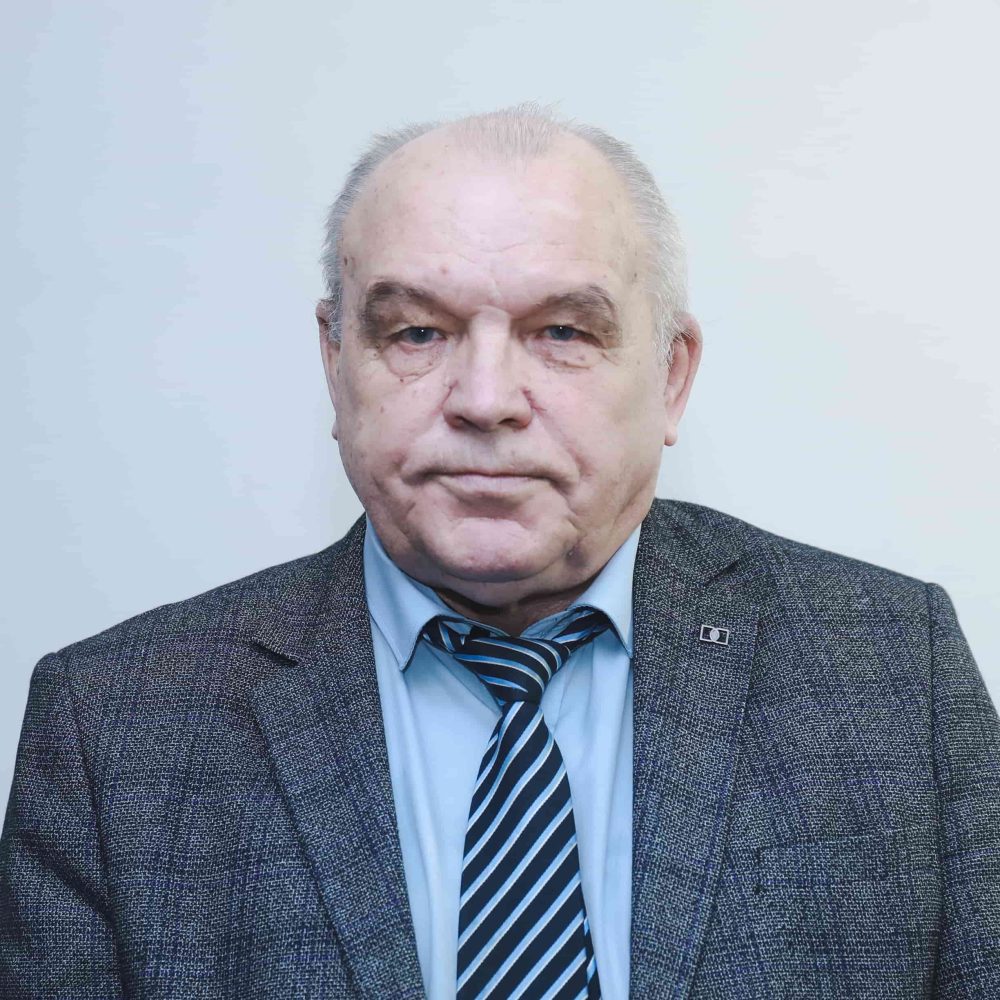
Chursin Anatoly Sergeevich
Associate Professor

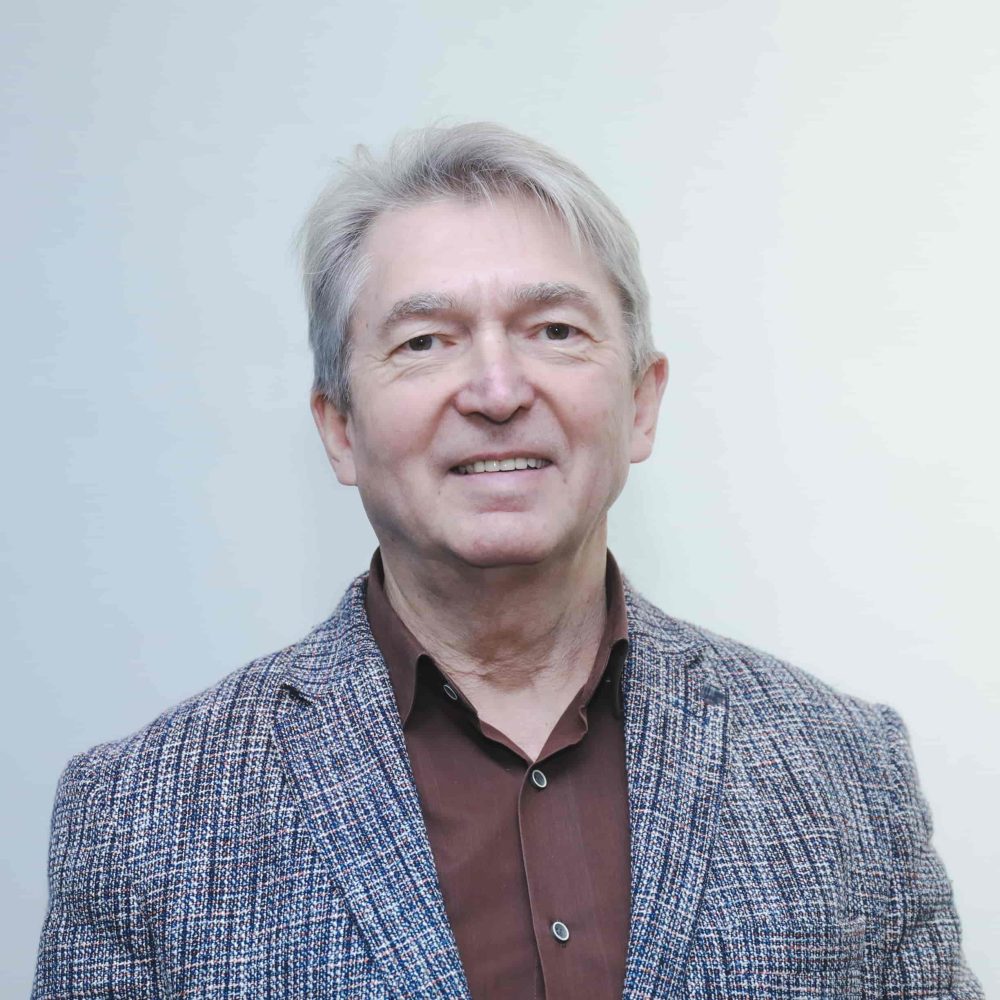
Zhensikbaeva Nazgul Zhanybekovna
PhD, Professor
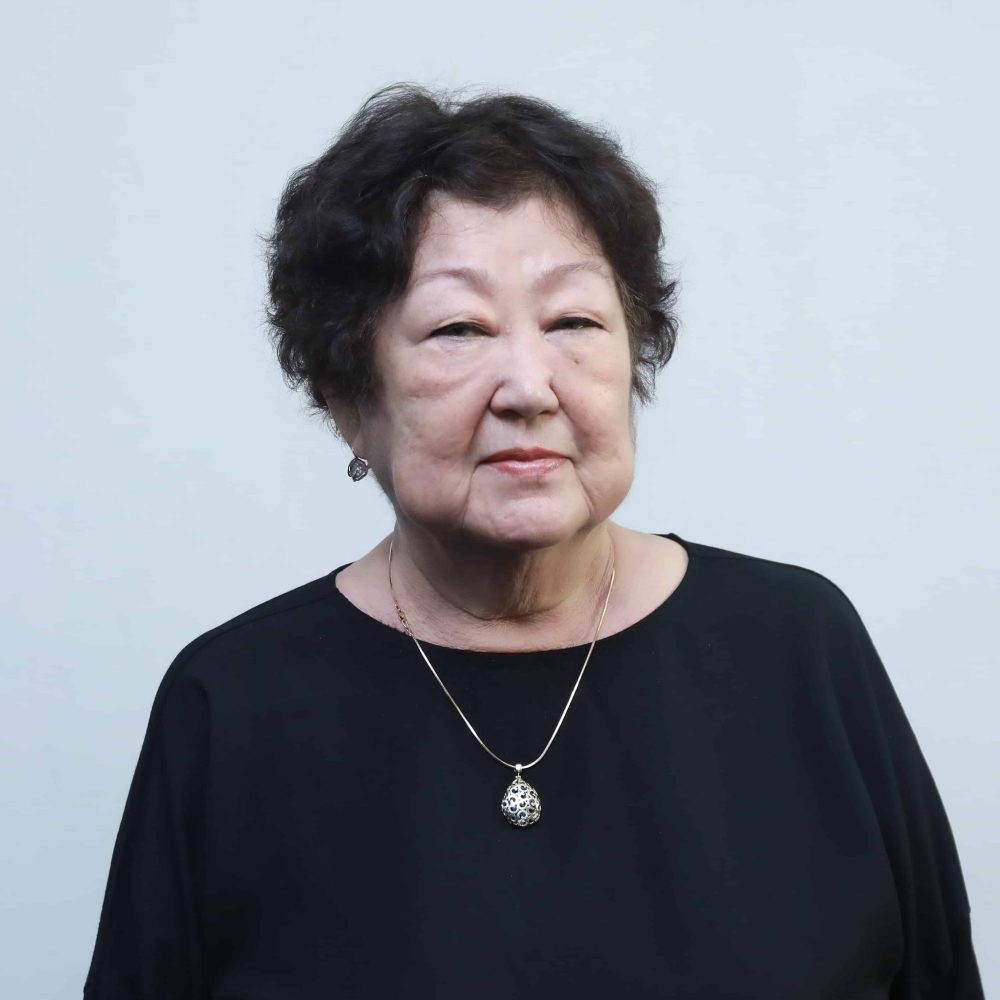
Tsyganov Anatoly Pavlovich
Associate Professor
Beisembayeva Roza Seydakhmetovna
Professor

Abdugalieva Gulzhan Yusuphanovna
Professor

Dakieva Kulzipa Zhusupovna
Professor

Bakin Serik Askarovich
Senior Lecturer
Garmashova Svetlana Anatolyevna
Associate Professor

Zhaznaeva Zhanat Kadyrbekovna
Senior Lecturer

Pavlenko Anatoly Vladimirovich
Senior Lecturer
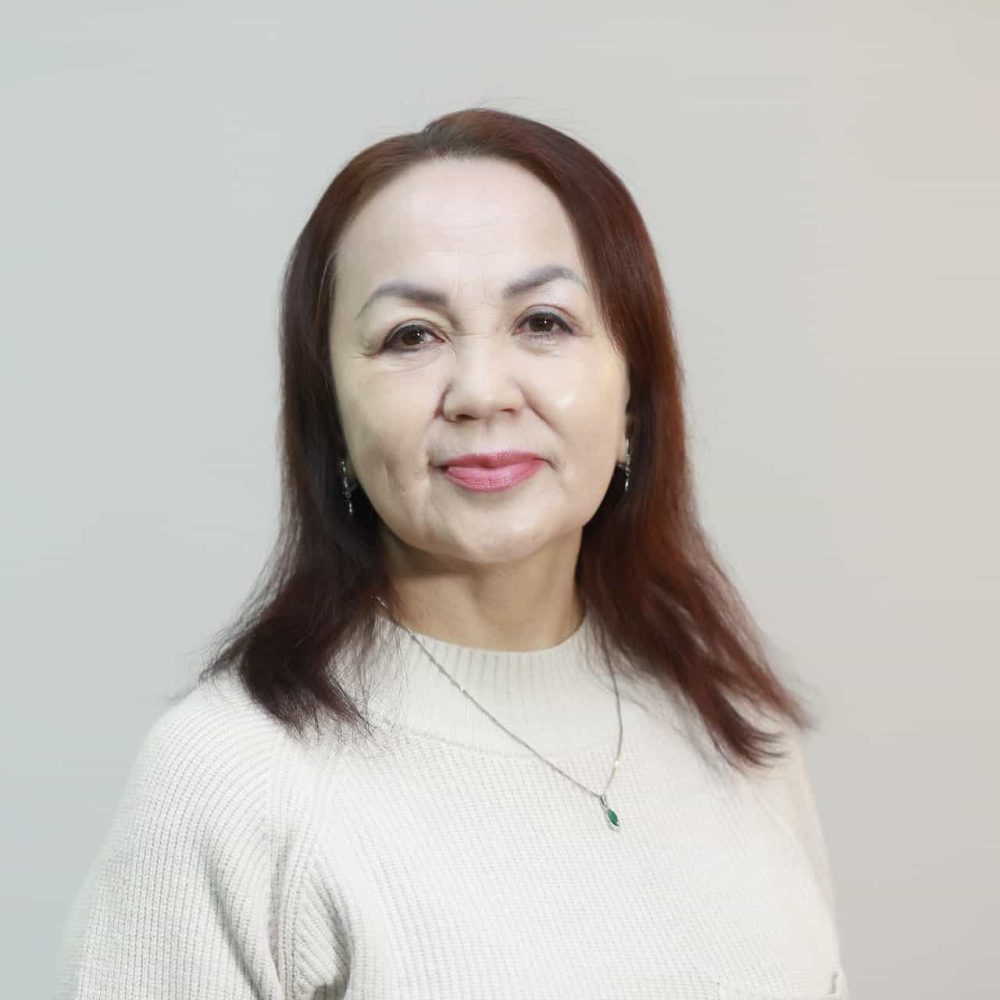
Bayzhumanova Leila Toleubaevna
Senior Lecturer
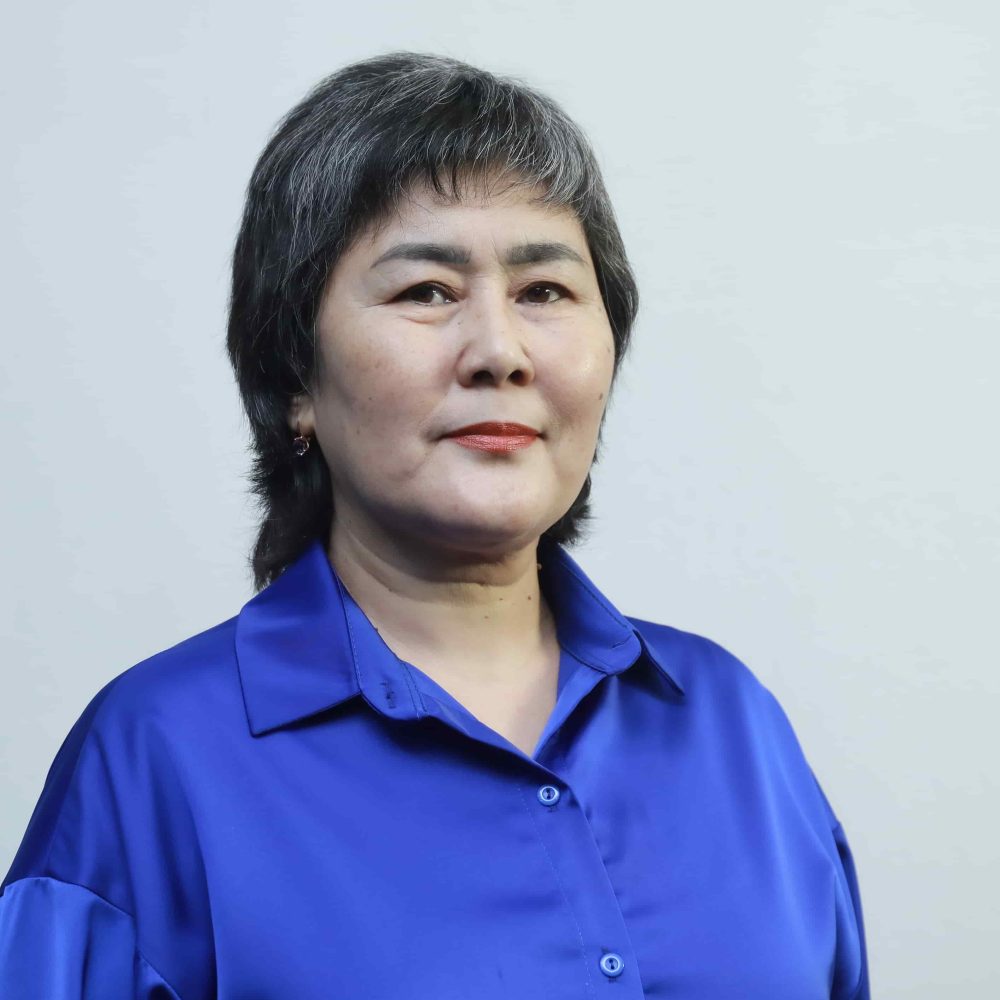
Abzeleeva Kamila Aukenovna
Senior Lecturer

Kabdrakhmanova Nazim Kabdrakhmanovna
Senior Lecturer

Nurasylov Aikyn Kenzhalovich
Lecturer

Kaisarova Asel Sayalinovna
Senior Lecturer

Kalelova Gulfat Zhanbolatovna
Senior Lecturer

Sabyrbaeva Botagoz Talgatbekovna
Senior Lecturer

Salykbaeva Galiya Manapovna
Senior Lecturer
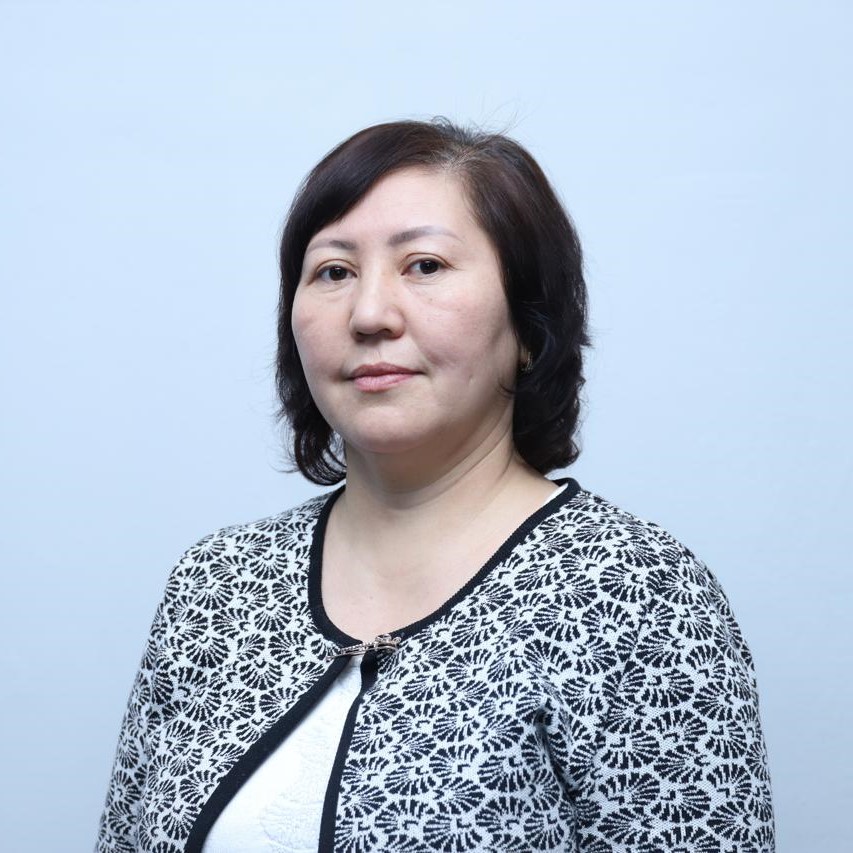
Orsarinova Asem Oraldinovna
Senior Lecturer

Rakhisheva Marzhan Dulatkyzy
Lecturer

Seitzhan Didar
Lecturer

Daukenova Bibigul Serikovna
Lecturer

Amangeldy Nazerke
Lecturer