
Polymer Composite Materials Laboratories

Akatan Kydyrmolla
Head of the National Scientific Laboratory for Collective Use (NSLCU), Doctor of Philosophy (PhD) in Specialty 6D060600 – Chemistry
- E-mail: ahnur.hj@mail.ru, kidirmolla@gmail.com
- Scopus Author ID: 57199328952
- Web of Science ResearcherID: R-8274-2019
- ORCID
- SCOPUS.COM
- SCHOLAR.GOOGLE
Main areas of activity and research interests
- Polymer chemistry
- Nanocatalysts
- NMR spectroscopy
- Polymer composite materials
- Carbon materials
- Nanomaterials
- Biopolymer-based composite materials
- Composite materials based on graphene oxide / biopolymers, including graphene oxide modified with metal nanoparticles
List of scientific and innovative developments
- Development and creation of a pilot commercial prototype of a damless mini hydropower plant under regional conditions;
- Production of high-voltage porcelain ceramics;
- Development of ceramic composite materials for the membrane–electrode assembly of a solid oxide fuel cell (SOFC);
- Development of ceramic filters based on SiC and other ceramic materials;
- Persistent organic pollutants: analysis and development of disposal methods;
- Development of nanocomposite sorbents based on biopolymers for wastewater treatment from metal ions;
- Development of nanocomposite membranes for water purification based on carbon materials with a modified surface;
- Development of a biodegradable soil “conditioner” based on natural polymers to retain moisture in agricultural land;
- Development of polymer composite membranes based on graphene oxide–like materials from carbon structures;
- Introduction of Jerusalem artichoke into agricultural production and development of biotechnological methods in seed production;
- Biotechnological methods for improving the health of elite heterotic sunflower hybrids;
- Original and elite seed production of potatoes;
- Development of microclonal propagation methods for strawberry to produce disease-free planting material.
Key publications and patents of staff members
- Igor V. Karpov, Leonid Yu. Fedorov, Evgeniya A. Slyusareva, Alexander V. Pavlov, Alexey I. Lyamkin, Almira M. Zhilkashinova. Impedance Characteristics and Phase-dependent Conductivity of ZrO2−x Nanopowders Produced by Vacuum-arc Synthesis. Journal of Siberian Federal University. Mathematics & Physics 2026, 19(1), 35–49.
- Beisebekov, M., Kabdrakhmanova, S., Kantay, N., Kadiran, A., Nauryzova, S., Shaimardan, E., ... & Tulegen, S. (2025). Comparative Study of a New Sodium-Bentonite Clay for Use in the Pharmaceutical Industry. ES Materials and Manufacturing. ES Materials and Manufacturing, 2025, 30, 1954. DOI:10.30919/mm1954
- Abilev, M.; Yerbolat, D.; Skakov, M.; Zhilkashinova, A.; Pavlov, A.; Karpov, I. Influence of Y2O3 Content and Sintering Temperature on Microstructure and Mechanical Properties of YSZ Ceramics. Crystals 2025, 15, 1002. https://doi.org/10.3390/cryst15111002.
- hilkashinova, A.; Ocheredko, I.; Abilev, M. Improving the Torque of a Paddle Mini-Hydropower Plant Through Geometric Parameter Optimization and the Use of a Current Amplifier. Designs 2025, 9, 105. https://doi.org/10.3390/designs9050105
- Abilev, M.; Zhilkashinova, A.; Łatka, L.; Pavlov, A.; Karpov, I.; Fedorov, L.; Gert, S. Effect of Kr15+ Ion Irradiation on the Structure and Properties of PSZ Ceramics. Ceramics 2025, 8, 95. https://doi.org/10.3390/ceramics8030095
- Battalova, A., Kabdrakhmanova, S., Akatan, K., Shaimardan, E., Beisebekov, M., Karzhaubayeva, A., ... & Thomas, S. Synthesis and Application of Biodegradable Cellulose Hydrogels From Sunflower Husks as a Water‐Retaining Material in Agriculture. Journal of Polymer Science, 2025, 63(24), 5402-5413.
- Prokhorenkova, N.; Zhilkashinova, A.; Abilev, M.; Łatka, L.; Ocheredko, I.; Zhilkashinova, A. Phase Composition, Structure, and Microwave Absorption of Magnetron-Sputtered Co–C–Cr Multilayer Films. Compounds 2025, 5, 27. https://doi.org/10.3390/compounds5030027
- Alyona Russakova, Almira Zhilkashinova, Madi Abilev, Alexandr Pavlov, Assel Zhilkashinova, Darya Alontseva. Structural-Phase State of Austenitic 20GL Steel After Thermal Treatment by Normalising and High-Temperature Tempering. ohnson Matthey Technol. Rev., 2025, 69, (2), 283–298.
- Abilev, M., Yerbolat, D., Skakov, M. et al. Structure and Properties of Composite 6YSZ-Al2O3-HfO2 Ceramics Depending on the Sintering Mode. J. of Materi Eng and Perform 34, 12247–12255 (2025). https://doi.org/10.1007/s11665-024-09992-5
- L. Yu. Fedorov, I. V. Karpov, A. V. Pavlov, A. M. Zhilkashinova, A. I. Lyamkin, “Probe microscopy of resistive switching in nanocrystalline copper oxide (CuxO)”, Zhurnal Tekhnicheskoi Fiziki, 95:10 (2025), 1898–1905
- Battalova, A., Akatan, K., Kabdrakhmanova, S., Ibraeva, Z., Madiar, B., Esbol, S., ... & Thomas, S. Isolation of cellulose nanofibers from sunflower seed husks via formic acid hydrolysis. Journal of Polymer Science, 2025, 63(24), 5392-5401.
- Skakov, M., Akatan, K., Kaiyrbekov, N., Aidana, I., Kabdrakhmanova, S., Zhilkashinova, A., & Zhanbolatova, G. Microporous aerogel based on microcrystalline cellulose as a sorbent for use as a gas capacitor. Cellulose, 2025. 1-14.
- Bolatkan, D. K., Kerimkulova, A. Z., Beisebekov, M. M., Akatan, K., Kantay, N., Shaimardan, E., ... & Kabdrakhmanova, S. K.. Quantitive assessment of the use of Kazakhstan montmorillonite clays as sorbent carriers for pharmaceutical substances. Physical Sciences & Technology, 2025, 12. 12(1-2), 121–133. https://doi.org/10.26577/phst202512112
- Akatan, K., Kaiyrbekov, N., Demeukhan, A., Battalova, A., Shaimardan, E., Beisebekov, M., & Kabdrakhmanova, S. Synthesis of Cellulose based Hydrogel with High Absorption Capacity. International Journal of Biology & Chemistry, 2025, 18 (1):150-58. https://doi.org/10.26577/IJBCh202518115.
- Battalova, A., Ibraeva, Z., Kabdrakhmanova, S., Akatan, K., Shaimardan, E., Demeukhan, A., & Maussumbayeva, A. Comparative characteristics of microcrystalline cellulose obtained from the rice waste production of Kazakhstan. Chemical Bulletin of Kazakh National University, 2024, 113(4), 14-23.
- Zhilkashinova, A.; Ocheredko, I.; Azamatov, B.; Nurbaev, M.; Dogadkin, D.; Abilev, M. Modeling and Comparison of Design Features of Pendulum and Radial Micro-Hydropower Plants Considering the Influence of Variable Design Parameters. Designs 2024, 8, 101. https://doi.org/10.3390/designs8050101
- Kabdrakhmanova, S., Skakov, M., Shaimardan, E., Akatan, K., Zhilkashinova, A., Beisebekov, M., ... & Zhanbolatova, G. Electrocatalyst For Solid Oxide Fuel Cells Operating at Intermediate Temperatures. International Journal of Nanoscience and Nanotechnology, 2024, 20(4), 285-294.
- Kuanyshbekov, T., Akatan, K., Guseinov, N., Nemkaeva, R., Kurbanova, B., Tolepov, Z., ... & Zhilkashinova, A. Renewable Resources as Promising Materials for Obtaining Graphene Oxide-like Structures. Nanomaterials, 2024, 14(19), 1588.
- Abilev, M., Yerbolat, D., Skakov, M., Zhilkashinova, A., Pavlov, A., Kantay, N., Gert, S., Zhilkashinova, A., & Łatka, L. (2024). Study of the structural and phase state of ceramics synthesized from 6YSZ - Al2O3 – HfO2 by semi–dry pressing followed by sintering in vacuum. Chemical Bulletin of Kazakh National University, 112(3), 12-21. https://doi.org/https://doi.org/10.15328/cb1375
- Akatan, K., Battalova, A., Sagiyeva, N., Kabdrakhmanova, S., Kaiyrbekov, N., Tursyngazykyzy, A., & Kampitova, G. Oxidized starch/CMC based biofilm: Synthesis and characterization. Physical Sciences and Technology, 2024, 11(1-2). https://doi.org/10.26577/phst2024v11i1a7
- Prokhorenkova, N.; Zhilkashinova, A.; Abilev, M.; Ocheredko, I.; Pavlov, A.; Mussabekova, A.; Kuanyshbekov, T.; Zhilkashinova, A. Structure and Mechanical Properties of Microwave-Absorbing Co-C Coatings Obtained by Magnetron Sputtering. Coatings, 2024, 14, 1234. https://doi.org/10.3390/coatings14101234
- Almasov, N., Kurbanova, B., Kuanyshbekov, T., Akatan, K., Kabdrakhmanova, S., & Aimaganbetov, K. Study of the structure and electrical properties of graphene oxide (GO) and graphene oxide+ nanocellulose (GO+ NC). Kompleksnoe Ispolzovanie Mineralnogo Syra= Complex use of mineral resources, 2024, 329(2), 103-109.
- Almasov, N., Kurbanova, B., Kuanyshbekov, T., Akatan, K., Kabdrakhmanova, S., & Aimaganbetov, K. Study of the structure and electrical properties of graphene oxide (GO) and graphene oxide+ nanocellulose (GO+ NC). Kompleksnoe Ispolzovanie Mineralnogo Syra= Complex use of mineral resources, 2024, 329(2), 103-109.
- Kuanyshbekov, T., Guseinov, N., Tolepov, Z., Kurbanova, B., Tulegenova, M., Akatan, K., ... & Zhasasynov, E. Thermally Reduced Graphene Oxide Membranes From Local Kazakhstan Graphite “Ognevsky”. ChemistrySelect, 2023, 8(42), e202301746.
- Pavlov, A.; Sagdoldina, Z.; Zhilkashinova, A.; Magazov, N.; Turar, Z.; Gert, S. Synthesis and Investigation of Properties of Beryllium Ceramics Modified with Titanium Dioxide Nanoparticles. Materials 2023, 16, 6507. https://doi.org/10.3390/ma16196507
- Kabdrakhmanova, S. K., Kabdrakhmanova, A. K., Shaimardan, E., Akatan, K., Beisebekov, M. M., Selenova, B. S., ... & Seilkhanov, T. M. Growth stimulating and fungicidal properties of succinic acid complexes with silver, copper and boron ions during pre-sowing treatment of soybean seeds. Engineered Science, 2023, 26, 973.
- Kabdrakhmanova, S., Joshy, K. S., Sathian, A., Aryp, K., Akatan, K., Shaimardan, E., ... & Thomas, S. Anti-bacterial activity of Kalzhat clay functionalized with Ag and Cu nanoparticles. Engineered Science, (2023), 26(2), 972.
- Skakov, M. K., Kabdrakhmanova, S. K., Akatan, K., Zhilkashinova, A. M., Shaimardan, E., Beisebekov, M. M., ... & Mukhamedova, N. M.. La2CuO4 electrode material for low temperature solid oxide fuel cells. ES Mater Manuf. 2023, 22: 969.
- Kuanyshbekov, T., Sagdollin, Z., Zhasasynov, E., Akatan, K., Kurbanova, B., Guseinov, N., ... & Beisebekov, M.). Composite membrane based on graphene oxide and carboxymethylcellulose from local Kazakh raw materials for possible applications in electronic devices. Journal of Composites Science, 2023, (8), 342.
- Kabdrakhmanova, S., Kabdrakhmanova, A., Shaimardan, E., Akatan, K., Beisebekov, M., Hryhorchuk, N., ... & Thomas, S. (2023). Fungicidal and Stimulating Effects of Heteroleptic Copper Complex on the Germination and Phytosafety of Plants. Journal of Composites Science, 7(8), 308.
- Battalova, A. K., Kabdrakhmanova, S. K., Akatan, K., Beisebekov, M. M., Kantay, N., Ibraeva, Z. E., ... & Merck, L. Features of microcrystalline cellulose produced from sunflower seeds of different oil content. International Journal of Biology and Chemistry, 2023, 16(1), 78-86.
- Zhambakin, D.; Zhilkashinova, A.; Abilev, M.; Łatka, L.; Pavlov, A.; Tuyakbaev, B.; Zhilkashinova, A. Structure and Properties of Spark Plasma Sintered SiC Ceramics with Oxide Additives. Crystals 2023, 13, 1103. https://doi.org/10.3390/cryst13071103
- Kabdrakhmanova, S., Kaiyrbekov, N., Akatan, K., Shaimardan, E., Kabdrakhmanova, A., Beisebekov, M., ... & Imangazinova, Z. Synthesis, characterization and biological studies of coordination compounds of silver complex of succinic acid. Materials Today: Proceedings. 2023, https://doi.org/10.1016/j.matpr.2023.04.342.
- Kabdrakhmanova, S.; Kabdrakhmanova, A.; Shaimardan, E.; Akatan, K.; Beisebekov, M.; Hryhorchuk, N.; Selenova, B.S.; Joshy, K.S.; Thomas, S. Fungicidal and Stimulating Effects of Heteroleptic Copper Complex on the Germination and Phytosafety of Plants. J. Compos. Sci. 2023, 7, 308. https://doi.org/10.3390/jcs7080308
- Kadyroldina, A., Alontseva, D., Voinarovych, S., ...Zhilkashinova, A., Burburska, S. Microplasma spraying of hydroxyapatite coatings on additive manufacturing titanium implants with trabecular structures Materials Science- Poland, 2022, 40(4), pp. 28–42
- Abilev, M., Zhilkashinova, A., Pavlov, A., Zhambakin, D., Tuyakbayev, B. Structural-Phase State and Properties of SiC Ceramics Obtained by Ultrasound-Assisted Liquid-Phase Sintering with Eutectic Additives Siliconthis link is disabled, 2023
- Russakova, A., Zhilkashinova, A., Alontseva, D., ...Khozhanov, A., Zhilkashinova, A. Effect of the Dislocation Substructure Parameters of Hadfield Steel on Its Strain Hardening Materialsthis link is disabled, 2023, 16(4), 1717
- Kydyrmolla Akatan, Sana Kabdrakhmanova, Tilek Kuanyshbekov, Ainur Battalova, Zhanar Ibraeva, K. S. Joshy, Sabu Thomas. Highly-efficient isolation of microcrystalline cellulose and nanocellulose from sunflower seed waste via environmentally benign method. Cellulose, 2022, 29(7), pp. 3787–3802.
- Zhilkashinova, A., Abilev, M., Ocheredko, I., ...Nurbayev, M., Azamatov, B. Mini-Hydropower Plant Based on Lenyov Hydrobelt and Volume-Sectional Hydraulic Engine Processes, 2022, 10(2), 368
- Kabdrakhmanova, S., Shaimardan, E., Akatan, K., ...Erbolatuly, D., Skakov, M. Preparation and Characterization of the Catalyst Based on the Copper Nanoparticles International Journal of Nanoscience and Nanotechnology, 2022, 18(1), pp. 1–10
- Skakov, M., Zhilkashinova, A., Zhilkashinova, A., ...Agelmenev, M., Ismailova, A. Effect of Heat Treatment on the Structural-Phase State and Properties of a Multilayer Co-Cr-Al-Y Coating Crystalsthis link is disabled, 2022, 12(8), 1056
- Akatan K., Kabdrakhmanova S., Rakhadilov B., Abilev M. Effect of Electron Beam on Physico-Chemical Properties of PA6 Polyamide. Journal of Chemical Technology and Metallurgy, 2021, 56(3), стр. 511–515 ISSN: 13147471.
- Akatan K., Kabdrakhmanova S.K., Abilev M. B. ,Ibraeva Zh. E., Nurgamit K., Bukunova A. S., Imasheva A. A. Effect of the mechanical treatment on structural features of cellulose obtained from Cannabis ruderalis Janisch. Oxidation Communications, 2021, 44(1), стр. 231–242 ISSN: 0209-4541.
- Zhilkashinova A.M., Alontseva D.L., Krasavin A.L., Abilev M.B. Microplasma deposition of biocompatible coatings using an intelligent robotic system for plasma processing Acta Physica Polonica A. – 2019. – 136(2). – P. 310-313 Процентиль 32, IF 0,579 (Q4)
- Zhilkashinova A.M., Abilev M., Zhilkashinova A. Microplasma-sprayed V2O5/C double-layer coating for the parts of mini-hydropower systems Coatings. – 2020. – 10. – 725,
- Zhilkashinova, A., Abilev, M., Pavlov, A., ...Gradoboev, A., Zhilkashinova, A. Ion-plasma spraying and electron-beam treatment of composite cr-al-co-zro2-y2 o3 coating on the surface of ni-cr alloy Coatings, 2021, 11(3), 321
- Zhilkashinova, A., Skakov, M., Abilev, M., Yerbolatuly, D. Effect of Alloying Elements on the Structural Phase State of Hadfield Steel Journal of Materials in Civil Engineeringthis link is disabled, 2021, 33(11), 04021324
- Rakhadilov B.K., Akatan K., Maulet M., Kabdrakhmanova S.K., MagazovN.M. Study on the influence of electron beam on the physicochemical properties of polyamide 6. Eurasian Physical Technical Journal, 2021, 18(2), стр. 35–39 DOI:10.31489/2021no2/35-39. ISSN: 1811-1165.
- Kuanyshbekov Т. K., Akаtаn K., Kabdrakhmanova S.K., Nemkaeva R., Aitzhanov M., Imasheva A., Kаirаtuly Е. Synthesis of graphene oxide from graphite by the Hummers method. Oxidation Communications 44, No 2, 356–365 (2021) ISSN: 0209-4541.
- Tulegenova, M.; Ilyin, A.; Guseinov, N.; Beall, G.; Kuanyshbekov, T. Computer simulation of the effect of structural defects on the effectiveness of the graphene's protective properties. J. Computational and Theoretical Nanoscience. – 2019. – Vol. 16, Issue 2. – P. 351–354 DOI:10.1166/jctn.2019.8020ISSN: 15461963 15461955
- Ilyin, A.M.; Guseinov, N.R.; Kuanyshbekov, T.K.; Beall, G.W.; Tulegenova, M.A. Computer Simulation and First Principles Study of Ga-Doped Graphene Nanostructures J. Of Computational And Theoretical Nanoscience 2019. –16(1), Р. 39-41. DOI: 10.1166/jctn.2019.7693 ISSN: 15461963 15461955
- Kuanyshbekov Т. K. Akаtаn K. Kabdrakhmanova S.K. Nemkaeva R. Aitzhanov M. Imasheva A. Kаirаtuly Е. Synthesis of graphene oxide from graphite by the hummers method. Oxidation Communications 44, No 2, 356–365 (2021) ISSN: 0209-4541
- Zhilkashinova, A., Abilev, M., Ocheredko, I., Tuyakbayev, B., Nurbayev, M., & Azamatov, B. Mini-hydropower plant based on lenyov hydrobelt and volume-sectional hydraulic engine. Processes, 2022, 10(2) doi:10.3390/pr10020368
- N.KantayB. Rakhadilov, Sh. Kurbanbekov, D. Yeskermessov, G. Yerbolatova, A. ApsezhanovaInfluence of Detonation-Spraying Parameters on the Phase Composition and Tribological Properties of Al2O3 Coatings Coatings. – 2021, Vol.11(7). – P. 793.
- N.KantayB. Rakhadilov, Zh. Sagdoldina, D. Erbolatuly, G. Bektasova, M. Paszkowski Experimental investigations of Al2O3 - and ZrO2-based coatings deposited by detonation spraying Materials Research Express. – 2021, Vol. 8(5). – P. 056402.
- Nurgamit Kantay, Nurdek Kasmamytov, Bauyrzhan Rakhadilov, Sergey Plotnikov, Maciej Paszkowski, Sherzod Kurbanbekov Influence of temperature on structural-phase changes and physical properties of ceramics on the basis of aluminum oxide and silicon//Material testing 2020
- Kantai N. Skakov M. Yerbolatova G. Scheffler M. Investigation of the Influence of Electrolytic-Plasma Processing on Structural-Phase State and Mechanical Properties of the 40CrNiAl Alloy 2014 International Conference on Frontiers of Energy, Materials and Information Engineering (ICFEMI 2014) will be held in Hong Kong, August, 21-22, 2014 (Applied Mechanics and Materials) S.67-70
- Akatan K., Kabdisalim K., Kabdrakhmanova A., Mauletkhan M., Ukibaev Zh., Khabyev A., Kabdrakhmanova S., Synthesis of Polymer-Protected Nanoparticles of Coper on Oxide-Carbon Carrier // Journal of Applied science and advanced materials international. – 2015. –Vol.1. – P.113-117.
- Sana K. Kabdrakhmanova, Esbol Shaimardan, Kydyrmolla Akatan, Ainur K. Kabdrakhmanova, Madi B. Abilev N. Kantai Characteristics and antibacterial activity of polymeric films based on starch and polyvinyl alcohol// Journal of Chemical Technology and Metallurgy, January 2018
- Amanzhol Turlybekuly, Alexander Pogrebnjaka, Sergey Plotnikov, Zhasulan Shaimardanovb, Botagoz Shaimardanova, Nazgul Yerdybayeva, Syrym Zhanyssov, Aleksandr Miakinin, Ruslan Kimossov, Nurgamit Qantay Bio-functional composite coating of calcium apatite and zno on a printed porous orthopedic implant METAL 20186 27th International conference on Metallurgy and Materials May 23-25th 2018, Brno, Crech Republic
- K. NURGAMIT, K. AKATAN, S. K. KABDRAKHMANOVA, M. B. ABILEV, ZH. E. IBRAEVA, A. S. BAKANOVA, A. A. IMASHEVA EFFECT OF THE MECHANICAL TREATMENT ON STRUCTURAL FEATURES OF CELLULOSE OBTAINED FROM Cannabis ruderalis JANISCH // Oxidation Communications 44, No 1, 231–242 (2021)
- Sukhodub L.F., Pogrebnjak A.D., Sukhodub L.B., Sagidugumar A.; Kistaubaeva A.S., Savitskaya I.S., Talipova A., Sadibekov A., Kantay N.,Akatan K.,Turlybekuly ATurlybekuly A.Antibacterial and physical characteristics of silver-loaded hydroxyapatite/alginate composites//Functional Composites and StructuresТом 3, Выпуск 4December 2021 Номер статьи 045010
- N. Kantay, B.K. Rakhadilov, D.N. Kakimzhanov, G. Botabaeva, D.B. Buitkenov, L.B. Bayatanova Changes in the structure and properties of ZrO2 detonation coatings during annealing // Eurasian Journal of Physics and Functional Materials. – 2020, Vol.4(4). – С. 319-326.
- Zhilkashinova, Madi Abilev, Igor Ocheredko, Baurzhan Tuyakbayev, Mergen Nurbayev, Bagdat Azamatov. Mini‐Hydropower Plant Based on Lenyov Hydrobelt and Volume‐Sectional Hydraulic Engine Processes 2022, 10, 368. https://doi.org/10.3390/pr10020368 Almira
- Abilev, M., Zhilkashinova, A., Pavlov, A., Zhambakin, D., Tuyakbayev, B. Structural-Phase State and Properties of SiC Ceramics Obtained by Ultrasound-Assisted Liquid-Phase Sintering with Eutectic Additives Silicon, 2023
- Zhilkashinova A.M., Yeleussizova A.A., Skakov M.K., Rofman O.V. Deformation twinning in hadfield steel. Advanced Materials Research. – 2013. – 772. – P. 62-67
- Zhilkashinova A.M., Skakov M., Kurbanbekov S. Research of electrolytic-plasma carbonitriding and nitriding influence on phase composition of the stainless steel Applied Mechanics and Materials. – 2013. – 404. – P. 40-43
- Zhilkashinova A.M., Kabdrakhmanova S.K., Troyeglazova A.V., Abilev M.B. Structure and properties of metallurgical-grade silicon. Silicon. – 2018. – Vol. 10, Issue 5. – P. 2201-2210 Процентиль 52, IF 1,499 (Q4)
- Kuanyshbekov, T.K., Ilyin A.M., Beall G.W., Guseinov N.R. Creation of a Humidity Sensor Based on Functionalized Graphene Nanostructures. Proceedings Paper Sensors & Transducers. – 2019. – Vol. 229, – № 1. – P. 39-46.
- Akatan K. Kabdrakhmanova S. Kuanyshbekov T. Ibraeva Zh. Battalova A. Joshy K. S. Sabu Thomas Highly-efficient isolation of microcrystalline cellulose and nanocellulose from sunflower seed waste via environmentally benign method Cellulose (2022). https://doi.org/10.1007/s10570-022-04527-4, ISSN: 0969-0239 ISSN: 0969-0239
- N.Kantay, B.K. Rakhadilov, M. Paszkowski, B.Tuyakbayev, Sh. Kurbanbekov, A. Nabioldina Research of annealing influence on the hardness of detonation coatings from aluminum oxide Bulletin of the University of Karaganda-Physics. – 2021. – №2(102). – р.6-13, Karaganda.
- N.Kantay B.К. Rakhadilov, D.N. Kakimzhanov, P. Kowalewski, R.S. Kozhanova Research of annealing influence on the hardness of detonation coatings from zirconium dioxide Bulletin of the University of Karaganda-Physics. – 2020. – №2(98). – рр.75-82, Karaganda.
- N.Kantay B.K. Rakhadilov, D.N. Kakimzhanov, G. Botabaeva, D.B. BuitkenovL.B. Bayatanova Changes in the structure and properties of ZrO2 detonation coatings during annealing Eurasian Journal of Physics and Functional Materials. – 2020, Vol.4(4). – С. 319-326.
- N.Kantay, B. Rakhadilov, Sh. Kurbanbekov, D. Yeskermessov, G. Yerbolatova, A. Apsezhanova Influence of Detonation-Spraying Parameters on the Phase Composition and Tribological Properties of Al2O3 Coatings Coatings. – 2021, Vol.11(7). – P. 793.
- N.Kantay, B. Rakhadilov, Zh. Sagdoldina, D. Erbolatuly, G. Bektasova, M. Paszkowski Experimental investigations of Al2O3 - and ZrO2-based coatings deposited by detonation spraying Materials Research Express. – 2021, Vol. 8(5). – P. 056402.
- Sagidugumar, A. N., Turlybekuly A ,Dogadkin D, Pogrebnjak, A. D., Kantai N , Sadibekova A Phase transformations during the doping of zinc chloride and silver nitrate into calcium phosphates // Bulletin of the University of Karaganda-Physics. Vol 2, 2022, PP. 18-23
- Sukhodub L.F., Pogrebnjak A.D., Sukhodub L.B., Sagidugumar A.; Kistaubaeva A.S., Savitskaya I.S., Talipova A., Sadibekov A., Kantay N.,Akatan K.,Turlybekuly A Turlybekuly A.Antibacterial and physical characteristics of silver-loaded hydroxyapatite/alginate composites//Functional Composites and StructuresТом 3, Выпуск 4December 2021 Номер статьи 045010
- Nurgamit Kantay, Nurdek Kasmamytov, Bauyrzhan Rakhadilov, Sergey Plotnikov, Maciej Paszkowski, Sherzod Kurbanbekov Influence of temperature on structural-phase changes and physical properties of ceramics on the basis of aluminum oxide and silicon//Material testing 2020
- Zhilkashinova A.M., Alontseva D.L., Abilev M.B., Voinarovych S.G., Kyslytsia O.N., Ghassemieh E., Russakova A., Latka L. Optimization of hydroxyapatite synthesis and microplasma spraying of porous coatings onto titanium implants Advances in materials science. – 2018. – Vol. 18, Issue 3. – P. 79-94
- Жасасынов, Е., Қуанышбеков, Т., Сагдоллин, Ж., Ақатан, К., Тулегенова, М., & Төлепов, Ж. ПОЛУЧЕНИЕ ОКСИДА ГРАФЕНА (ГО) ИЗ АКТИВИРОВАННОГО УГЛЯ МЕТОДОМ ХАММЕРСА И ЕГО ИЗУЧЕНИЕ. Вестник Казахстанско-Британского технического университета, 2024б 21(2), 217-228.
- Шаймардан, Е., Кабдрахманова, С. К., Бейсебеков, М. М., Селенова, Б. С., Кантай, Н., Акатан, K., ... & Сагдоллин, Ж. (2023). ВЛИЯНИЕ ЖИДКОФАЗНОГО ОКИСЛЕНИЯ АКТИВИРОВАННОГО УГЛЯ МАРКИ «БАУ-А» СОЛЯНОЙ КИСЛОТОЙ НА ЕГО ПОВЕРХНОСТНУЮ СТРУКТУРУ. Вестник НЯЦ РК, (3), 96-102.
- А. В. ПАВЛОВ, Л. И. КВЕГЛИС, Д. Н. САПРЫКИН, Р. Т. НАСИБУЛЛИН, A. A. KАЛИТОВА, Д. А. ВЕЛИКАНОВ, И. В. НЕМЦЕВ, Н. KАНТАЙ Появление ферромагнетизма в наночастицах керамики со структурой перовскита BeTiO3 // ФУНКЦИОНАЛЬНЫЕ МАТЕРИАЛЫ «МАТЕРИАЛОВЕДЕНИЕ» № 5, 2020 C.15-20
- Қ. Ақатан, Қабдрахманова С.Қ., Абилев М.Б., С.Е. Ж.Е. Ибраева, Құдайбергенов, С.Қ. Қабдрахманова, А.А. Имашева. Майлы дақыл қалдығынан целлюлоза алу жағдайын, морфологиясын және қасиетін зерттеу. Вестник НЯЦ РК,выпуск 1, март 2020, 35-40б.
- Куанышбеков Т.К. Тулегенова М.А., Гусейнов Н.Р. Термическое восстановление оксида графена в водородной атмосфере. ВЕСТНИК КазНИТУ имени К.И. Сатпаева, Серия техническая. – 2017. – № 3(123). – С. 331-336. ISSN 2709-4766 (Online) ISSN 2709-4758 (Print)
- Kuanyshbekov T.K. Tulegenova М.А., Baigarinova G.A., Guseinov N.R., Ilyin A.M.. Investigation of temperature influence on the process of reduction of graphene oxide VESTNIK KazNU. – 2017. – Vol. 2, № 61. – P. 18-23.
- Куанышбеков Т.К. Тулегенова М.А., Гусейнов Н.Р., Озюлмаз Б., Ильин А.М.. Изучение стабильности датчика влажности на основе оксида графена ВЕСТНИК КазНИТУ им. К.Сатпаева. – 2017. – Vol. 124, № 6. – P. 210-213. ISSN 2709-4766 (Online)ISSN 2709-4758 (Print)
- Куанышбеков Т.К. Тулегенова М.А., Гусейнов Н.Р., Beall G.W., Ильин А.М. Получение графена диффузией графита ВЕСТНИК КазНИТУ имени К.И. Сатпаева, Серия техническая. – 2018, – Vol. 127, № 3. – P. 152-158. ISSN 2709-4766 (Online) ISSN 2709-4758 (Print)
- Каюкова Л.А.б Байтурсынова Г.П. Кабдрахманова С.К., Героникаки А., Пралиев К.Д., Акатан К., Шаймардан Е., Кайнарбаева Ж.Н. Тозилаты β-аминопропиоамидоксимов в условиях отщепления уходящей группы. Химический журнал Казахстана №4(56) октябрь-декабрь 2016. - С. 328-334.
- Т.Қ. Қуанышбеков, Н.Р. Гусейнов, А.М. Ильин. Защита поверхности меди от температурной коррозии с помощью малослойных графеновых наноструктур. Журнал «Вестник КазНИТУ», Технические науки, №2(126), 2018, Стр. 262-267. ISSN 2709-4766 (Online) ISSN 2709-4758 (Print)
- Beall, G.W.; Kuanyshbekov, T.K.; Tulegenova, М.А.. Graphene produced by carbon diffusion through nickel foil. Physical Sciences and Technology, [S.l.], v. 5, n. 3-4, p. 37-42, jan. 2019. ISSN 2409-6121. DOI: https://doi.org/10.26577/phst-2018-2-156
- Т.Қ. Қуанышбеков Н.Р. Гусейнов, А.М. Ильин, Г. Билл,. Образование композита Ga-графен путем низкоэнергетического Ga+-ионного облучения. Вестник КазНИТУ. - № 2(132). – 2019. – Стр. 160-166. ISSN 2709-4766 (Online) ISSN 2709-4758 (Print)
- Akatan K. Kuanyshbekov T.K. Imasheva A.A. Battalova A.K. Abylkalykova R.B. Nasyrova A.K. Ibraeva Zh. E. Synthesis of nanocomposite material through modification of graphene oxide by nanocellulose. Chemical Bulletin of Kazakh National University 2021/9/18 №3 https://doi.org/https://doi.org/10.15328/cb1238 ISSN 1563-0331, eISSN 2312-7554
- Kaiyrbekov N. Akatan K. Kabdrakhmanova S. Kuanyshbekov T. Imasheva A. Battalova A. Modification of nanostarch by citric acid. Vol 8 No 1-2 (2021): Physical Sciences And Technology https://doi.org/10.26577/phst.2021.v8.i1.09.
- T. Kuanyshbekov, Zh. Sagdollin, E. Zhasasynov, N. Kaiyrbekov, K. Akatan, S. Kabdrakhmanova, N. Kantay, Zh. Tolepov, M. Tulegenova, M. Beisebekov. Synthesis of composite membrane based on graphene oxide and nanostarch. Вестник НЯЦ РК, выпуск 3, сентябрь 2022. – С. 94-98 https://doi.org/10.52676/1729-7885-2022-3-94-99
- Кантай Н. Ерболатулы Д. Абулхаиров Д. Тусупжанов А.Е. Муктанова Н. Влияние вакуумного напыления и отжига на структурно-фазовое состояние и свойстваповерхности сплава на основе Fe-Ni-Cr Вестник Казахстанской Национальной Академии Естественных Наук.- № 1/2015. – Астана, С. 48–50.
- Кантай Н. Мұратбеков Б.М. Тусупжанов А Е. Исследование эксплуатаци-онных характеристик и структурно-фазового состояния Fe-Ni-Co инвара Вестник КазНУ. Серия физическая. - №2 (57). - 2016.-с. 70-79
- Кантай Н. Азаматов Б.Н. Темирбеков Б.Б. Ерболатулы Д. Исследование свойств древесно-полимерного композита как перспективного Вестник ВКГТУ. - №2 - 2016.-с. 106-110
- Б.К. Рахадилов, М. Пашковский, Б. Туякбаев, Қ.С. Заманғалиев Детонационный метод нанесения покрытий Вестник Семипалатинского государственного университета им. Шакарима, №4(88). – 2019. – C.44-46, Семей.
- Кантай Н. Ерболатұлы Д. Буйткенов Д.Б. Тусупжанов А.Е. Исследование свойств полиуретана, модифицированного графитом и термообработанного с различной выдержкой Вестник КарГУ. Серия физика - №3 (83), 2016. – С.8-14.
- Кантай Н. Жилкашинова А.М., Байжан Д., Мұратбеков Б.М. 36НХТЮ қорытпа бетін газбен атқылап механикалық қасиетке əсерін зерттеу Вестник ВКГТУ №3 (77) сентябрь 2017 – С.110-116.
- Н. Кантай, Н.К. Касмамытов, А. Календеров Влияние температуры обжига на формирование структуры и свойств высоковольтной фарфоровой керамики на базе местного сырья Научный журнал Физика г. Бишкек Кыргызстан, 2018, №1 C.52-63;
- Қантай Н. А. Тұрлыбекұлы, С.В. Плотников, Б.Х. Шаймарданова, Н.К. Ердыбаева, Л.В. Шушкевич, Р.Н. Кимосов. Ақатан Қ., Шаймардан Е., Синтезирование микродисперсного гидроксиапатита кальция Вестник ВКГТУ №2, 2018г. 160-165
- Н.Кантай, Н.К.Касымамытов, Б.К.Рахадилов, М.Пошковский, Б.М.Муратбеков Жоғары температураның керамиканың физикалық және механикалық қасиеттеріне әсері ШҚМТУ Хабаршысы №3,2019ж. Б.108-113
- Д.Л. Алонцева, Н. Қантай, А.В. Русакова, С.С. Герт, А.В. Джес, А.Б. Садибеков Роботтандырылған микроплазмалық тозаңдау технологиясымен титан имплантанттарына биоүйлесімді жабындарды қаптау ШҚМТУ Хабаршысы №2,2019ж. Б.73-78
- Н.Қантай, Н.К. Касмамытов, Б.К. Рахадилов, С.В. Плотников Күйдіруден кейінгі керамиканың құрылым-фазалық алмасуын зерттеу Вестник НЯЦ РК 2019
- Kantay N., Rakhadilov B., Plotnikov S., Pashkovskyi M., Abilev M., Thermal resistant coating obtained from zirconium and aluminum oxides by detonation method Вестник НЯЦ РК №4, 2019, стр.104-108.
- T. Kuanyshbekov, Zh. Sagdollin, E. Zhasasynov, N. Kaiyrbekov, K. Akatan, S. Kabdrakhmanova, N. Kantay, Zh. Tolepov, M. Tulegenova, M. Beisebekov SYNTHESIS OF COMPOSITE MEMBRANE BASED ON GRAPHENE OXIDE AND NANOSTARCH Вестник НЯЦ РК ВЫПУСК 3(91), СЕНТЯБРЬ 2022 С. 94-99
- Жилкашинова А.М., Троеглазова А.В., Кабдрахманова С.К., Оспанова Ж. Оценивание показателей повторяемости при контроле качества резины марки СКИ-3. Вестник ЕНУ им. Л. Гумилева. – 2015. – 109(6). – С.10-14
- Жилкашинова А.М., Бутенко В.В., Троеглазова А.В., Аубакирова Р.А., Кабдрахманова С.К. Обзор титриметрических и фотометрических методов контроля теллура в образцах природного и техногенного происхождения. Вестник КазНПУ им. Абая. Серия «Естественно-географические науки». – 1(47), 2016. – С. 46-50.
- Жилкашинова А.М., Амренова А.А., Ахметжанов Б.К., Троеглазова А.В. Исследование микроструктуры и физико-механических свойств кремния после плазменно-дуговой обработки. Вестник КазНПУ. Серия «Физико-математические науки». - 2 (54). – 2016. – С. 94-102.
- Жилкашинова А.М., Алонцева Д.Л., Русакова А.В., Прохоренкова Н.В., Оразаметова С.М. Исследование пористости, шероховатости и коррозионной стойкости биосовместимых покрытий, напыленных плазмой на титановые импланты. Вестник ВКГТУ им. Д.Серикбаева. – 2019. – 2. – С. 67-73
- Жилкашинова А.М., Скаков М.К., Жилкашинова Аc.М., Градобоев А.В., Абилев М.Б. Разработка и исследование технологии получения жаропрочного сплава на основе Ni-Cr с композиционным покрытием Вестник Национального ядерного центра РК, 2020. - 4. – С. 28-33.
- Жилкашинова А.М., Русакова А.В., Касымканова М.Т., Акбасова А.Б. Влияние электронного облучения на процессы радиационного дефектообразования в композитных наноструктурных материалах Вестник ВКТУим. Д. Серикбаева. – 2020. - №3. – С.135-139.
- Жилкашинова А.М., М.К. Скаков, С.К. Кабдрахманова Разработка и исследование электрокаталитических систем для электродов твердооксидных водородно-воздушных топливных элементов Вестник НЯЦ РК.– № 2.– С. 4–10.– https://doi.org/10.52676/1729-7885- 2021-2-4-10.
- ZhilkashinovaAs.M., Skakov M.K., Gradoboyev A.V., Zhilkashinova Al.M. MULTILAYER ION-PLASMA COATING CR-AL-CO-Y AND ITS PHASE COMPOSITION Доклады НАН РК» Volume 4, Number 338 (2021), 158 – 166 https://doi.org/10.32014/2021.2518-1483.73
- Т.Қ. Қуанышбеков. Совершенствование допрофессиональной подготовки обучающихся в системе профильного обучения по дисциплине «Автодело» в условиях ресурсного центра. Учебное пособие, - г. Усть-Каменогорск, Изд-во «Берель», 2022.– С. 107. ISBN 978-601-314-636-2
- T.K. Kuanyshbekov. Synthesis and researching the properties of functionalized few-layer graphene nanostructures films and membranes. Изд.2. Монография, - Усть-Каменогорск, изд-во «Берель», Изд-е 2, 2022. – 100 с. ISBN 978-601-314-599-0
- Unstructured data and text analytics: next generation informatics / Aliya Nugumanova, Zheniskul Zhantasova. – Усть-Каменогорск: издательство «Берел» ВКГУ им. Сарсена Аманжолова, 2016г. – 168с.
- Программная реализация методов точного земледелия средствами R и Python / А.Б. Нугуманова. – Усть-Кмаеногрск: издательство «Берел» ВКУ им. С.Аманжолова, 2022. – 106 с.
- Табиғи тіл мәтіндеріндегі терминдерді автоматты түрде тану/ А.Нугуманова, М.Мансуроа. - /Өскемен: С.Аманжолов атындағы ШҚМУ «Берел» баспасы, 2019. – 95 б.
- Жилкашинова А.М.., Павлов А.М., Очередько И. Разработка и создание опытного коммерческого образца бесплотинной мини-гидроэлектростанции в условиях региона монография 2021 г
- Д.Ерболатулы Г.У. Ерболатова А.Е. Тусупжанов Н.Қантай Исследование механических свойств и структурно-фазового состояния аустенитных сплавов и сталей после упрочняющих обработок Издательство «Берел» Восточно-Казахстанского государственного университета имени С.Аманжолова, Усть-Каменогорск, 2017.-с. 139
- Кабдрахманова С.К., К. Акатан, Е. Шаймардан. Қоршаған ортаны қорғауға арналған полимерлер / –Өскемен, 2017. –150 б.
- А.В. Павлов А.М. Жилкашинова А.Е. Тусупжанов Н.Қантай Д.Ерболатулы Технологические приемы упрчнения металлов Издательство «Берел» Восточно-Казахстанского государственного университета имени С.Аманжолова, Усть-Каменогорск, 2017.-с. 131
- Р.Е. Сакенова, Қылышқанов М.К., Бектасова Г.С., Ерболатова Г.У., Қантай Н. Физикалық есептерді шығару жолдары «ШҚБК АРГО» баспасы, 2018. – 182 б.
- Кантай Н. Ерболатулы Д. Чериханова А.Х. Рентгенография методические указания к лабороторным работам Методические указания к лабороторным работам, ВКГУ им. С.Аманжолова, Усть-Каменогорск, 2014. С.54.
№37499 «Электролитная мембрана твердооксидного топливного элемента»
№36346 «Способ изготовления твердооксидного топливного элемента»
№8667 «Мембранно-электродный блок»
№10752 «СПОСОБ ПОЛУЧЕНИЯ АКТИВИРОВАННОГО УГЛЯ ИЗ АГРОПРОМЫШЛЕННЫХ ОТХОДОВ»
Кабдрахманова А.К., Шаймардан Е., Кабдрахманова С.К., Акатан К., Кантай Н., Маусумбаева. Патент на полезную модель №7462 от 23.09.2022г. ТОО «Научный центр композитных материалов» 2022/0011.2 от 12.01.2022. Состав для капсулирования семян подсолнечника, сахарной и кормовой свеклы полимерными композитами. А.М.
Кабдрахманова С.К., Масимов К.К., Шибанова А.И., Акатан К., Шаймардан Е.Патент на полезную модель №3462 от 30.11.2018г. ТОО «Оздоровительный центр Масимова» 2018/0796.2 от 13.03.2017. Фиксирующий раствор для жидкостной цитологии.
- Очередько Игорь Александрович Скаков Мажын Канапинович Туякбаев Бауржан Толеубекович Кантай Нургамит Ананьева Елена Сергеевна Способ газопламенного нанесения защитного покрытия на металлическую подложку Патент нa полезную модель, №7207. – Дата публикации 17.06.2022. г. Нур-Султан.
- Кантай Н. Б.К.Рахадилов, Д.Н.Кәкімжанов, И.А.Очередько Детонациялық жабын жағу тәсілі Патент пайдалы модель, №6204. – Жарияланған күні 02.07.2021. Нұр-Сұлтан қ.
- Н.Кантай Б.К.Рахадилов Металдардың бетіне детонациялық жабын жағу тәсілі Патент пайдалы модель, №6665. – Жарияланған күні 12.11.2021. Нұр-Сұлтан қ.
- Павлов Александр Викторович Лепешев Анатолий Александрович Рахадилов Бауыржан Корабаевич Кантай Нургамит Способ получения электропроводной керамики на основе оксида бериллия с добавкой наночастиц диоксида титана Заявки на изобретение, внесения сведений в государственный реестр изобретений Республики Казахстан, а также выдачи охранного документа, 2019.
- Кабдрахманова Айнур Канатовна Шаймардан Есбол Кабдрахманова Сана Канатбековна Акатан Кыдырмолла Қантай Нұрғамит Маусумбаева Аида Макеновна Состав для капсулирования семян подсолнечника, сахарной и кормовой свеклы полимерными Композитами Патент нa полезную модель, №7462. – Дата публикации 23.09.2022. г. Нур-Султан.
- Кабдрахманова А.К., Шаймардан Е., Кабдрахманова С.К., Акатан К., Кантай Н., Дженбаев Б.М., Маусумбаева А.М. Состав для капсулирования семян подсолнечника, сахарной и кормовой свеклы полимерными композитами № 2017/0444.1 oт 23.05.2017г.
- Жидехан Д., Досмурат Н., Жилкашинова а. М., Кабдрахманова С.К., Акатан К., Шаймардан Е., Қантай Н. Ветероэлектростанция. № 31575 19.03.2015.
- Кабдрахманова Сана Канатбековна Жилкашинова Альмира Михайловна Скаков Мажын Канапинович Ақатан Қыдырмолла Шаймардан Есбол Қантай Нұрғамит Қуанышбеков Тілек Қуанышбекұлы Миниязов Арман Жанарбекович Коянбаев Ерболат Тайтолеуович: № 2022/0187.1 Композиттік катод материалын алу тәсілі Регистрационный номер заявки 2022/0187.1 Дата подачи заявки 25.03.2022
- Жилкашинова Альмира Михайловна Кабдрахманова Сана Канатбековна Акатан Кыдырмолла Шаймардан Есбол Кантай Нургамит Миниязов Арман Жанарбекович Коянбаев Ерболат Тайтолеуович Скаков Мажын Канапинович № 2022/0195.1 «Кремний негізіндегі отын элементінің электродтарын жасау тәсілі» Регистрационный номер заявки 2022/0195.1 Дата подачи заявки 28.03.2022
- Жилкашинова А.М., Абакумов С.А., Очередько И.А., Туякбаев Б.Т., Павлов А.М., Абилев М.Б. «Мини-гидроэлектростанция «Лента» Заявка на получение патента на изобретение РК 2020/0348.1 Дата подачи 27.05.2020
- Жилкашинова А.М., Скаков М.К, Рахадилов Б.К., Жакупова А.Е., Гречаник А.Д. Способ электролитно-плазменного упрочнения пилообразного режущего инструмента №27496 от 15.10.2013 г.
- Жилкашинова А.М., Скаков М.К., Журерова Л.Г., Сапатаев Е.Е., Рахадилов Б.К., Курбанбеков Ш.Р., Баятанова Л.Б., Уазырханова Г.К. Устройство для электролитно-плазменного упрочнения деталей и устройство для его осуществления №27501 от 15.10.2013 г.
- Жилкашинова А.М., Сабиев С.Е., Очередько И.О. Ветровой генератор – «Близнецы» №29300 от 15.12.2014.
- Жилкашинова А.М., Кабдрахманова С.К., Шаймардан Е., Акатан К., Сабиев С.Е. Способ изготовления угольных электродов топливного элемента №29378 от 25.12.2014.
- Жилкашинова А.М., Кудайбергенов С.Е., Кабдрахманова С.К., Акатан К., Шаймардан Е.Способ изготовления металлполимерного катализатора №29622 от 16.03.2015.
- Жилкашинова А.М., Кабдрахманова С.К., Акатан К., Шаймардан Е., Кантай Н., Жидехан Д., Досмурат Н. Ветроэлектростанция №31575 от 30.09.2016 г.
- Жилкашинова А.М., Кабдрахманова С.К. Троеглазова А.В.Резиновая смесь №1733 от 30.09.2016 г
- Жилкашинова А.М., Абакумов С.А. Теплица №1712 от 30.09.2016 г.
- Жилкашинова А.М., Абакумов С.А. Способ получения кремния №32298 от 15.08.2017 г.
- Жилкашинова А.М., Троеглазова А.В., Кабдрахманова С.К. Сырьевая смесь для приготовления. золошлакового бетона №32587 от 29.12.2017 г.
- Жилкашинова А.М., Павлов А.В., Тусупжанов А.Е., Кабдрахманова С.К., Троеглазова А.В., Ерболатұлы Д. Способ нанесения износостойкого покрытия на металлическую подложку №32803 от 21.05.2018г.
- Жилкашинова А.М., Троеглазова А.В., Кабдрахманова С.К., Злобина Е.В. Способ подготовки проб для химического анализа №2957 от 09.07.2018г.
- Жилкашинова А.М., Абакумов С. Мини-гидроэлеткростанция №2803 от 21.05.2018г.
- Жилкашинова А.М., Троеглазова А.В., Кабдрахманова С.К., Злобина Е.В., Аубакирова Р.А. Способ подготовки кремнийсодержащих металлургических образцов для определения их химического состава. №2956 от 09.07.2018г.
- Жилкашинова А.М., Абакумов С. Ветросиловая установка. №3071 от 03.09.2018г
- Жилкашинова А.М., Павлов А.В., Тусупжанов А.Е., Кабдрахманова С.К., Троеглазова А.В. Способ нанесения покрытия на металлическую матрицу №33652 от 29.05.2019г.
- Жилкашинова А.М., Алонцева Д.Л., Бакланова О.Е., Русакова А.В., Прохоренкова Н.В., Абилев М.Б. Способ нанесения гидроксиапатита на матрицу из титана и его сплавов № 33199 от 12.08.2019
- Жилкашинова А.М., Скаков М.Ж., Жилкашинова А.М. Способ нанесения износостойкого покрытия на детали из чугуна и стали №32587 от 29.12.2017 г
- Жилкашинова А.М., Жилкашинова А.М., Абакумов С.А., Очередько И.А., Туякбаев Б.Т., Павлов А.М., Абилев М.Б. Бесплотинная мини-гидроэлектростанция№35179 от от 02.07.2021
- Жилкашинова А.М., Скаков М.К, Рахадилов Б.К., Жакупова А.Е., Гречаник А.Д. Способ электролитно-плазменного упрочнения пилообразного режущего инструмента Номер патента: Идентификационный № Derwent: 2019-30296H.KZ27496-A4.
- Жилкашинова А.М., Скаков М.К., Журерова Л.Г., Сапатаев Е.Е., Рахадилов Б.К., Курбанбеков Ш.Р., Баятанова Л.Б., Уазырханова Г.К. Устройство для электролитно-плазменного упрочнения деталей и устройство для его осуществления Номер патента: KZ29300-A4. Идентификационный № Derwent: 2019-277861.
- Жилкашинова А.М., Сабиев С.Е., Очередько И.О. «Близнецы» KZ29300-A4. Идентификационный № Derwent: 2019-277861.
- Жилкашинова А.М., Очередько И.А., Сабиев С.Е., Туякбаев Б.Т. Ветровой генератор – «Бриз» Номер патента: KZ29296-A4. Идентификационный № Derwent: 2019-277862
Equipment
01NMR SPECTROMETER AVANCE III 500
The Bruker Avance III 500 NMR spectrometer is a high-resolution pulsed nuclear magnetic resonance spectrometer equipped with a superconducting magnet (≈11.7 T), operating at a frequency of approximately 500 MHz for ¹H nuclei. It is designed for the investigation of the structure, composition, properties, and dynamics of molecules in solutions and other media.
The instrument provides high sensitivity and excellent magnetic field homogeneity, supports multinuclear measurements (¹H, ¹³C, ¹⁹F, ³¹P, etc.), and enables one-dimensional, two-dimensional, and multidimensional NMR experiments (COSY, HSQC, HMBC, NOESY, etc.). This allows detailed analysis of intramolecular interactions and molecular conformation.
The Avance III 500 is widely used in organic and inorganic chemistry, biochemistry, pharmacology, materials science, and analytical chemistry for substance identification, structural confirmation of synthesised compounds, investigation of reaction mechanisms, biomolecules, and complex mixtures. Experiment control and data processing are carried out using specialised Bruker TopSpin software.
Technical Specifications:
| Parameter | Specification |
|---|---|
| Operating frequency (¹H) | ~500 MHz (500.13 MHz) |
| Magnetic field | ~11.7 Tesla (actively shielded superconducting magnet) |
| Magnet bore size | ~54 mm |
| Residual pressure in the working volume | 1.3 × 10⁻⁴ Pa |
| Evaporator filament current | 200 A |
| Sample stage temperature | 600 °C |
| Maximum glow discharge current | 47 mA |
| Console | Bruker Avance III |
| Software | Bruker TopSpin |
| Gradient capability | Yes, Z-gradient capability |
| Probes | Various: e.g. 5 mm BBFO, BBO, TXI/TBO, QXI, microprobes (configurations may vary) |
| Supported nuclei | ¹H, ¹³C, ¹⁹F, ¹⁵N, ³¹P |
| Temperature control | VT unit (BCU) for variable-temperature measurements |
| Measurement types | 1D, 2D, and multidimensional NMR experiments |
| Field homogeneity | ~1 ppb |
| Number of channels | 3-channel |
| Console/channel cooling | Actively cooled channels |
| Additional peripherals | Auto-tuning, autosampler |
02X-RAY DIFFRACTOMETER X’PERT PRO
The X’Pert Pro X-ray diffractometer is a high-precision instrument designed for the investigation of the crystalline structure of materials using the X-ray diffraction (XRD) method. It is intended for the analysis of powder, thin-film, and single-crystal samples, as well as for the determination of phase composition, unit cell parameters, crystallite orientation, texture, microstrains, thin epitaxial layers, and other structural characteristics.
The instrument is based on a high-precision goniometer with a computer-controlled system and uses X-ray radiation, most commonly Cu Kα (λ ≈ 1.540 Å), to record diffraction peaks corresponding to the crystallographic planes of the material. The X’Pert Pro supports a wide angular scanning range, various optical modules (mirrors, monochromators), and modern detectors, enabling qualitative and semi-quantitative material analysis.
| Parameter | Value / Description |
|---|---|
| Instrument type | X-ray diffractometer (XRD) |
| Model | PANalytical X’Pert Pro |
| Manufacturer | Netherlands (PANalytical, now part of Malvern Panalytical) |
| X-ray radiation source | Cu Kα (λ ≈ 1.540 Å) |
| Generator power | Up to ~2 kW (typically 40 kV, 30–40 mA) |
| Measurement geometry | Bragg–Brentano, reflection mode; thin-film, texture and other measurements depending on configuration |
| Angular range (ω, 2θ) | ω: ~5°–105°; 2θ: ~10°–168° (depending on configuration) |
| Angular measurement accuracy | ~0.0001° (ω and 2θ) and ~0.01° for other axes |
| Goniometer system | High-precision goniometer with step size of ~0.0001° |
| Detectors | Proportional counters, 1D detectors (e.g. X’Celerator), depending on configuration |
| Samples | Powders, thin films, single crystals (various holders and accessories) |
| Software | Specialised software for diffractogram acquisition and analysis, phase analysis, lattice parameter determination; Rietveld refinement possible (depending on software) |
| Control | PC-based system with interface for setup, data acquisition and processing |
| Applications | Phase analysis, structure determination, texture analysis, microstrain evaluation, epitaxial layers, thin films, etc. |
03FTIR SPECTROMETER FT-801
The FT-801 Fourier Transform Infrared (FTIR) spectrometer is an automated analytical instrument designed for recording infrared absorption spectra of solid, liquid, and gaseous substances in the near- and mid-infrared spectral regions, followed by qualitative and quantitative identification of components. It is widely used in forensic, customs, research, industrial, and environmental laboratories for the analysis of polymers, paints and coatings, petroleum products, pharmaceutical preparations, explosives, and other materials.
The instrument is equipped with a misalignment-resistant interferometer optical system based on a “double corner-cube” design, digital electronics, and computer control via a USB interface. The dedicated ZaIR 3.5 software enables spectral acquisition and processing, searching within extensive spectral libraries (over 130,000 spectra), as well as automated quantitative analysis and verification.
| Parameter | Value / Description |
|---|---|
| Spectral range (standard) | ~470–5700 cm⁻¹ (21–1.8 µm) with ZnSe beamsplitter |
| Spectral range (KBr option) | ~350–7800 cm⁻¹ (28–1.3 µm) at zero signal level |
| Spectral resolution | 0.5; 1; 2; 4; 8 cm⁻¹ |
| Detector | Uncooled pyroelectric detector |
| Signal-to-noise ratio (RMS) | ≥ 25,000:1 (typical) at 4 cm⁻¹, 1 min |
| Signal-to-noise ratio (alternative) | ≥ 40,000:1 (RMS, at 4 cm⁻¹, 2000–2200 cm⁻¹) |
| Interferometer | “Double corner-cube” optical design |
| Software | ZaIR 3.5 (with spectral library >130,000 spectra) |
| Control interface | USB (via PC / Windows) |
| Instrument weight | 16 kg |
| Dimensions | ~550 × 290 × 180 mm |
| Sample compartment dimensions | ~200 × 210 × 170 mm |
04UV SPECTROMETER L8
The L8 spectrophotometer is a double-beam ultraviolet–visible (UV–Vis) spectrophotometer based on a Czerny–Turner optical design with dual light beams. It provides accurate measurements of transmittance, absorbance, and solution concentration over a spectral range of approximately ~190 nm to ~1100 nm. The double-beam configuration compensates for light source fluctuations and improves measurement stability.
The instrument is equipped with a built-in colour touchscreen display (typically 8 inches), enabling spectrum visualisation directly on the device without the need for a PC, as well as control of wavelength settings and measurement methods. Light sources include deuterium and halogen lamps, while detection is performed using a silicon photodiode, ensuring broad sensitivity and good photometric accuracy.
The spectrophotometer supports spectral scanning at various speeds, automatic switching between light sources, and data export via USB or flash storage. It also includes standard modes for quantitative analysis and calibration curve construction, making it suitable for routine laboratory tasks in chemistry, biology, and quality control.
05ENERGY-DISPERSIVE X-RAY FLUORESCENCE ANALYSER (XRF) – EDX3600H SPECTROMETER
The use of the X-ray fluorescence (XRF) method in the EDX3600H series X-ray fluorescence spectrometer (High modification) enables rapid and accurate elemental analysis. This technology employs low-energy X-rays, which provide effective excitation of light elements such as Si, S, Na, and Mg. In addition, by reducing testing time, the overall analytical efficiency of the EDX3600H has been significantly improved.
The EDX3600H features excellent energy linearity, high energy resolution, favourable spectral characteristics, and a high peak-to-background ratio due to the use of a new UHRD (Ultra High Resolution Detector). These capabilities are achieved through the integration of an automatic spectrum stabilisation module. The original spectrum can be efficiently transformed using UHRD technology, which enhances the weighted analytical accuracy for the determination of light elements such as Si, S, Al, and others.
By applying a multi-parameter linear regression method, the effects of absorption and inter-element reflection can be significantly reduced. In accordance with European Union Directive 2002/95/EC, the Montreal Protocol, the Stockholm Convention, and regulations of the International Electrotechnical Commission (IEC), the use of halogenated materials has been restricted. IEC 61249-2-21 establishes maximum limits for chlorine, bromine, and total halogens: chlorine and bromine less than 900 ppm each, and total halogens (Br + Cl) less than 1500 ppm.
Skyray Instrument Inc. specialises in high-performance X-ray fluorescence spectrometers. The EDX3600H performs non-halogen spectrometric analysis and represents a high-performance, high-technology instrument for halogen testing. The spectrometer utilises an intelligent vacuum system and low-energy X-rays to excite light elements, thereby effectively addressing the challenges of chlorine and bromine analysis.
The instrument is capable of analysing a wide range of products containing hazardous halogen substances. In addition, it can be used for comprehensive elemental analysis and RoHS compliance testing. The EDX3600H is a multifunctional instrument that meets international standards.
06ATOMIC ABSORPTION SPECTROMETER AAS-8020
The AAS-8020 atomic absorption spectrometer is an analytical instrument designed for the quantitative determination of elements (primarily metals) in solutions using the atomic absorption spectroscopy (AAS) method. Such instruments employ a narrow-band radiation source (typically a hollow cathode lamp), a monochromator, an atomiser (flame and/or graphite furnace), and a detector to measure the absorption of light by the atomic vapour of the analyte.
Analysis is performed over wavelength ranges characteristic of the absorption lines of the elements under investigation. The instrument is typically controlled via a PC, enabling automated measurements and data processing.
| Parameter | Approximate Value |
|---|---|
| Analysis method | Atomic absorption spectroscopy (AAS) |
| Wavelength range | ~190–900 nm (typical for AAS) |
| Optical system | Monochromator (typically Czerny–Turner) |
| Spectral slit width | Programmable, approximately 0.2–1.0 nm (depending on configuration) |
| Light source | Hollow cathode lamp (HCL) |
| Background correction | Deuterium or equivalent (depending on model) |
| Atomisation type | Flame atomisation (air/acetylene) |
| Detector | Photomultiplier tube or solid-state detector (depending on version) |
| Control | PC-based software |
| Automation | Automatic lamp and mode switching possible |
| Interface | USB / RS-232 |
| Power supply | AC mains (typical 220 V) |
| Dimensions / weight | Benchtop instrument, approximately ~50–80 cm × 35–60 cm × 40–65 cm; weight ~30–60 kg (depending on configuration) |
07LUMINESCENCE SPECTROFLUORIMETER F-97
The F-97 spectrofluorimeter is an analytical instrument designed for the measurement of fluorescence (luminescence) of substances. It enables the recording of excitation and emission spectra, as well as qualitative and quantitative analysis of the fluorescent properties of samples. The instrument is equipped with a high-power xenon light source (≈150 W, Hamamatsu) and a highly sensitive photomultiplier tube for the detection of weak signals, providing high sensitivity and a wide dynamic range.
The spectrofluorimeter employs an optical system with a double monochromator and automatic monitoring of the excitation beam ratio, which enhances measurement stability and accuracy. A wide excitation and emission spectral range (approximately 200–900 nm) makes the instrument versatile for the analysis of organic and inorganic fluorophores in biochemistry, pharmacology, environmental studies, food analysis, and materials science. Data are transferred to a computer via a USB interface for processing and visualisation of results.
08SIMULTANEOUS THERMAL ANALYSER STA200
The STA200 simultaneous thermal analyser is a laboratory analytical instrument that combines thermogravimetric analysis (TGA) and differential thermal analysis (DTA) or differential scanning calorimetry (DSC) in a single device. This combination enables the simultaneous measurement of sample mass changes and thermal effects associated with phase transitions, decomposition, reactions, and other thermal processes in materials.
As a result, the STA200 serves as a versatile tool for investigating the physical and chemical properties of polymers, metals, ceramics, pharmaceutical substances, composites, and other materials. Materials science, the chemical industry, quality control, and scientific research are among the primary fields of application for TGA-based analysis.
| Parameter | Value |
|---|---|
| Analysis method | Simultaneous thermal analysis (TGA + DTA/DSC) |
| Temperature range | From room temperature up to ~1150 °C (optionally up to ~1350 °C) |
| Temperature resolution | ~0.1 °C |
| Temperature fluctuation | ±0.1 °C |
| Heating rate | 1 °C/min – 80 °C/min |
| Cooling rate | 1 °C/min – 20 °C/min |
| Operating modes | Heating, cooling, isothermal holding |
| Mass measurement range | ~1 mg … 2 g (option up to ~5 g) |
| DSC range | ~0 … ±500 mW |
| DSC resolution | ≈ 1 µW |
| Mass measurement resolution | ~0.1 µg |
| Display | LCD (liquid crystal display) |
| Measurement atmosphere | Inert, oxidative, reductive, static and dynamic |
| Gas controller | Built-in flow controller with dual-channel gas switching |
| Interface | USB / software for data acquisition and processing |
| Power supply | AC 220 V, 50 Hz (AC 110 V option available) |
| Software | Intelligent software for TG/DSC curve acquisition and data processing |
09LASER PARTICLE SIZE ANALYSER WINNER2005
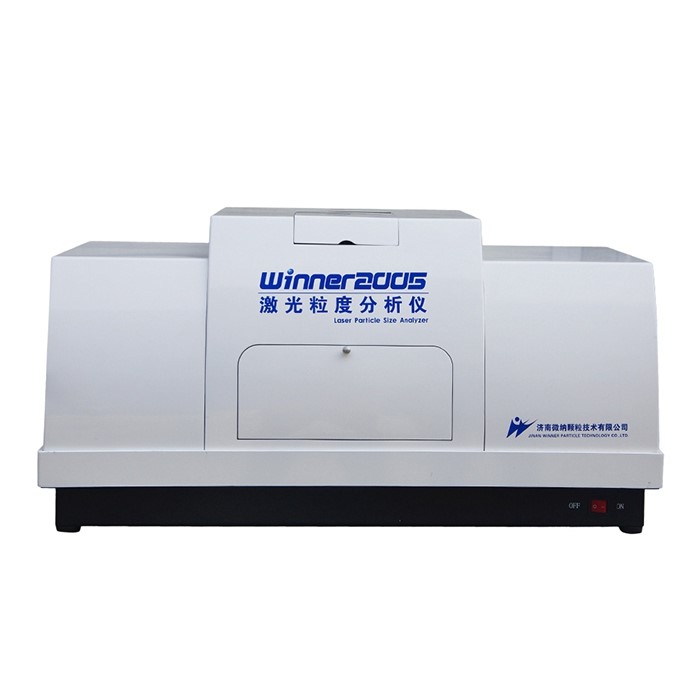
The Winner2005 intelligent fully automatic laser diffraction particle size analyser operates on the Mie scattering principle and is designed for precise determination of particle size distribution in the range from 0.01 µm to 1000 µm. The instrument enables detailed characterisation of materials such as abrasives, adhesives, agrochemicals, barite, battery materials, bentonite, boron carbide, brucite, bubbles, calcite, calcium carbonate, carbon black, catalysts, cement, ceramics, chemicals, clay, coal, coatings, corundum, cosmetics, diamond powder, dolomite, diatomite, emulsions, environmental samples, explosives, ferrites, flour, fluorescent materials, fluorite, food and beverages, food additives, graphite, grinding materials, inks, kaolin, medical materials, metal powders, mica, milled products, minerals, oxides, paints, paper, petrochemicals, pharmaceuticals, pigments, gypsum, plastics, polymers, quartz, refractories, resins, silica, suspensions, soil sediments, starch, sulphur, synthetic materials, talc, toners, tourmaline, wollastonite, zeolite, zirconium silicate, and many others across various industrial sectors.
Technical Specifications
- Particle size range: 0.01–1000 µm
- Number of photodetectors: 90
- Accuracy error: <1% (D50 deviation based on national standard reference material)
- Laser source: High-performance helium–neon laser, λ = 632.8 nm, power >2 mW, service life >25,000 hours
- Testing speed: <2 minutes per measurement (including all procedures); fastest measurement time <10 s
- Operating temperature: 15 °C – 35 °C
10POTENTIOSTAT / GALVANOSTAT

Purpose:
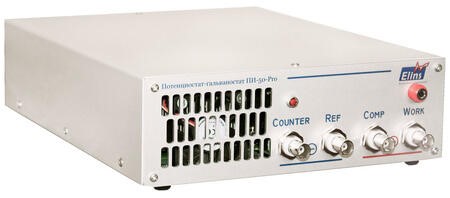
The CS electrochemical workstation (potentiostat/galvanostat) integrates a high-speed digital function generator, a high-speed data acquisition system, a potentiostat, and a galvanostat. Featuring high stability and accuracy, modern hardware, and well-developed software, it serves as a comprehensive research platform for studies in corrosion, batteries, electrochemical analysis, sensors, biological sciences, and environmental chemistry.
Applications:
- Investigation of reaction mechanisms in electrosynthesis, electrodeposition (electroplating), anodic oxidation, etc.;
- Electrochemical analysis and sensor research;
- New energy materials (lithium-ion batteries, solar cells, fuel cells, supercapacitors), advanced functional materials, and optoelectronic materials;
- Study of metal corrosion in water, concrete, soil, and other environments;
- Rapid evaluation of the efficiency of corrosion inhibitors, water stabilisers, coatings, and cathodic protection systems.
| Parameter | Value |
|---|---|
| Supported electrode systems | 2-, 3-, or 4-electrode configurations |
| Potential control range | ±10 V |
| Current control range | ±2 A |
| Potential control accuracy | 0.1% × full scale ± 1 mV |
| Current control accuracy | 0.1% × full scale |
| Potential resolution | 10 µV (>100 Hz); 3 µV (<10 Hz) |
| Current sensitivity | 1 pA |
| Rise time | <1 µs (<10 mA); <10 µs (<2 A) |
| Reference electrode input impedance | 10¹² Ω |
| Current ranges | 2 nA – 2 A, 10 ranges |
| Compliance voltage | ±21 V |
| Potential and current range selection | Automatic |
| Maximum output current | 2.0 A |
| CV and LSV scan rate | 0.001 mV/s – 10,000 V/s |
11TEXTURE ANALYSER TA-3000
The TA-3000 texture analyser is used to determine hardness, brittleness, elasticity, resilience, fibre strength, adhesion, cohesiveness, yield strength, plasticity, gel strength, and other performance characteristics. It is widely applied for testing composite materials and products of the food industry, as well as biological products, pharmaceuticals, cosmetics, and packaging materials.
The instrument can also be used to evaluate film coating adhesion, the brittleness of granular agents, bioadhesion, and other related mechanical and textural properties.
12CONTACT ANGLE GONIOMETER SDC-1000
The SDC-1000 contact angle goniometer is a laboratory instrument designed to measure the wetting (contact) angle of liquids on solid surfaces using an optical droplet analysis method. It is used to evaluate surface wettability, surface energy, interfacial tension, droplet spreading dynamics, and other parameters that are essential in studies of materials, polymers, glass, coatings, electronics, and related fields.
The SDC-1000 is designed for measuring large samples. Its platform can rotate through 360° and accommodates large-sized objects, which is particularly useful for analysing oversized products (e.g. large glass sheets).
The instrument includes a high-resolution droplet imaging system, a magnification lens, adjustable LED illumination, and software for automated contact angle analysis, generation of dynamic curves, and report preparation.
| Parameter | Value / Description |
|---|---|
| Model | SDC-1000 — large-format contact angle goniometer |
| Measurement type | Optical (non-contact) droplet analysis |
| Contact angle | Measurement range: 0–180° (typical) |
| Angular resolution | ~0.01° (depending on software and configuration) |
| Sample stage size | ~410 × 410 mm |
| Stage travel range | 200 × 250 × 20 mm (X–Y–Z) |
| Platform rotation | 360° |
| Imaging system | USB 3.0 camera + microscope-type lens |
| Lens magnification | ~6.4× (standard configuration) |
| Frame rate (optional) | Up to ~2500 fps (optional) |
| Lens adjustment | Forward/backward 60 mm, tilt ±10° |
| Liquid dispensing system | Automatic/manual droplet dosing; accuracy ~0.01 µL |
| Light source | Focusable LED, wavelength ~450–480 nm |
| Instrument dimensions | ~1430 × 480 × 690 mm |
| Weight | ~50.5 kg |
| Power supply | AC 100–240 V, 50/60 Hz |
| Interface | USB for PC connection and analysis software |
| Software and functions | Automatic measurement, reporting, dynamic curves, data export (Word/Excel, graphs) |
13ULTRASONIC (SPRAY) COATING EQUIPMENT JZPT-300
An ultrasonic spray coater is a device used for depositing thin, uniform coatings onto substrates by means of ultrasonic atomisation of a liquid solution. It is widely applied in research laboratories, microelectronics, materials science, energy technologies, micro-optics, and other fields where thin films with thicknesses ranging from nanometres to tens of micrometres are required.
The method is based on an ultrasonic spray nozzle that converts a liquid into extremely fine droplets (micro- and submicron-sized) under high-frequency vibrations. These droplets are then uniformly deposited onto the substrate surface, providing high coating uniformity, efficient material usage, and precise thickness control.
| Parameter | Specification / Description |
|---|---|
| System type | Ultrasonic spray coater |
| Purpose | Deposition of thin films and coatings on solid substrates |
| Ultrasonic nozzle | Frequency: ~20–200 kHz |
| Droplet size | ~10–45 µm (depending on frequency) |
| Nozzle power | ~1–15 W (model-dependent) |
| Liquid delivery | Precision pump (syringe or injector type) |
| Liquid flow rate | ~0.01–50 mL/min (approx.) |
| Accuracy and uniformity | Coating uniformity ≥ 95% |
| Coating thickness | ~20 nm … 100 µm (depending on solution and parameters) |
| Motion control | Programmable XYZ three-axis positioning system |
| Parameter control | Programmable control (PLC / touchscreen) |
| Operating temperature | ~1–60 °C |
| Coating materials | Solutions of dyes, polymers, protective coatings, photoresists, functional materials, nanoparticles, etc. |
| Fields of application | Electronics, solar energy, microfluidics, biosensors, nanomaterials |
14SHORE HARDNESS TESTER HT-6510
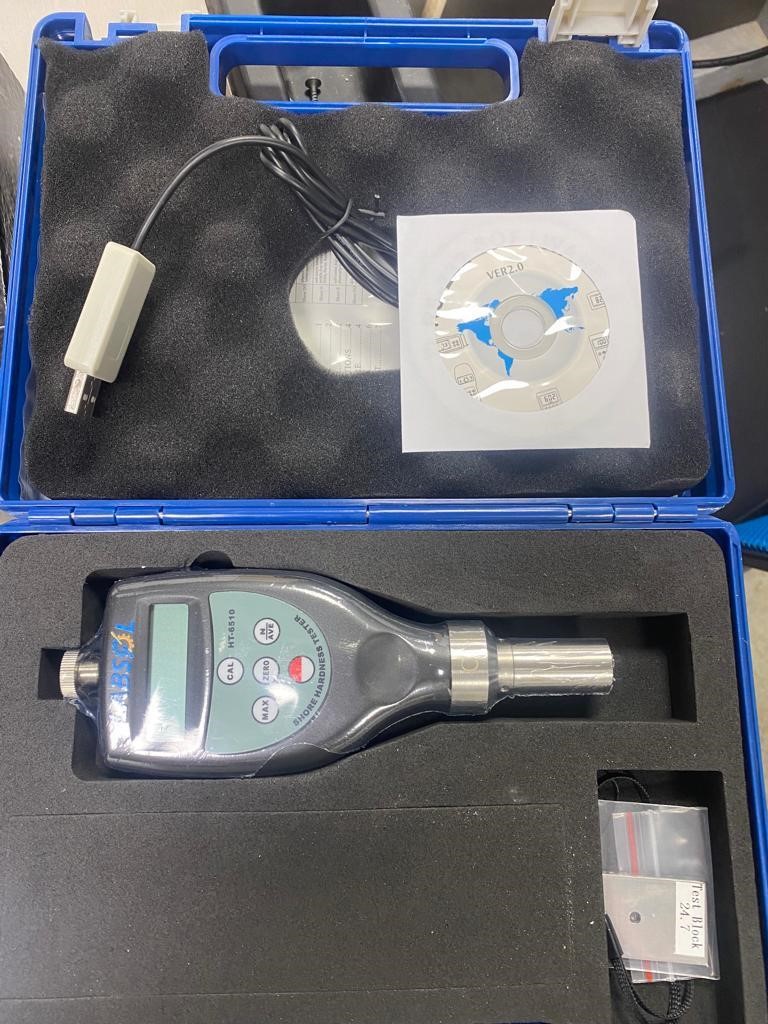
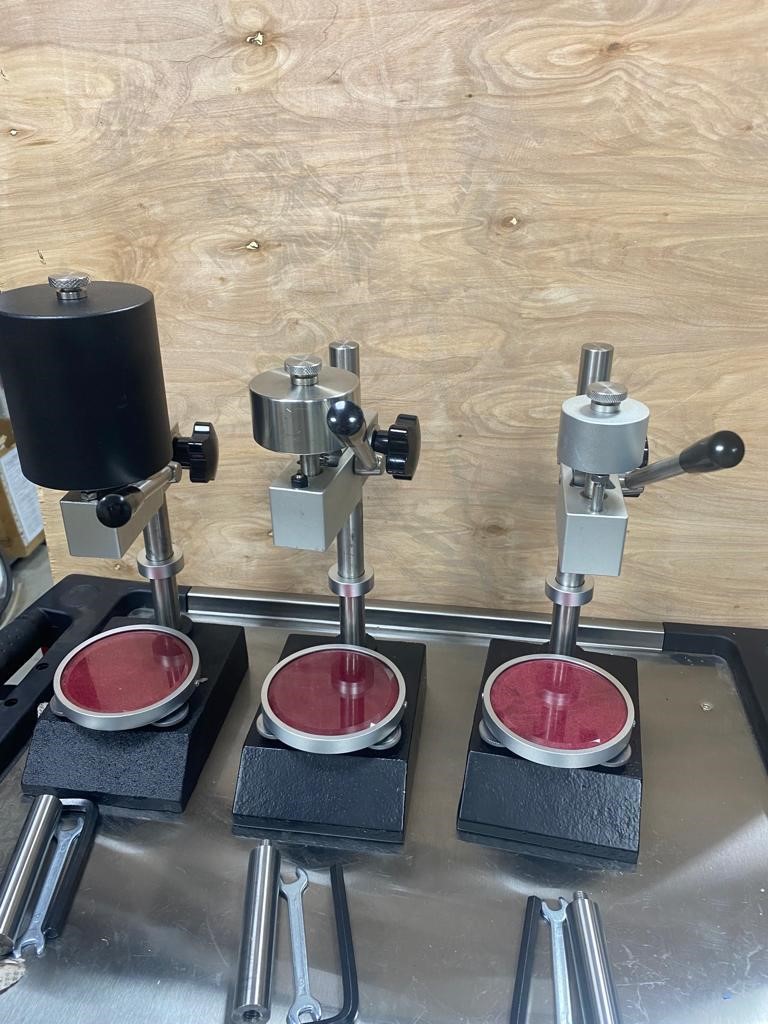
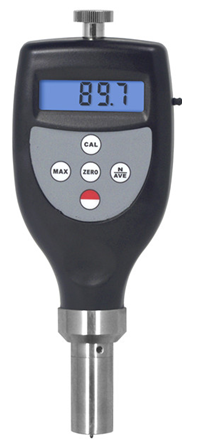
The Shore hardness tester (durometer) is used to determine the indentation hardness of materials ranging from cellular products to rigid plastics under laboratory conditions at a temperature of (23 ± 5) °C and relative humidity of (65 ± 15)%. The instrument’s indenter is pressed into the material by a spring with a fixed force, and the hardness value is displayed on the dial in Shore hardness units.
The device can be used as a handheld instrument or mounted on an optional stand, which improves the repeatability of measurement results. The range of Shore hardness testers (durometers) includes several models with different measurement ranges.
Technical Specifications
- Measurement range (Shore hardness scale, HA): 0–100 H
- Test range (HA): 10–90 H
- Resolution: 0.1 H
- Measurement deviation: ≤ ±1 H
The range of Shore hardness testers (durometers) includes several models with different measurement ranges.
| Model | Specification |
|---|---|
| A | Truncated cone indenter: R = 0.79 mm, 35° ± 1/4°. Designed for testing soft rubber, elastomers, natural rubber products, neoprene, resins, polyester, soft PVC, foam, and similar materials. |
| C | Truncated cone indenter: R = 0.79 mm, 35° ± 1/4°. Intended for testing plastics and rubber materials of medium hardness. |
| D | Cone indenter: R = 0.1 mm, 30° ± 1/2°. Suitable for testing fibres, hard rubber, rigid plastic materials, acrylic glass (PMMA), rigid thermoplastics, printing rollers, vinyl sheets, cellulose acetate, and similar materials. |
| DO | Spherical indenter with radius R = 1.2 mm. Used for testing plastics and materials ranging from medium rigidity to hard rubber. |
| OO | Spherical indenter with radius R = 1.2 mm. Designed for sponge and cellular rubber, foam rubber, silicone, and gel-like materials. |
15BENCHTOP HUMIDITY-CONTROLLED GLOVE BOX
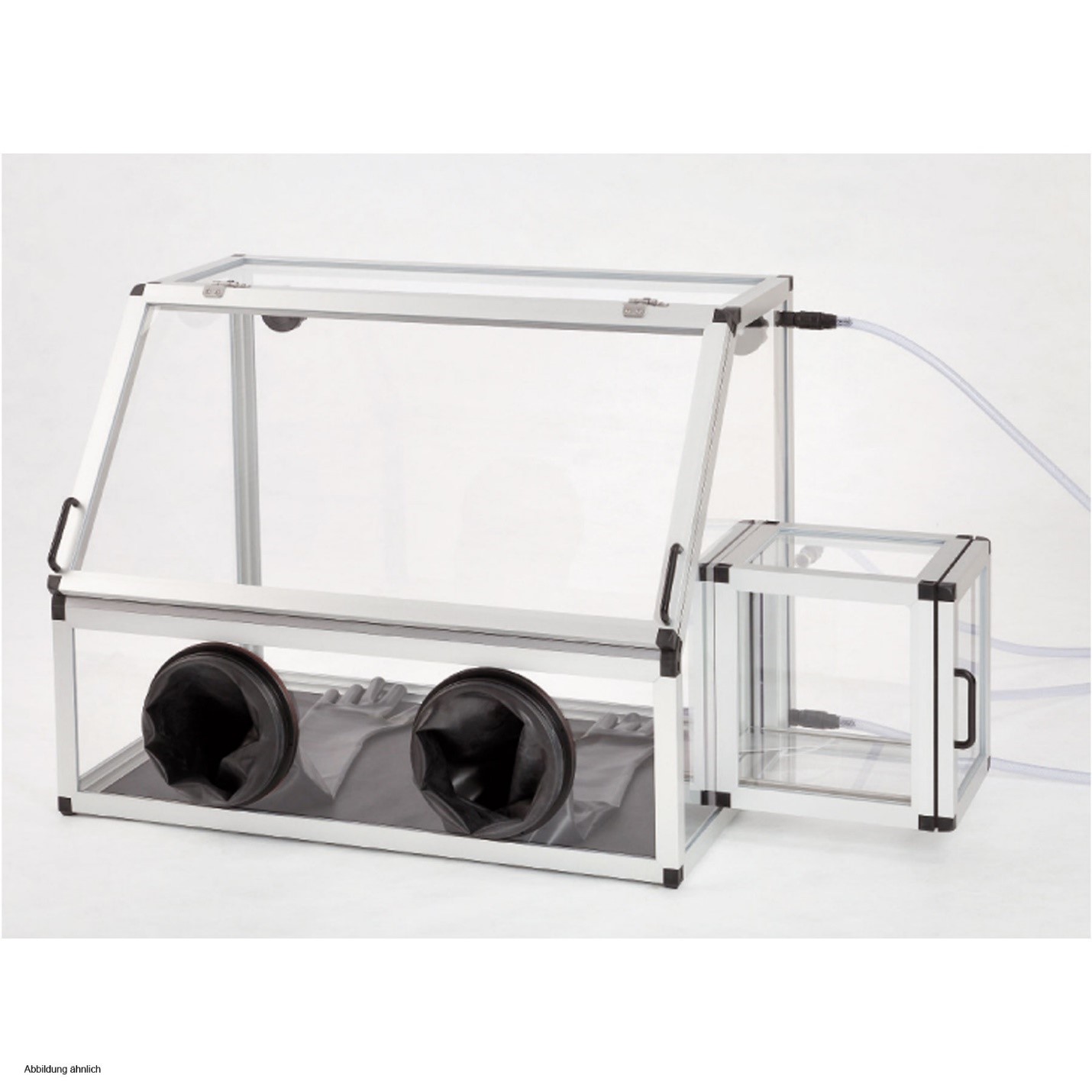
Purpose:
A benchtop humidity-controlled glove box is a sealed enclosure designed for manipulating objects within a separate, controlled atmosphere. Gloves are integrated into the side walls of the glove box, allowing the user to insert their hands and perform operations inside the enclosure without compromising the protective barrier. Part or all of the enclosure is typically transparent.
There are two main types of glove boxes. The first is intended for handling hazardous substances, such as radioactive materials or infectious agents. The second is used for manipulating materials that must be maintained in a highly pure inert atmosphere, such as argon or nitrogen. A glove box may also be used for operations under vacuum conditions.
Technical Specifications
- Box material: Acrylic
- Pressure gauge on airlock chamber: 1 set
- Pressure indication range: −0.1 MPa to +0.1 MPa
- Main chamber dimensions: 700 (L) × 300 (W) × 300 (H) mm
- Airlock chamber dimensions: 210 (L) × 210 (W) × 210 (H) mm
- Main chamber wall thickness: 5 mm
- Humidity controller range: 15% to 85% RH, with temperature sensor; humidity adjustment from 25% to 75% RH in ≤ 540 seconds
- Power supply: 220 V, 50 Hz
- Transparent material thickness: 8 mm
- Standard gloves included
- Rubber gloves length: 600 mm
- Provision for fixing sintered samples (polymers) using electrodes
16OPTICAL MICROSCOPE
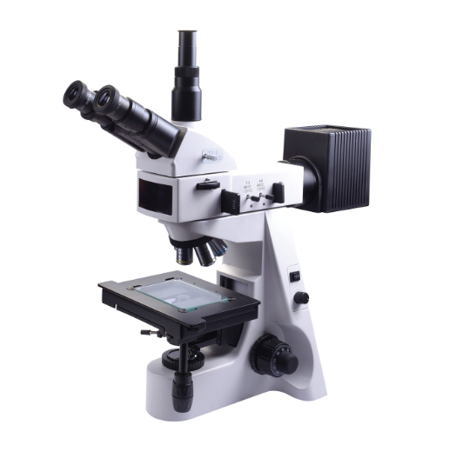
Purpose:
This equipment can be used for observation, analysis, and research in metallurgy, mineralogy, crystallography, and microelectronics, and represents an optimal choice for manufacturing facilities, universities, research institutes, and the electronics industry.
The XJP-146JBT microscope supports two illumination modes—reflected and transmitted light—for observations up to 1000 nm, and is additionally equipped with epi-illumination and polarisation devices. Under reflected light, bright-field and polarised observations can be performed, while bright-field observation is also possible under transmitted illumination.
The stable, high-quality optical system meets high image quality requirements. The square housing provides increased rigidity, and the T-shaped design offers a more stable base. The ergonomic configuration and user-friendly controls reduce operator fatigue during prolonged use.
Technical Specifications
- Viewing head: Trinocular head, fixed 30° inclination (interpupillary distance 55–75 mm)
- Eyepieces: WF10×/22 mm; WF10×/20 mm; crosshair eyepiece with 0.1 mm reticle
- Nosepiece: Quadruple revolving nosepiece
- Objectives:
- Infinity 4×/0.10, WD 29.4 mm
- Plan metallurgical 10×/0.25, WD 16 mm
- Plan metallurgical 20×/0.40, WD 10.6 mm
- Objective 40×/0.60, WD 5.4 mm
- Infinity 4×/0.10, WD 29.4 mm
- Plan metallurgical 10×/0.25, WD 16 mm
- Plan metallurgical 20×/0.40, WD 10.6 mm
- Objective 40×/0.60, WD 5.4 mm
- Stage: Double-layer mechanical stage; size 180 × 150 mm; travel range 75 × 50 mm
- Focusing: Coaxial coarse and fine focusing with rack-and-pinion mechanism; fine focus increment 0.002 mm
- Calibration tool: 0.01 mm micrometer
17LYOPHILISER (FREEZE DRYER) 18ND
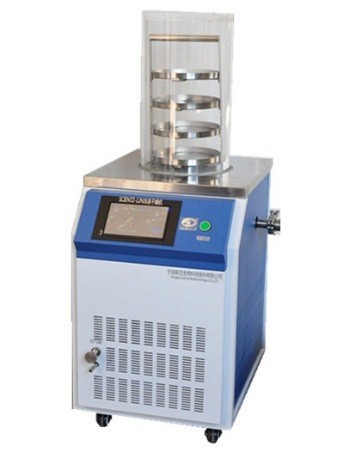
Purpose:
Lyophilisation (freeze drying) is a gentle drying method in which a substance in liquid form is first subjected to deep freezing (at temperatures from −50 °C to −105 °C) and then placed in a chamber where, under vacuum and low temperature, the frozen solvent is removed by sublimation.
Vacuum sublimation drying technology, also referred to as freeze drying, is a technical process in which samples are pre-frozen and then their moisture is sublimated under vacuum conditions. Products processed by freeze drying can be stored for extended periods and may be reconstituted to their original state while retaining their chemical and biological properties upon rehydration.
As a result, freeze-drying technology is widely used in medicine, the food industry, the chemical industry, and in the processing of biological products.
Technical Specifications
- Cold trap coil temperature: −56 °C (no load), optional −80 °C (no load)
- Ultimate vacuum: < 5 Pa (empty)
- Pumping speed: 2 L/s
- Water capture capacity: 3–4 kg / 24 hours
- Cooling mode: Air-cooled
- Defrost mode: Natural defrosting
- Drying capacity (standard function):
- Sample plate: 4 trays, disc diameter φ200 mm, capacity 1200 mL (sample thickness 10 mm)
- Sample plate: 4 trays, disc diameter φ200 mm, capacity 1200 mL (sample thickness 10 mm)
- Optional function:
- 6-layer sample tray, disc diameter φ200 mm, capacity 1800 mL (sample thickness 10 mm)
- 6-layer sample tray, disc diameter φ200 mm, capacity 1800 mL (sample thickness 10 mm)
- Stoppering (capping) function:
- Sample disc diameter φ180 mm, 3 layers, capacity 800 mL (sample thickness 10 mm)
- Sample disc diameter φ180 mm, 3 layers, capacity 800 mL (sample thickness 10 mm)
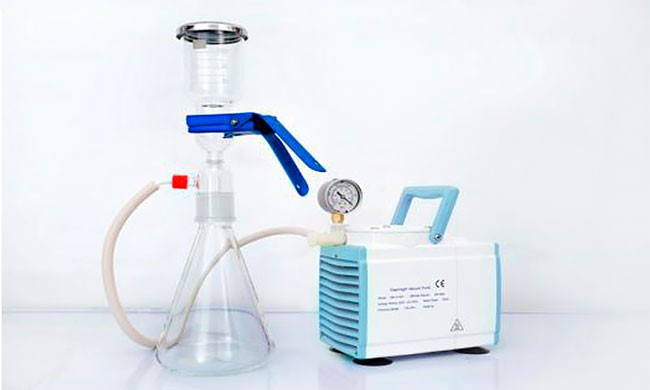
18VACUUM FILTRATION APPARATUS
Purpose:
The vacuum filtration apparatus is designed for the following applications:
- Vacuum filtration of drinking water samples for sanitary and microbiological analysis in accordance with regulatory standards and methodological guidelines for drinking water quality control;
- Fine filtration of water in physico-chemical laboratory tests and scientific research;
- Microbiological studies in the food, medical, pharmaceutical and related industries;
- Analysis of liquid oils, fuels and other liquids that are not aggressive to the filter cell materials and are contaminated with solid particles;
- Preparation of graphene oxide membranes and composite materials from liquid suspensions.
Technical Specifications
- Filtration cell with stainless steel funnels, volume 300 mL; membrane filter diameter 35 mm
- Vacuum diaphragm pump NVM-0.33II; vacuum up to −0.8 kgf/cm², capacity 20 L/min
- Receiver (Büchner/Bunsen flask) with volume 2500 mL or 5000 mL, with silicone stopper
- Moisture trap filter FVG-022 with PTFE membrane 0.2 µm, diameter 65 mm
- Set of connecting pipelines (tubing)
19HIGH-PRESSURE MINI REACTOR PR-250M
The PR-250M high-pressure mini reactor is suitable for laboratory benchtop use and features a compact volume and ease of operation. The standard operating conditions are a temperature of up to 300 °C and a pressure of 10 MPa. The reactor employs high-temperature-resistant magnetic coupling technology with magnetic stirring, providing a stirring speed of up to 1500 rpm, and is suitable for mixing low-viscosity materials.
The microreactor is widely used in the chemical, pharmaceutical, polymer, metallurgical, and environmental fields. Typical applications include catalytic hydrogenation, polymerisation, hydrometallurgy, esterification, flavour and fragrance synthesis, supercritical reactions, and related processes.
The key advantages of the microreactor include precise temperature control (±0.1 °C), automatic setting of temperature and time, forward and reverse rotation control, and a digital display through which all operating parameters are managed.
| Parameter | Value |
|---|---|
| Product name | Microreactor (mechanical stirring) |
| Model | PR-250 (M) |
| Volume | 100 / 250 / 500 mL |
| Controller | PID |
| Temperature accuracy | ±0.1 °C |
| Operating temperature | Up to 300 °C (up to 400 °C on request) |
| Operating pressure | Up to 10 MPa (up to 80 MPa on request) |
| Safety material | Overpressure and pressure relief via explosion-proof alloy rupture disc |
| Stirring system | Mechanical magnetic coupling |
| Stirring speed | Up to 1200 rpm |
| Power | 1000–1600 W |
| Power supply | AC 220 V, 50 Hz |
20BALL MILL PULVERISETTE 6
The PULVERISETTE 6 laboratory planetary ball mill from Fritsch (Classic Line) is a high-performance device for fine grinding of hard, medium-hard, soft, brittle, and even moist materials down to submicron particle sizes. The mill operates on the planetary principle: the grinding jar rotates around its own axis while simultaneously rotating in the opposite direction on a main disc, generating strong centrifugal and impact forces for efficient size reduction.
The mill is suitable for dry and wet grinding and can also be used for homogenisation of emulsions and pastes or for mechanical alloying of materials. Thanks to adjustable rotational speed, a programmable timer, and the option to operate under an inert atmosphere, the instrument is suitable for a wide range of applications in geology, materials science, chemistry, pharmacy, biology, and other research fields.
| Parameter | Value |
|---|---|
| Type | Planetary ball mill (Planetary Mono Mill) |
| Model | PULVERISETTE 6 Classic Line |
| Operating principle | Impact (planetary) |
| Number of grinding bowls | 1 |
| Bowl volumes | 80, 250, 500 mL |
| Grinding ball diameter | 0.1–40 mm |
| Max. feed particle size | ≈10 mm |
| Minimum sample volume | ~10 mL |
| Maximum sample volume | ~225 mL |
| Final fineness | < 1 µm (depending on material) |
| Grinding modes | Dry / wet / under inert atmosphere |
| Disc rotational speed | 100–650 rpm |
| Transmission ratio | i = 1 : −1.82 |
| Effective diameter of main disc | 121.6 mm |
| Centrifugal acceleration | ~29 g |
| Power supply / consumption | 100–120 / 200–240 V, 50–60 Hz, ~1100 W |
| Motor power | ~0.75 kW |
| Interfaces | RS-232 data interface (optional) |
| Weight | ~63 kg (net) |
| Dimensions (W × D × H) | ~37 × 53 × 50 cm |
| Noise level | Up to ≈85 dB(A) |
| Features | Programmable timer, reverse rotation, imbalance adjustment, chamber cooling by fan |
21WATER DEIONISER “VODOLEY”
The “VODOLEY” water deioniser is designed to produce deionised (demineralised) water by ion exchange using cation and anion exchange resins. The instrument is used in chemical, analytical, educational, and medical laboratories for solution preparation, rinsing laboratory glassware, supplying analytical instruments, and performing chemical analyses.
The operating principle is based on the sequential removal of cations and anions present in the incoming tap water, which significantly reduces electrical conductivity and total dissolved solids. The unit is characterised by ease of operation, compact design, and the possibility of regenerating the ion-exchange columns.
| Parameter | Value |
|---|---|
| Purpose | Production of deionised water |
| Purification method | Ion exchange (cation exchanger + anion exchanger) |
| Feed water | Tap water |
| Capacity | 5–30 L/h (depending on model) |
| Specific conductivity of purified water | ≤ 1–5 µS/cm |
| Total dissolved solids (TDS) | ≤ 5–10 mg/L |
| Operating water pressure | 0.1–0.4 MPa |
| Feed water temperature | +5…+35 °C |
| Ion-exchange resins | Strong-acid cation resin and strong-base anion resin |
| Regeneration capability | Yes |
| Housing material | Plastic / chemically resistant polymer |
| Power supply | Not required |
| Overall dimensions | ~300 × 200 × 500 mm |
| Weight | 8–15 kg |
| Fields of application | Chemistry, analytics, education, medicine |
22HYDROGEN GENERATOR SHC-500
The SHC-500 hydrogen generator is a benchtop device designed to produce high-purity hydrogen (H₂) by electrolysis of distilled water using an alkaline electrolyte. It is widely used in laboratories and research facilities as a hydrogen source for gas chromatography (including use as a carrier gas), ICP-MS, emission analysers, hydrogenation reactors, and other analytical instruments where a stable, high-quality gas supply is required.
The unit is characterised by ease of operation, high reliability, and a safe design. Routine operation requires only periodic replenishment of distilled water and the addition of alkali as needed. The presence of an anti-backflow alkali valve enhances operational safety and extends service life. The housing and electrolyser are manufactured from 316L stainless steel, ensuring durability and corrosion resistance.
| Parameter | Value |
|---|---|
| Model | SHC-500 (SHC series) |
| Generation method | Alkaline water electrolysis (with KOH) |
| Hydrogen output | 0–500 mL/min |
| Hydrogen purity (H₂) | ≥ 99.999% |
| Output pressure | 0–0.4 MPa (0–4 bar) |
| Protection pressure | 0.45–0.46 MPa |
| Power supply | AC 220 V, 50 Hz (optional 110 V) |
| Power consumption | ≤ 300 W |
| Water consumption | ≈ 0.6 L/day |
| Electrolyser | 316L stainless steel |
| Dimensions (approx.) | ~590 × 370 × 360 mm |
| Weight | ~17 kg |
| Applications | Gas chromatography, ICP-MS, analysers, reactors, etc. |
| Features | Anti-backflow alkali valve; stable flow; easy operation |
23BENCHTOP HIGH-SPEED CENTRIFUGE ZT-TG16
The ZT-TG16 benchtop high-speed centrifuge is a versatile laboratory instrument designed for centrifugation of biological, chemical, and clinical samples at high rotational speeds. It is widely used in research, medical, biotechnological, and chemical-analytical laboratories for density-based separation of components, such as cells, proteins, DNA/RNA, plasma, suspensions, and other particles.
The centrifuge is equipped with microprocessor control, a digital display for monitoring speed, time, and relative centrifugal force (RCF), an imbalance protection system, and an automatic lid lock to ensure safe operation. It supports a variety of rotors and adapters for tubes and centrifuge vessels of different volumes.
| Parameter | Value |
|---|---|
| Type | Benchtop high-speed centrifuge |
| Maximum speed | Up to 16,000 rpm |
| Maximum RCF | ~20,000–21,500 ×g (depending on rotor) |
| Maximum capacity | Typically 6 × 50 mL (other rotor options available) |
| Time setting | 1 min – 99 min |
| Speed accuracy | ±30 rpm (approx.) |
| Digital display | Yes (speed, RCF, time) |
| Control system | Microprocessor-controlled |
| Safety features | Imbalance protection, automatic lid lock, overspeed protection |
| Noise level | ≤ ~62 dB(A) |
| Power supply | AC 220 V ±22 V, 50/60 Hz |
| Power consumption | ~400 W |
| Housing / chamber | Metal housing with stainless steel chamber |
| Dimensions | ≈ 330 × 390 × 300 mm |
| Weight | ≈ 25 kg |
| Fields of application | Biology, medicine, chemistry, materials science, molecular biology |
24Horizontal Vacuum Tube Furnace BROTHER
The BROTHER vacuum tube furnace is equipped with a high-purity alumina tube and a quartz tube and operates within a working temperature range of 300–1200 °C. The furnace features an advanced temperature control system, ensuring ease of operation, high accuracy at elevated temperatures, effective thermal insulation, and excellent temperature uniformity.
It is primarily used in university laboratories, scientific research centres, and industrial production facilities for heat treatment, sintering, annealing, calcination, and other high-temperature processes under vacuum or controlled atmospheres.
25Ultrasonic Bath “SAPFIR”
The “SAPFIR” ultrasonic bath is a laboratory device designed for cleaning surfaces from various types of contaminants (dirt, grease, dust, residues of pastes, etc.) using ultrasonic vibrations in a liquid medium. The instrument is widely used in laboratories, industry, medical and dental facilities, mechanical engineering, electronics, jewellery manufacturing, and other fields.
It provides a safe and effective method for removing stubborn contaminants, accelerating the mixing of emulsions, and preparing components and samples prior to further processing. Ultrasonic waves generate microscopic cavitation in the liquid, which mechanically acts on the surfaces of objects and removes contaminants even from hard-to-reach areas.
The SAPFIR series includes various models featuring digital control, a thermostat, a timer, as well as optional power regulation and cleaning solution degassing (RMD) functions to optimise the cleaning process.
| Parameter | Value |
|---|---|
| Device type | Ultrasonic bath “SAPFIR” (laboratory) |
| Ultrasonic frequency | ≈ 35 kHz (optimal for component cleaning) |
| Working volume | ~5.7 L |
| Power supply | 220 V, 50–60 Hz |
| Timer | 1–99 min (digital) |
| Thermostat (heating) | 15–65 °C (digital) |
| Total power consumption | 280 W (entire unit) |
| Ultrasonic generator power | 150 W |
| Heater power | 300 W |
| Number of transducers | 3 (ultrasonic) |
| Dimensions (L × W × H) | 325 × 175 × 330 mm |
| Tank dimensions | 300 × 150 × 150 mm |
| Weight | ~7 kg |
| Standard supply | Bath, stainless steel basket, lid, user manual, packaging |
26Ultrasonic Apparatus “ALENA” UZTA-0.15/22-O
The UZTA-0.15/22-O ultrasonic apparatus is a technological ultrasonic device designed for cavitation treatment of liquids and liquid-dispersed media in laboratory and technological processes. It belongs to the ALENA series of ultrasonic equipment intended to intensify processes such as mixing, dispersion, emulsification, dissolution, cleaning, and acceleration of preparatory operations in liquid media.
The unit consists of an electronic ultrasonic generator and a piezoelectric oscillating system with a working tool housed in a metal enclosure and cooled by natural or forced ventilation. This design enables the generation of stable ultrasonic oscillations at a frequency of approximately 22 kHz, which are transmitted into the liquid via the working tool, producing a cavitation effect—the formation and collapse of microbubbles—resulting in effective воздействие on the medium.
| Parameter | Value |
|---|---|
| Model | UZTA-0.15/22-O (ALENA series) |
| Device type | Ultrasonic technological apparatus |
| Purpose | Treatment of liquids and liquid-dispersed media (mixing, dispersion, cavitation) |
| Power consumption | 150 VA (maximum) |
| Operating ultrasonic frequency | 22 ± 1.65 kHz |
| Working tool diameter | ~20 mm |
| Oscillating system design | Piezoelectric system with titanium alloy (VT5) working tool |
| Continuous operation time | Not less than 8 hours |
| Operating media / temperature | Designed for use in liquid media (water, solutions, emulsions); for technological lines, higher-power models are recommended |
| Control functions | Generator with power regulation, timer, and digital indicator (typical for the series) |
| Dimensions and weight | Depend on the specific generator and oscillating system configuration; compact generator housing with a detachable oscillating unit |
List of services provided by NSLCU
- X-ray diffraction studies using the X’Pert PRO X-ray diffractometer
- NMR studies using the Bruker Avance III 500 MHz NMR spectrometer
- Elemental analysis using an X-ray fluorescence (XRF) spectrometer
- Infrared spectroscopy studies using the FTIR-801 Simex spectrometer
- Atomic absorption spectroscopy (AAS) using electrothermal and flame atomisation
- UV–Vis spectrophotometric studies using the PE-5400UV spectrophotometer
- Electrochemical studies using a potentiostat/galvanostat
- Mechanical testing using the PMT-3 microhardness tester
- Thermal analysis using a thermogravimetric analyser (TGA)
- Production of powder materials from aqueous suspensions using the 18ND lyophiliser (freeze dryer)
- Mechanical testing using the WDW-E5 universal testing machine
- Scientific supervision and support for the implementation of technologies in the system of original and elite potato seed production
- In vitro cloning of potato varieties for the primary nursery of original seed production
- Seed encapsulation prior to sowing using polymer composite materials
- Production and modification of polymer materials
- Heat treatment of steels and alloys in various environments (air, vacuum, and controlled gas atmospheres) using the BROTHER tube furnace and SNOL 30/1300 muffle furnace
- Mechanical testing of materials over a wide range of deformation rates and temperatures, including testing in an inert gas atmosphere
Staff
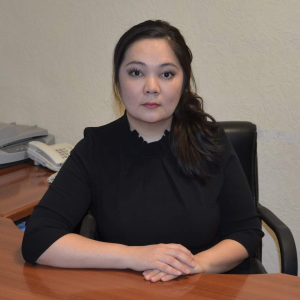
Zhilkashinova Almira Mikhailovna
Leading Research Scientist, Candidate of Physical and Mathematical Sciences, Associate Professor
More
- E-mail: almira_1981@mail.ru
- Web of Knowledge
- Web of Science ResearcherID: GHF-3101-2022
- ORCID
- Scopus Author ID: 55890420000
- Researcher ID: P-5882-2017
Main areas of activity and research interests
- Technologies, devices, and materials for renewable energy sources (RES)
- Ceramic composite materials

Kantay Nurgamit
Senior Research Scientist at NSLCU, Doctor of Philosophy (PhD) in Specialty 6D072300 – Technical Physics
More
- E-mail: kantaynurgamit2025@gmail.com
- Scopus ID
- Web of Science ResearcherID: CXT-3865-2022
- ORCID: 0000-0002-5557-0081
- Scopus Author ID: 56500555200
Main areas of activity and research interests
- Condensed matter physics
- Polymer composite materials
- Ceramic composite materials
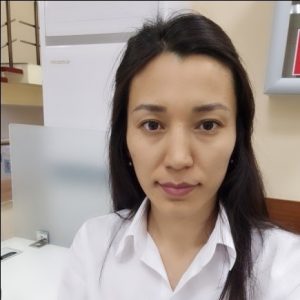
Battalova Ainur Kumarbekovna
Senior Research Scientist, Doctor of Philosophy (PhD) in Specialty 8D05302 – Chemistry
More
Main areas of activity and research interests
- Biodegradable composite materials based on natural polymers

Imasheva Aidana
Junior Research Scientist 3rd-year PhD Doctoral Candidate in Specialty 8D05302 – Chemistry
More
Main areas of activity and research interests
- Development of polymer composite materials
- Study of the structure of organic compounds using NMR and IR spectroscopy
- Nanocatalysts
- Organic synthesis

Kaiyrbekov Nariman Ruslanuly
Junior Research Scientist 1st-year PhD Doctoral Candidate in Specialty 8D05302 – Chemistry
More
Main areas of activity and research interests
- Carbon materials
- Nanomaterials
- Metal carbide–based fuel cells
- Composite materials
- Biodegradable composite materials based on natural polymers
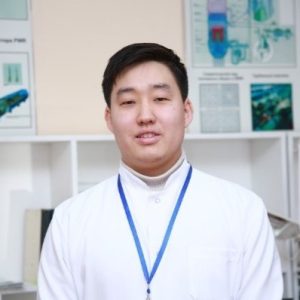
Sagdollin Zhandos Rashiduly
Junior Research Scientist 1st-year PhD Doctoral Candidate in Specialty 8D05302 – Chemistry
More
Main areas of activity and research interests
- Carbon materials
- Nanomaterials
- Graphene oxide derived from graphite and activated carbon
- Composite materials based on graphene oxide and polymers
Gulmurod Pulot
1st-year Master’s Student in Specialty 7M05302 – Chemistry
More
- E-mail: gpulot@gmail.com, kadyr9450@gmail.com
- Web of Science ResearcherID: OON-9224-2025
- ORCID
Main areas of activity and research interests
- Carbon materials
- Nanomaterials
- Biodegradable conductive composite materials
Demeukhan Ansagan Demeukhankyzy
Laboratory Technician, 3rd-year Bachelor’s Student in Specialty 6B01507 – Chemistry
More
- E-mail: demeuhanansagan@gmail.com
- ORCID
Main areas of activity and research interests
- Carbon materials
- Nanomaterials
- Cellulose-based composite materials
- Biodegradable composite materials based on natural polymers