
Laboratory of Plant Biology and Biotechnology
About Us
The Plant Biology and Biotechnology Laboratory of National Laboratory for Collective Use is a modern scientific and practical center that addresses key challenges in the region's agricultural development using advanced biological methods. Our work is focused on preserving genetic resources, improving planting material health, and implementing environmentally safe technologies.
Our Key Focus Areas and Achievements
In Vitro Healthy Potato Bank
We have established and maintain a unique collection of potato cultivars and breeding lines in in vitro culture, free from viruses and infections. The bank comprises over 125 varieties of both domestic and foreign breeding, including 17 varieties adapted to our region. This collection serves as the foundation for original seed production. It is available to elite seed-growing farms and is a source of healthy starting material for production.
We guarantee the purity and typicality of the varieties through systematic diagnostics using the modern, highly sensitive ELISA method and the application of micropropagation techniques.
Five varieties in our collection (Izolda, Vostochny-1, Magistr, Tavria, Shakird) are breeding products of S. Amanzholov VKU (or: were developed by S. Amanzholov VKU).
Annually, based on the bank, we establish field multiplication nurseries in cooperation with farming enterprises, providing scientific support.
Biotechnology for Berry Crops
We are developing and implementing an innovative technology for strawberry sanitation and propagation in in vitro culture, novel for Eastern Kazakhstan.
This work helps address a critical phytosanitary problem in the region and provides producers and gardeners with high-quality, pathogen-free planting material.
Propagation of Medicinal Plants
The laboratory conducts work on introducing valuable medicinal plant species (marshmallow, oregano, lemon balm, mint, thyme, etc.) into in vitro culture and their micropropagation.
We also investigate the cultivation potential of succulents, many of which possess medicinal properties.
Applied Research for Sustainable Agriculture
Study of Biopreparations: We conduct research on the effects of organic fertilizers and biopreparations on the growth and development of vegetable crops, promoting the transition to eco-friendly farming.
Phytopathological Examination: We provide seed analysis services for latent infections. This examination allows for an accurate assessment of seed quality, selection of effective seed treatments, and determination of a batch's suitability for seed purposes.
Educational Mission
The laboratory serves as a base for student internships, bridging the gap between theory and real-world production.
List of scientific works
- Получение оздоровленного семенного материала картофеля для оригинального семеноводства в горно – степной зоне Восточно – Казахстанской области Республики Казахстан.Publication details: Международный журнал гуманитарных и естественных наук – 2019. DOI: 10.24411/2500-1000-2019-10734Authors: Николаева В.Н., Жаркова С.В.
- Получение оздоровленного семенного материала картофеля с использованием микроклонального размножения в условиях Восточно-Казахстанской областиPublication details: Вестник Алтайского государственного аграрного университета. - 2020. - № 6 (188). - С. 32–42.Authors: Николаева В.Н., Доланбаева Г.Т., Жаркова С.В
- Применения метода in vitro в системе семеноводства картофеля в условиях Восточного КазахстанаPublication details: Флора и растительность Алтая: Труды Южно-Сибирского ботанического сада. Том 13. Специальный выпуск «Научное наследие В.И. Верещагина: прошлое, настоящее, будущее». – Министерство науки и высшего образования РФ, Алтайский государственный университет. – Барнаул : Изд-во Алт. ун-та, 2021. – С. 87-92Authors: В.Н.Николаева, С.В.Жаркова
- Seed-potatoes production using biotechnology methods under the conditions of East Kazakhstan.Publication details: IOP Conf. Series: Earth and Environmental Science 677 (2021) 052020 DOI:10.1088/1755-1315/677/5/052020Authors: Nikolaeva V.N., Zharkova S.V., Gefke I.V. and Dolanbayeva G.T.
- The influence of biological preparations presowing seed treatment on the spring soft wheat yield formation in conditions of Altai Krai Ob region.Publication details: IOP Conference Series: Earth and Environmental Science, 2022, 1010(1), 012143 DOI:10.1088/1755-1315/1010/1/012143Authors: Nikolaeva V.N., Nechaeva A.V., Zharkova S.V., Sokolova L.V., Manylova O.V.,
- Введение лекарственных растений в культуру in vitroPublication details: Аграрная наука - сельскому хозяйству Сборник материалов XVI Международной научно-практической конференции. В 2-х книгах. Том Книга 1. Барнаул, 2021 С 245-247Authors: Богданова К.О., Николаева В.Н., Доланбаева Г.Т. Сейткумарова А.А., Жакманова Е.А. Хоснутдинова Т.С.
- Мониторинг вирусных заболеваний (PVХ, PVS, РVL, PVM, PVYN И PVY0) картофеля в Восточно-Казахстанском регионе.Publication details: Сборник «XVI Международная научно-практическая конференция «Аграрная наука – сельскому хозяйству», Алтайский государственный аграрный университет. 2021г стр.220-221Authors: Т.С. Хоснутдинова, В.Н. Николаева, Г.Т. Доланбаева, Е.А. Жакманова, А.А. Сейткумарова.
- Monitoring of viral and fungal diseases of potatoes in East Kazakhstan.Publication details: IOP Conference Series: Earth and Environmental Science, 2022, 1010(1), 012141.Authors: Nikolaeva, V.N., Dolanbayeva, G.T., Khosnutdinova, T.S., Bogdanova, X.O., Zharkova, S.V.
- Влияние селеносодержащего стимулятора на рост, развитие и урожайность растений картофеля в условиях открытого грунта закрытой зоны.Publication details: Вестник АГАУ №7 2022 гAuthors: Есилбекова Е.Е., Китапбаева А. А., Воробьев А. Л., Богданова К. О., Доланбаева Г. Т., Николаева В. Н.
- Получение оздоровленного посадочного материала картофеля in vitro методом культуры апикальной меристемы.Publication details: Сборник материалов XVII Международной научно-практической конференции. В 2-х книгах. Барнаул,09-10 февраля 2022 года, - С 213-215Authors: Доланбаева Г.Т, Николаева В.Н., Жаркова С.В.
- Определение остаточного воздействия супрессора РНК-интерференции на семенной материал картофеля и его устойчивость к PVY вирусу.Publication details: Сборник материалов XVII Международной научно-практической конференции. В 2-х книгах. Барнаул,09-10 февраля 2023 года, - С 203-205Authors: Богданова К.О., Доланбаева Г.Т., Есилбекова Е.Е., Вноровская Е.В., Николаева В.Н., Жаркова С.В.
- Фитопатологическая оценка семян сои в условиях Восточного Казахстана.Publication details: Сборник материалов XVII Международной научно-практической конференции. В 2-х книгах. Барнаул,09-10 февраля 2023 года, - С 209-212Authors: Е.Г. Герасимова, Г.Т. Доланбаева, К.О. Богданова, Е.В. Вноровская, В.Н. Николаева, С.В. Жаркова.
- Фитопатологическая оценка семян подсолнечника в условиях Восточного Казахстана.Publication details: Сборник материалов XVII Международной научно-практической конференции. В 2-х книгах. Барнаул,09-10 февраля 2023 года, - С 261-264Authors: Мерк Л.Б., Доланбаева Г.Т., Богданова К.О., Вноровская Е.В., Николаева В.Н., Жаркова С.В.
- Исследование влияния активатора роста на всхожесть семян с Истекшим сроком годности.Publication details: International scientific journal «Global science and innovations 2024: central asia» Astana, Kazakhstan, APRIL 2024, №22, с 19-22Authors: Богданова К.О., Нурдыбекова Д.А., Ергали Е.Е., Доланбаева Г.Т., Николаева В.Н.
- Введения лекарственных растений в культуру in vitro с использованием регуляторов роста.Publication details: International scientific journal «Global science and innovations 2024: central asia» Astana, Kazakhstan, April 2024, №22, с 23-26Authors: Голодова Э.В., Богданова К.О., Доланбаева Г.Т., Николаева В.Н.
- Оптимизация метода стерилизации семенного материала с использованием фитопротравителя.Publication details: Международный научный журнал Endless light in science, Астана Казахстан, 30 сентябрь 2024. С-14-18Authors: Богданова К.О., Доланбаева Г.Т., Николаева В.Н, Вноровская Е.В.
- Производство оздоровленного семенного картофеля с использованием метода in vitroPublication details: Научно-практический журнал «Заметки ученого». – 2021.-№ 12-2.-С. 294-298Authors: В.Н.Николаева, С.В.Жаркова
- Изучение и подбор сортов in vitro для оригинального и элитного семеноводства в Восточном КазахстанеPublication details: Сборник материалов XVI Международной научно-практической конференции. В 2-х книгах. Барнаул,09-10 февраля 2021 года, - С 146-147Authors: Николаева В.Н., Доланбаева Г.Т., Хоснутдинова Т.С.
- Метод ускоренного размножения микрорастений in vitro картофеля.Publication details: Сборник материалов XVI Международной научно-практической конференции. В 2-х книгах. Барнаул,09-10 февраля 2021 года, - С 193-194Authors: Николаева В.Н., Жаркова С.В.
- Основные симптомы potato virus Y влияющие на рост и развитие растения Nicotiana ВenthamianaPublication details: Сборник материалов XVII Международной научно-практической конференции. В 2-х книгах. Барнаул,09-10 февраля 2022 года, - С 193-195Authors: Богданова К.О., Сутула М.Ю., Хазранова А.А., Жакманова Е.А., Есилбекова Е.Е., Николаева В.Н
- Мониторинг селекционного материала подсолнечника с целью определения уровня устойчивости к ложной мучнистой росеPublication details: Сибирский вестник сельскохозяйственной наyки, ноябрь 2023 годаAuthors: Мерк Л.Б., Губарева Н.С., Николаева В.Н., Доланбаева Г.Т., Дидоренко С.В.
- Priming of Solanum Tuberosum in vitro plants with PVY-specific interfering RNAs activates anti-viral resistancePublication details: Eurasian Journal of Applied Biotechnology DOI: 10.11134/btp.3.2022.2Authors:
Sutula
- Influence of a selenium-containing stimulant on the growth, development and yield potential of potato plants (solanum tuberosum)Publication details: IOP Conference Series: Earth and Environmental Science DOI: 10.1088/1755-1315/1010/1/012144Authors: Ye. Ye. Yessilbekova X. O. Bogdanova G. T. Dolanbayeva
- Способ выделения коротких интерферирующих РНК из инфицированного растительного материала картофеляPublication details: Патент на полезную модель №7715 от 06.01.2023Authors: Сутула М.Ю., Хоснутдинова Т.С., Жакманова Е.А., Богданова К.О., Есилбекова Е.Е., Доланбаева Г.Т., Кабатаева Ж.К., Комекова Г.К.
Equipment
01Eppendorf 5427 R Centrifuge
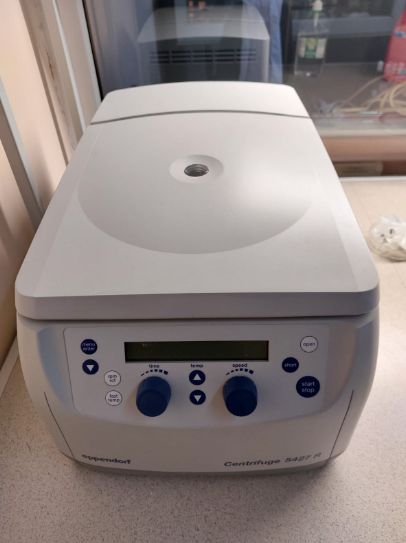
The Eppendorf 5427 R Centrifuge is a compact, benchtop refrigerated microcentrifuge designed for routine work with small-volume samples. It enables rapid density-based separation of components in suspensions and solutions by centrifugal force, including pellet formation, supernatant separation, removal of suspended particles, and faster wash and extraction steps. The “R” (refrigerated) designation indicates an integrated cooling system, which is essential when handling thermolabile materials (proteins, enzymes, RNA, etc.) and helps maintain sample stability during centrifugation.
Applications:
- Molecular biology (DNA/RNA): nucleic acid precipitation, brief spins after reagent addition, and wash steps in DNA/RNA extraction and clean-up kits.
- Proteins and enzymes: centrifugation of lysates, separation of cell debris/insoluble fractions, and processing of temperature-sensitive samples under controlled low-temperature conditions.
- Microbiology and cell culture: harvesting cells and microorganisms, washing steps, and fractionation following treatments/incubations.
- Biochemistry and analytical sample preparation: clarification of supernatants, particle removal prior to PCR, electrophoresis, spectrophotometry and other analytical methods, and rapid pelleting of fine precipitates.
- Routine laboratory workflows: short spins to collect condensate and droplets from tube walls, removal of bubbles, and preparation of samples for storage and transport.
02LAMSYSTEMS Laminar Flow Cabinet
The LAMSYSTEMS laminar flow cabinet is a workstation with a laminar stream of filtered air, designed to protect samples and the working area from airborne and particulate contamination. A filtration system (typically HEPA/ULPA) generates a stable, unidirectional airflow, creating a clean zone for aseptic handling and improving the reproducibility of laboratory procedures.
Applications:
- Microbiology and cell culture: aseptic inoculation and subculturing, handling of culture media, preparation of sterile consumables and solutions.
- Molecular biology: “clean” stages of sample preparation, preparation of reaction mixes, and handling of contamination-sensitive materials.
- Plant biotechnology: aseptic work with plant material, preparation and dispensing of culture media, manipulation of explants, micropropagation, and other procedures requiring controlled cleanliness.
- General laboratory practice: reducing the risk of cross-contamination between samples and protecting results from incidental airborne contamination.
03Levenhuk C510 NG Microscope
The Levenhuk C510 NG is an optical biological microscope for routine observation and initial examination of samples under transmitted light. It is used for visual assessment of cell and tissue morphology, evaluation of sample preparation quality, detection of impurities/contamination, and demonstration work in educational and applied laboratory settings.
Applications:
- Teaching laboratories and practical classes: developing microscopy skills, preparing native and stained slides, and demonstrating typical specimens (cells, tissues, microorganisms).
- Microbiology (basic control): observing wet mounts, assessing culture purity, detecting unwanted microflora, and monitoring contamination.
- Ecology and hydrobiology: analysing water samples (plankton, algae, protozoa), assessing biological impurities, and monitoring microbiota status.
- Food and agricultural laboratories: screening-level checks of microbial contamination, quality control of raw materials/samples, and detection of visible impurities in suspensions.
- Chemical-analytical sample preparation: visual inspection of precipitates/crystals, assessment of particle dispersion, and checking suspension homogeneity prior to further measurements.
- Routine laboratory work: checking staining quality, cleanliness of microscope slides and reagents, and rapid examination of samples before setting up experiments.
04Bio-Rad PW 40 Microplate Washer
The Bio-Rad PW 40 is an automated microplate washer used for ELISA (EIA) and other plate-based assays. It delivers wash buffer evenly and provides consistent aspiration from each well, reducing background signal and improving reproducibility when processing microplate series.
Applications:
- ELISA (EIA): washing plates between coating/adsorption, incubation and detection steps to minimise non-specific background and improve measurement accuracy.
- Plate-based immunoassays (non-clinical): research protocols for proteins, antigens/antibodies and markers in model and laboratory samples.
- Biochemical and enzymatic microplate assays: repeated wash cycles during assay workflows and preparation of wells for subsequent steps.
- Microbiological and biotechnology research (plate format): washing steps in plate-based assays (incubation, binding and subsequent detection).
- Routine laboratory sample processing: high-throughput handling of microplate batches, saving time and reducing operator-dependent variability compared with manual washing.
05Bio-Rad Vertical Electrophoresis System
The Bio-Rad vertical electrophoresis system is a laboratory instrument for separating proteins and nucleic acids in polyacrylamide gels (PAGE) within a vertical chamber. It is used to obtain sharp, well-resolved bands, to monitor sample quality, to estimate molecular mass/fragment size, and to prepare material for downstream identification and quantitative analysis.
Applications:
- SDS-PAGE (denaturing protein electrophoresis): separation of proteins by molecular mass, assessment of fraction purity, and verification of extraction/purification outcomes.
- Native PAGE: analysis of proteins and protein complexes without denaturation (maintaining activity/complexes where required by the protocol).
- Preparation for blotting: producing gels for subsequent transfer to membranes (Western blot, etc.) and specific detection.
- Nucleic acid analysis by PAGE: separation of short DNA/RNA fragments, checking reaction products and sample purity where high resolution is required.
- Research and routine control: protocol standardisation, comparison of sample series, and assessment of biomolecule stability and degradation.
06Bio-Rad Horizontal Electrophoresis System
The Bio-Rad horizontal electrophoresis system is a laboratory instrument for separating DNA and RNA (and, under specialised conditions, certain protein fractions) in agarose gels. The gel is cast and run horizontally, making the system convenient for routine use, rapid sample preparation, and visual inspection of results after staining.
Applications:
- Agarose gel electrophoresis (DNA/RNA): size-based separation of fragments and assessment of nucleic acid quality and integrity.
- PCR product checking: confirming the presence of an amplicon, assessing specificity (single vs multiple bands), and estimating fragment size using a DNA ladder/marker.
- Cloning and genetic engineering: restriction analysis, checking plasmid conformations, verifying assemblies, and preparing fragments for gel extraction.
- Gel extraction of fragments: excising the band of interest for subsequent purification and downstream procedures (ligation, sequencing, etc.).
- Routine research in biology, ecology and biotechnology: batch analysis of samples, comparison of groups, and monitoring contamination and material degradation.
07UV-Vis Spectrophotometer BNUV-D830
The Spectrophotometer UV-Vis BNUV-D830 is a versatile laboratory instrument for measuring absorbance and recording spectra across the 190–1100 nm range. It is suitable for quantitative determinations using standard colourimetric reactions and for analysing plant extracts in both the UV and visible regions. For plant physiology applications (including pigment analysis), the instrument is convenient because it covers the classical wavelengths, and a 2 nm spectral bandwidth provides sufficient resolution for routine calculations.
Applications:
- Chlorophyll a/b and carotenoids (photosynthetic pigments): assessing the impact of drought/salinity/heavy metals/herbicides, leaf senescence, N/Mg deficiency and light regime; comparing cultivars by “pigment profile”. Measurements are typically taken at ~470, 645 and 663 nm (protocol-dependent) following extraction (acetone/ethanol/DMSO).
- Anthocyanins (colouration, stress response): cold/UV stress, phosphorus deficiency, sugar induction and genotype differences; leaf/fruit-skin colour changes. Readings are often taken at ~520–535 nm with background correction at ~650–700 nm (method-dependent).
- Total phenolics (Folin–Ciocalteu): antioxidant potential and stress-induced phenolics; comparison of leaf/seed/fruit extracts. Readings are typically taken at ~760–765 nm with calibration against gallic acid.
- Flavonoids (AlCl₃ method): dynamics of secondary metabolites under stress/treatments; selection and cultivar comparison. Readings are commonly taken at ~410–430 nm, depending on the protocol/standard.
- MDA (TBARS assay; lipid peroxidation): degree of oxidative membrane damage under stress and the effectiveness of antioxidant treatments. Readings are typically taken at ~532 nm with correction at ~600 nm.
- Antioxidant enzymes (spectrophotometric assays): POD (guaiacol assay ~470 nm), CAT (decrease in H₂O₂ at ~240 nm), APX (decrease in ascorbate at ~290 nm), and SOD according to the chosen photochemical method in the visible region.
- Proline (osmotic stress marker): drought/salinity-related proline accumulation; comparison of cultivar tolerance. Ninhydrin assay, commonly read at ~520 nm (method-dependent).
- Algae and plant cell suspensions: growth by OD: monitoring biomass via optical density (often ~680–750 nm, selected according to the organism/protocol) and, in parallel, assessing pigments from spectral data.
- Spectral “fingerprints” of extracts: recording full spectra to compare extraction conditions (solvent/mode), monitor stability over time, and assess stability under pH changes.
08Microplate Spectrophotometer ZDM-1101
The microplate spectrophotometer ZDM-1101(microplate reader) is designed for rapid measurement of optical density (Abs/OD) in microplate wells (typically a 96-well format). It is used for high-throughput reading of colourimetric reactions and enzymatic assays, avoiding the need for individual cuvettes. In the literature, the ZDM-1101 is often referred to as a microplate reader / enzyme labeler, with absorbance measured at common assay wavelengths (e.g. 450, 490 and 540 nm, depending on the method).
Applications:
- Biochemical and enzymatic assays: measuring enzyme activity and reaction kinetics via changes in absorbance within wells (commonly read at 405/450/490/540 nm, depending on the substrate/reagent).
- Plant extracts and secondary metabolites (plate format): antioxidant/phenolic/flavonoid assays, comparison of extraction and treatment conditions, and screening large numbers of samples in a single run.
- Microbiology and biotechnology: monitoring microbial growth by OD, assessing inhibition/activity of compounds, and screening culture conditions where protocols rely on Abs/OD measurements.
- Non-clinical cell/tissue models: colourimetric viability/metabolic activity assays and other plate-based methods where the readout is absorbance in the well.
- Routine high-throughput laboratory analysis: any workflow where speed, repeatability and simultaneous reading of multiple samples under a single protocol are required.
09Amplifier T960
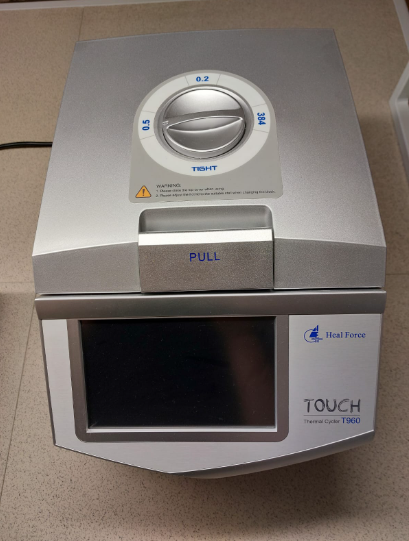
The T960 amplifier (PCR thermocycler) is a benchtop instrument for performing the polymerase chain reaction (PCR), providing precise, repeated heating and cooling of samples according to a defined temperature programme (denaturation — annealing — extension). The T960 series typically features a 96-well (0.2 mL) block and a temperature gradient function for rapid optimisation of PCR conditions, as well as a colour touchscreen for convenient protocol programming and process monitoring.
Applications:
- PCR amplification of DNA/cDNA: setting up and running standard PCR to obtain target fragments.
- PCR optimisation (gradient): selecting primer annealing temperatures, improving performance with challenging templates, and increasing reaction specificity.
- Checking reaction products: preparing samples for downstream analysis (e.g. agarose gel electrophoresis).
- Plant genetics and microbiology (research use): genotyping, verifying the presence/absence of target sequences, and screening lines/isolates.
- Teaching and routine laboratory work: demonstrations and practical classes in molecular biology, and batch processing of reactions in a 96-well format.
10Transilluminator
The Analytik Jena (UVP) transilluminator is a laboratory transmitted-light source used to visualise gels and membranes after electrophoresis. Depending on the configuration, it may use UV illumination (e.g. 302/365 nm), blue light (~460–470 nm) or white light, selected to match specific stains and applications. It provides uniform illumination of the work area and is convenient for rapid band inspection, excision of fragments, and operation as part of gel documentation systems.
Applications:
- Agarose gel electrophoresis (DNA/RNA): checking PCR products, restriction digests, plasmid conformations, and assessing nucleic acid quality and integrity.
- Visualisation of “safe” dyes under blue light: working with stains such as SYBR Safe, GelGreen and similar dyes with excitation at 460–470 nm, helping to reduce sample photodamage compared with UV.
- Polyacrylamide gels and membranes (within gel doc systems): viewing and documenting results, including fluorescent and colourimetric stains (depending on configuration and light source).
- Band/fragment excision from gels: preparing material for subsequent purification and downstream steps (cloning, sequencing, repeat reactions).
- Routine documentation of results: use with a camera/hood for safer viewing and image capture (where the transilluminator is integrated into, or used alongside, a documentation system).
Staff

Nikolaeva Valentina Nikolaevna
Research Fellow, Researcher. Teacher-Researcher.
More
- E-mail: valentina_nn23@mail.ru
- Scopus Author ID: 57222575514
- Web of Science Researcher ID: HKM-7472-2023
- ORCID: 0000-0001-8887-7111
Main areas of activity and research interests
- Micropropagation of Sanitized Agricultural Crops
- Phytopathological Examination of Plant Seed Material
- Immunobiotechnological Analysis of Plants
- Plant Biology and Biotechnology
- Original and Elite Seed Potato Production
- Health Improvement of Fruit and Berry Crops Based on Plant Micropropagation in vitro

Dolanbayeva Gulsaiyn
Research Fellow. Master of Natural Sciences, PhD (2nd year)
More
- E-mail: gulsaiyndolanbayeva@gmail.com
- Scopus Author ID: 57222570410
- Web of Science ResearcherID: HKM-7472-2023
- ORCID: 000000-0002-0049-1511
- Профиль
Main areas of activity and research interests
- Plant Biology and Biotechnology
- Original and Elite Seed Potato Production
- Health Improvement of Fruit and Berry Crops through Plant Micropropagation in vitro
- Mycological Studies of Agricultural Cultivars
- Introduction of Soybean Cultivars to in vitro and Health Improvement via Apical Meristem Method
- Micropropagation of Potato Cultivars in vitro
- Phytopathology of Cultivated Plants
- Development of New Effective Methods for Sterilization and Disinfection of Explants and Culture Media in in vitro Work Culture

Bogdanova Xeniya Olegovna
Research Fellow. Master of Natural Sciences, PhD (1st year).
More
- E-mail: noda-98@mail.ru
- Scopus Author ID: 57638427900
- SciProfiles: 3963627
- Web of Science ResearcherID: GZM-3036-2022
- ORCID: 0000-0001-9318-6155
- ResearchGate
- Google Scholar
Main areas of activity and research interests
- Plant Biology and Biotechnology
- Original and Elite Seed Potato Production
- Micropropagation of Potato in vitro
- Mycological Studies of Agricultural Plants
- Development of New Effective Methods for Sterilization and Disinfection of Explants and Culture Media in in vitro Work
- Electrophoretic Studies of Plants
- Investigation of the Influence of Growth Stimulator Concentrations in Nutrient Media on the Cultivation of Medicinal Plants in vitro and in vivo
- Propagation of Succulent Houseplants
Gladyshev Alexey Olegovich
Junior Research Fellow Bachelor of Agriculture (4 years), educational program "Forest Resources, Game Management and Beekeeping." Master's student in 7M05101 "Biology."
More
- E-mail: aleksei.glagyshev.030@gmail.com
- Web of Science ResearcherID: OIT-6103-2025
- ORCID
Main areas of activity and research interests
- Plant Biology and Biotechnology
- Study of extracts from medicinal mushrooms and plants, their antimicrobial, antioxidant, and disinfectant properties
- Research on the possibilities of cultivating exotic plants in controlled environments
- Experimental cultivation of exotic fruit crops under laboratory conditions
- Micropropagation of potato in vitro
- Mycological studies of agricultural plants
- Investigation of the influence of growth stimulator concentrations in nutrient media on the cultivation of medicinal mushrooms in vitro
- Study of the immunomodulatory, antioxidant, and antimicrobial properties of natural components used in dietary supplements
- Study of the physiological consequences of forming multi-root grafting systems
Sabitov Orazaly Oraluly
Junior Research Fellow Bachelor of Natural Sciences in the specialty "6B05101-Biology" (year of graduation: 2025). Master's student in 7M05101 "Biology."
More
- E-mail: orazali2003@gmail.com
Main areas of activity and research interests
- Study of the Adsorption Properties of Hydrogel in Relation to Various Organic Fertilizers
- Comparative Analysis of Soil Microflora in Different Functional Zones of the City
- The Effect of Auxins and Cytokinins on the Germination of Legume Seeds with Expired Shelf Life
- Development of an Ointment Based on Drone Brood Homogenate
- Scientific Interests: Soil Ecology, Agrochemistry and Biotechnology, Phytohormonal Regulation of Seed Germination, Development of Natural Biopreparations
Fateeva Maria Pavlovna
Junior Research Fellow Undergraduate student of Natural Sciences, Educational Program 6B05101 "Biology"
More
- E-mail: marry.f.eva@gmail.com
Main areas of activity and research interests
- Plant Biology and Biotechnology
- Micropropagation of Potato in vitro
- Investigation of the Allelopathic Effects of Plant Extracts
- Development and Testing of Bioherbicides, Bioinsecticides, and Molluscicides Based on Natural Plant Components
- Experimental Cultivation of Insectivorous Plants under Laboratory Conditions
- Introduction of Carnivorous Plants into in vitro Culture