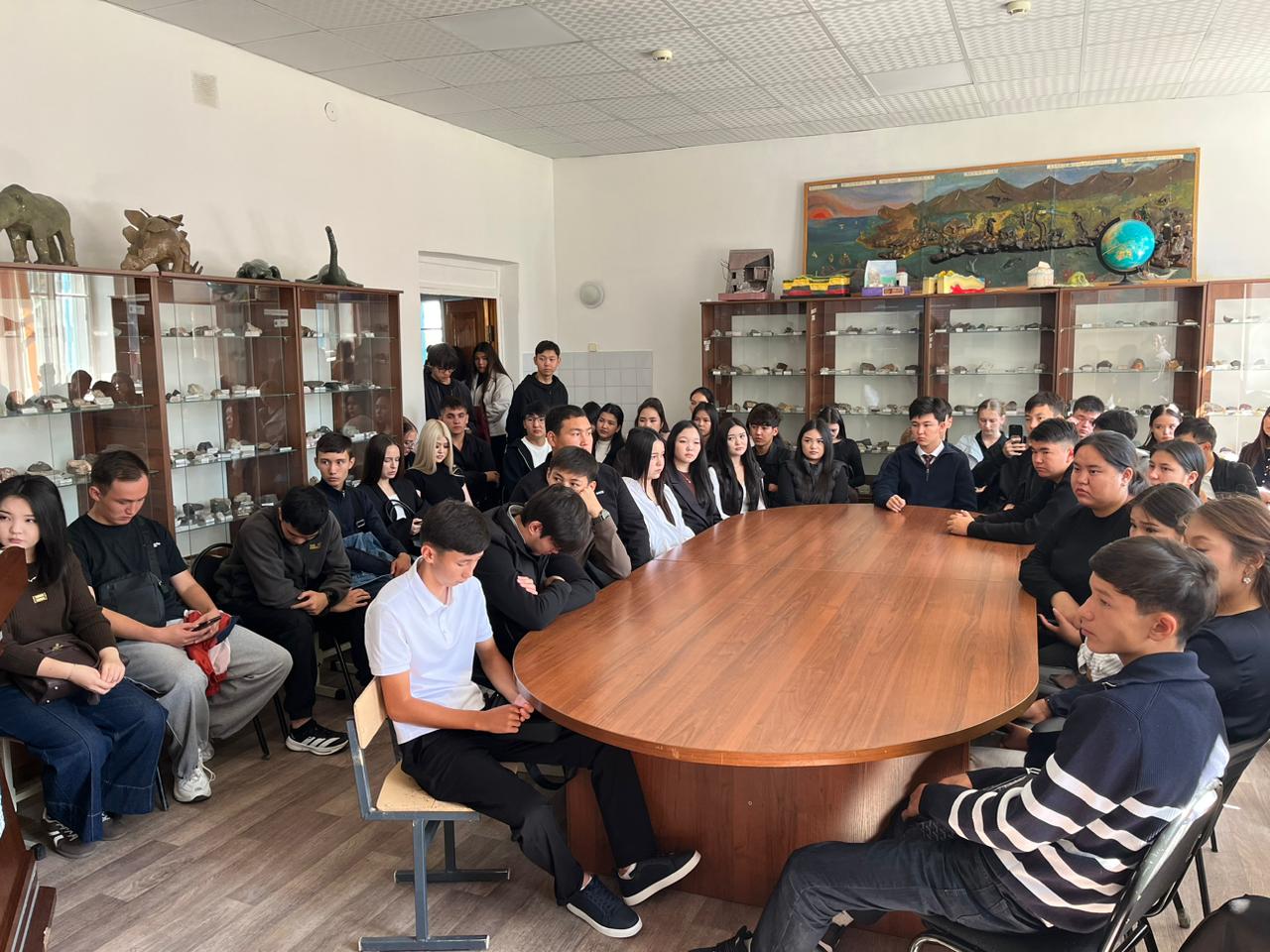
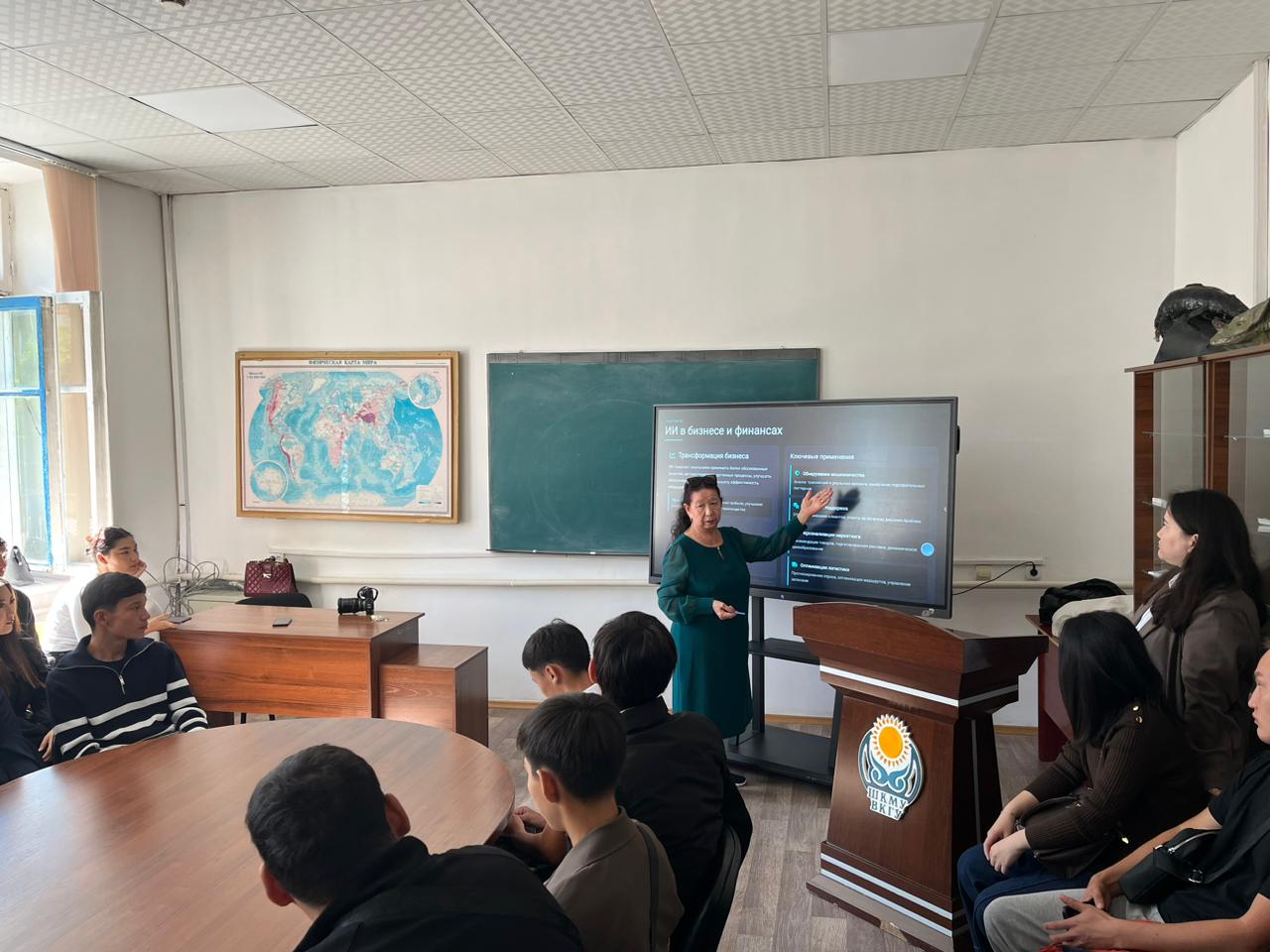
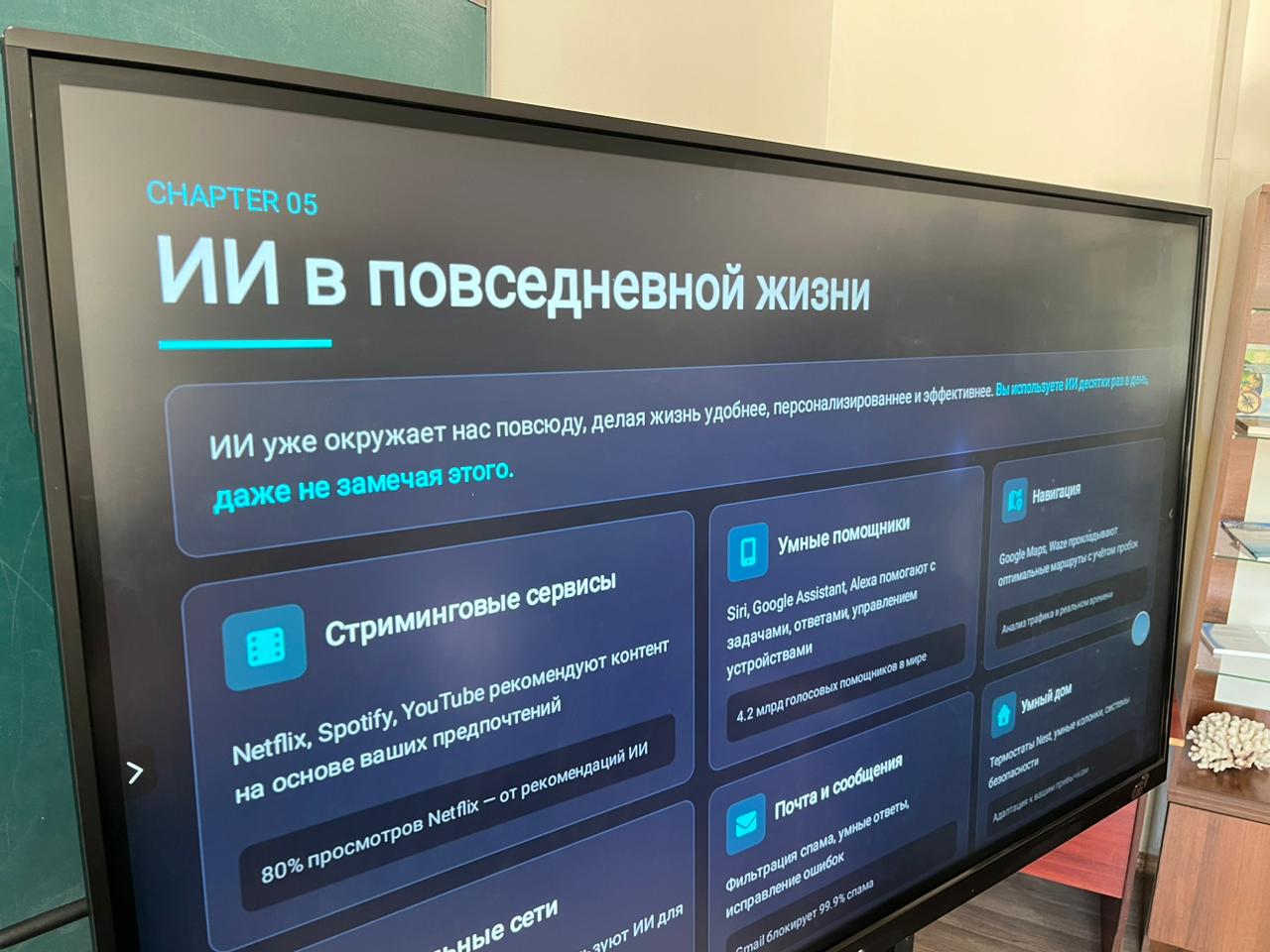
A session devoted to the modern capabilities and areas of application of artificial intelligence was held for students at Sarsen Amanzholov East Kazakhstan University. The session was conducted by Kulzipa Zhusupovna Dakiyeva, Doctor of Biological Sciences and Professor of the Department of Ecology and Geography.
During the meeting, participants explored the concept of artificial intelligence, its main capabilities, and the specific features of specialised AI systems. Artificial intelligence can be understood as the ability of machines to model certain human cognitive functions, including learning, reasoning, problem-solving, information perception, and language comprehension.
Participants were also introduced to the history of the development of this field and the key stages of its evolution. It was noted that the active development of artificial intelligence began in the 1950s.
Particular attention was paid to natural language processing (NLP), a field that enables computers to interact with human speech and text. Thanks to these technologies, systems are able to analyse, interpret, and generate text.
The relationship between artificial intelligence and robotics was also discussed. The integration of intelligent systems with physical devices enables robots to interact with their environment, navigate through space, work with various objects, make real-time decisions, and adapt to changing conditions.
At the conclusion of the session, it was emphasised that artificial intelligence is not intended to replace humans, but rather serves as a tool for solving complex tasks and improving the efficiency of various processes. The prospects for its further development largely depend on its responsible and competent use.
Adherence to ethical principles, human oversight, and a thoughtful approach to the application of modern technologies are essential conditions for ensuring that they benefit society. In education and science, artificial intelligence opens up new opportunities for learning, research, and professional development.