12 November 2026
PRESIDENT’S ADDRESS: NEW SOLUTIONS FOR THE DEVELOPMENT OF AMANZHOLOV UNIVERSITY
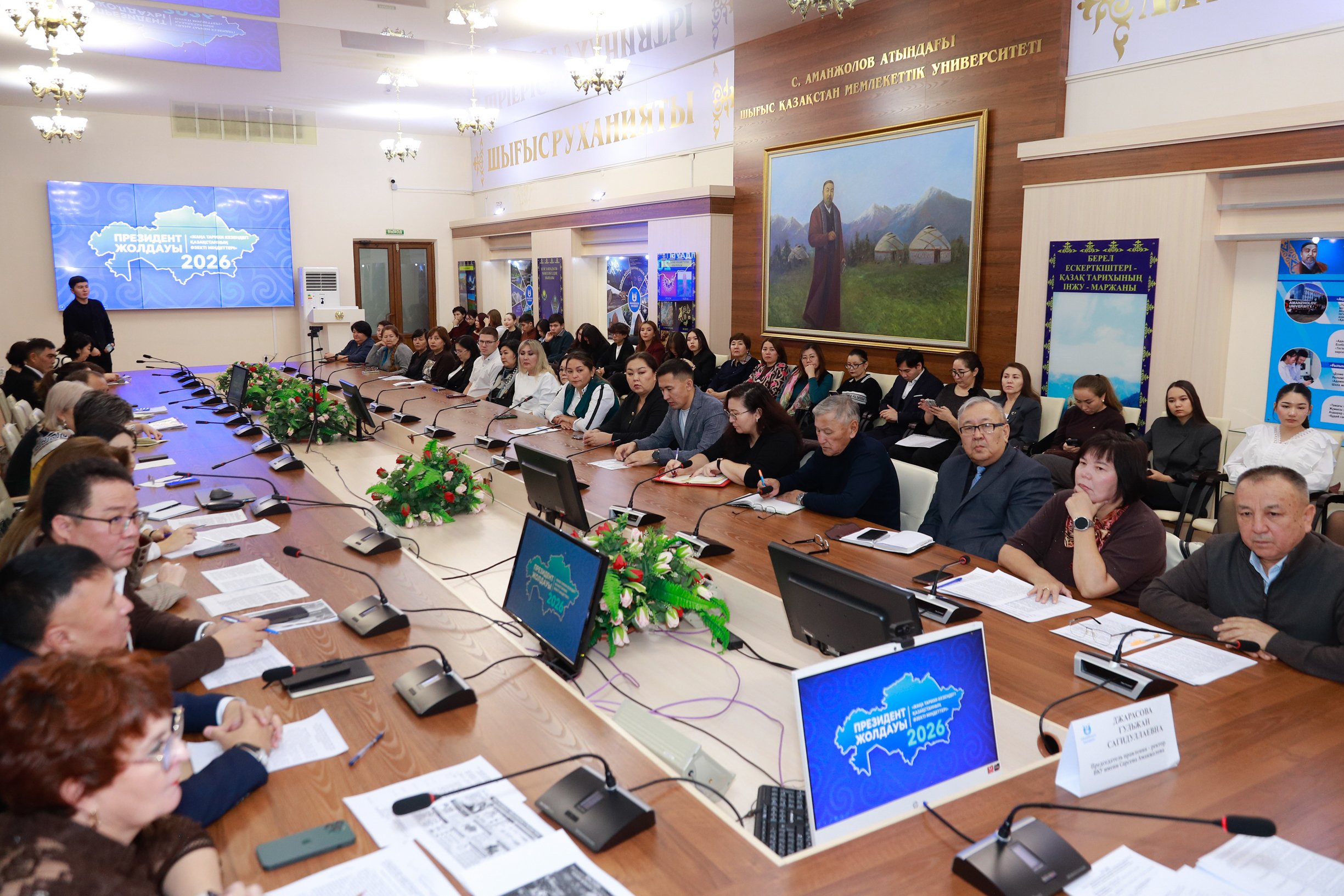
Sarsen Amanzholov East Kazakhstan University held a discussion of the Address of the President of the Republic of Kazakhstan under the leadership of The Chairman of the Board – Rector Gulzhan Jarassova.
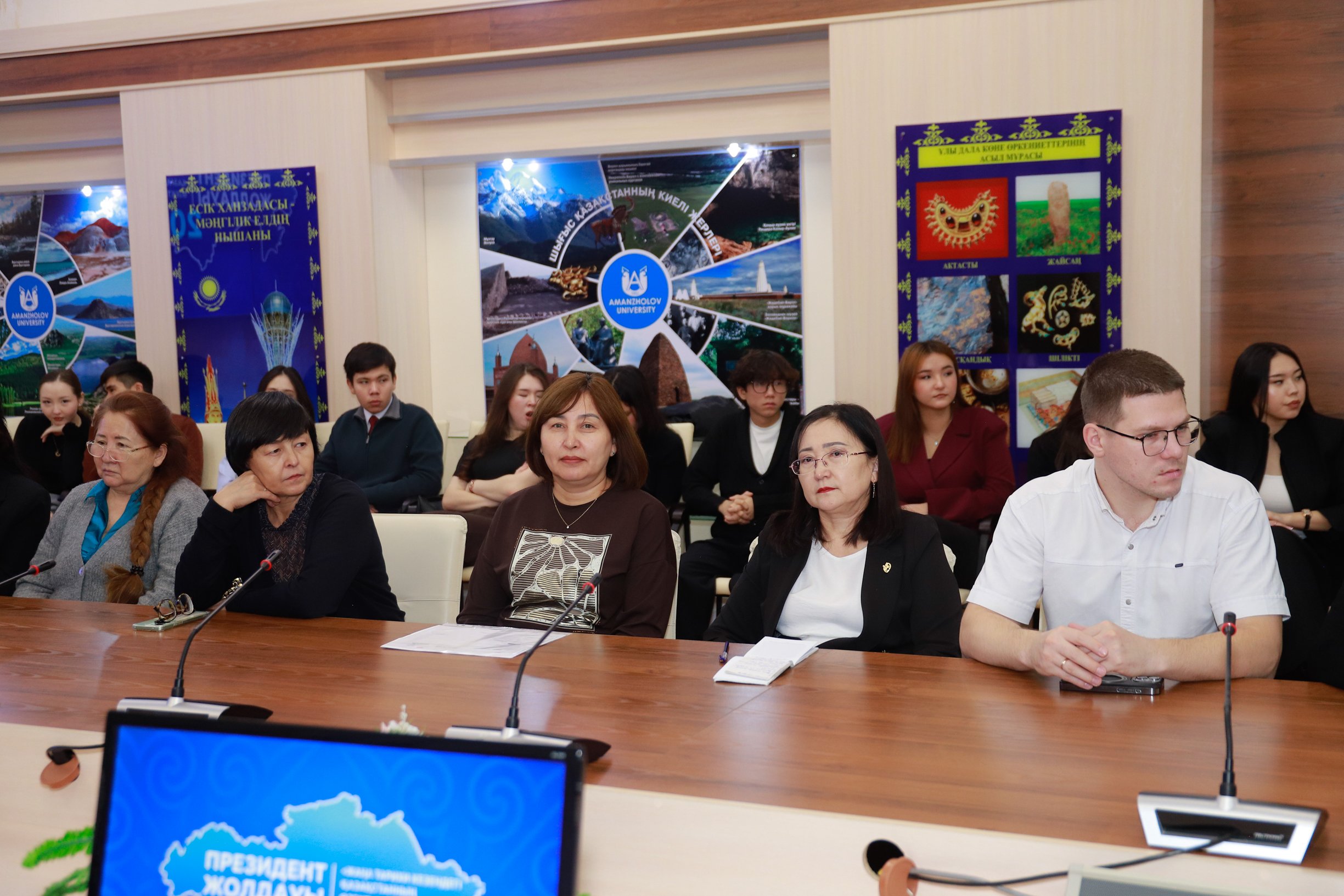
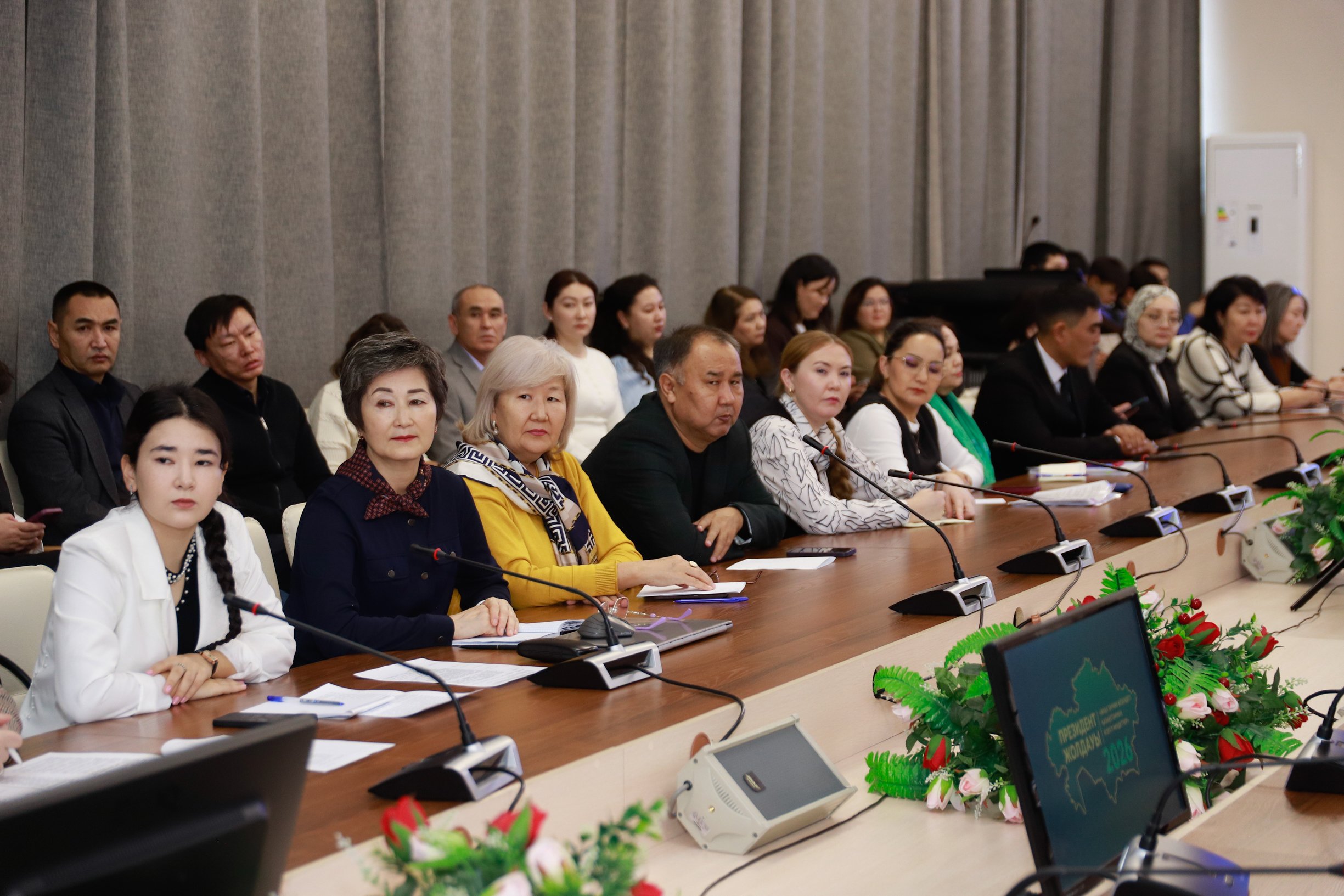
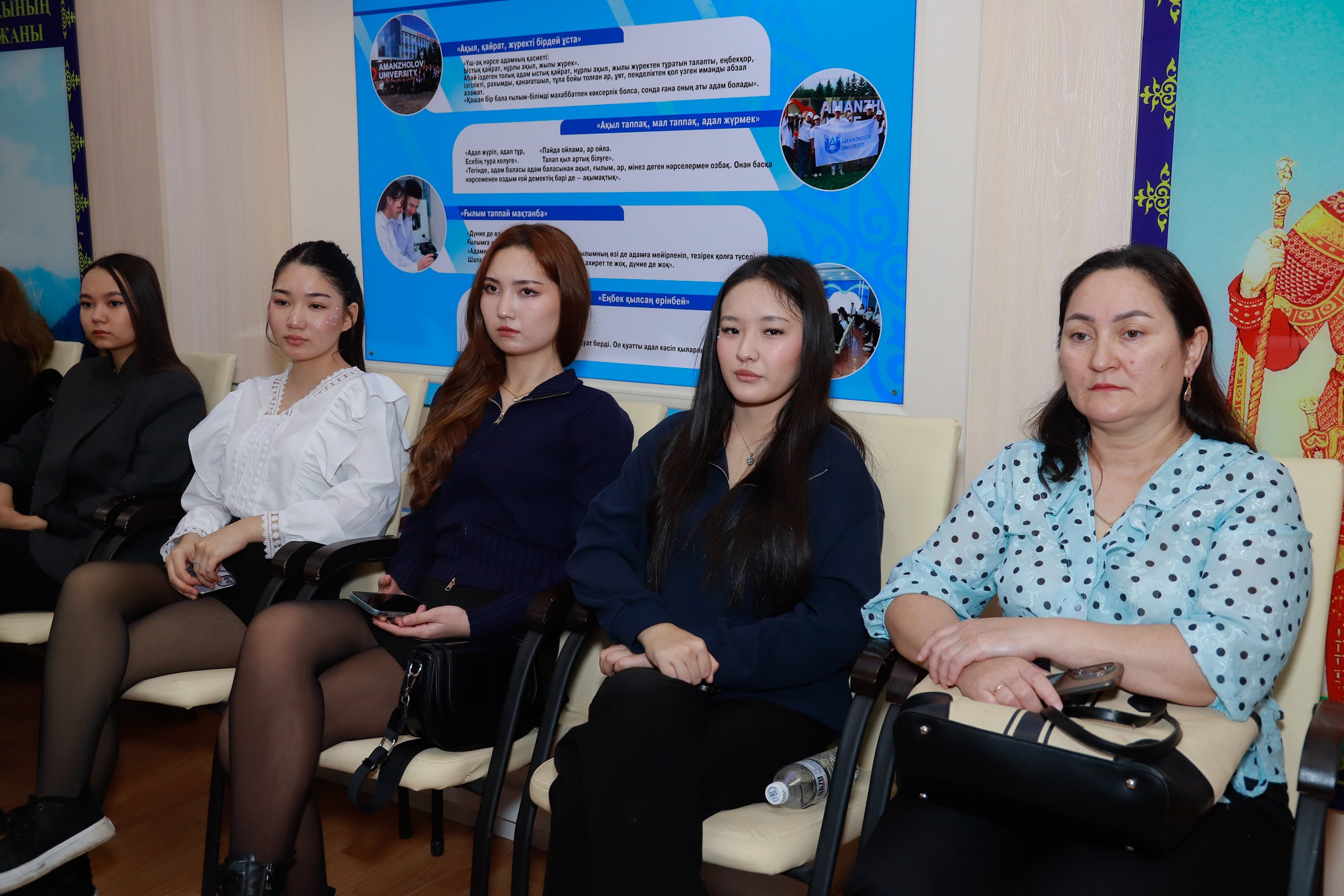
The meeting brought together representatives of the University leadership, faculty members, and students. The main focus was on specific projects through which the University intends to implement the priorities outlined by the Head of State.
Opening the meeting, the Rector emphasized that higher education today should not merely respond to global changes but should also actively contribute to shaping the future. Digitalization, artificial intelligence, scientific development, and improving the quality of education are no longer separate areas of activity, but interconnected conditions for the University’s competitiveness.
Digital transformation was identified as one of the key priorities. In particular, an initiative to introduce 13 AI agents was presented. These tools are expected to automate workflows across University units, reduce the volume of routine operations, and improve management efficiency. At the same time, artificial intelligence and blockchain technologies are planned to be integrated into educational programs so that students can master the tools shaping the modern digital economy.
However, digital transformation should not be limited to administrative processes. Its main outcome should be the creation of new learning opportunities in which theory is closely connected with practice and modern technologies become an instrument for students’ professional development.
This approach is reflected in the development of the Nuclear Physics and Nuclear Energy educational program. Plans include the creation of three specialized classrooms, expansion of cooperation with relevant organizations within the national consortium, and the launch of an augmented reality laboratory. The laboratory will strengthen the practice-oriented nature of natural science educational programs and make complex processes more visual, accessible, and technology-driven.
New educational opportunities should be accessible to everyone. Therefore, another important area of discussion was the development of an inclusive environment. Particular emphasis was placed on moving from basic accessibility toward evidence-based inclusion grounded in scientifically validated approaches and measurable outcomes.
To support this goal, it was proposed to establish a digital laboratory and develop a “Digital Inclusion Navigator” for children with special educational needs. Combining research, digital tools, and practical experience will help improve support systems for children and create new opportunities for inclusive education.
At the same time, the University’s potential is determined not only by the quality of specialist training but also by the ability of research to respond to real societal needs. In this context, closer interaction between the research environment and the regional economy is becoming increasingly important. Among the priorities identified were laboratory modernization, commercialization of scientific developments, expansion of agricultural research, and the development of solutions for the efficient use of water resources.
Special attention was also given to expanding cooperation with the business sector. The University plans to prepare proposals for participation in regional pilot digital projects for agriculture and entrepreneurship in 2027, as well as to hold negotiations with potential customers and partners. This approach will make it possible to align research activities more closely with the needs of enterprises and transform research outcomes into practical and in-demand technological solutions.
However, technological modernization and scientific achievements cannot be fully effective without the development of responsible individuals. Therefore, alongside professional competencies, academic integrity, civic responsibility, and the active participation of young people in public life remain important priorities.
In this area, particular attention was given to strengthening the principles of “Adal Azamat,” developing student self-government, the volunteer movement, and environmental initiatives. It is important that these values become not simply part of educational and social activities, but a natural foundation of University culture and the future professional activities of graduates.
The discussion continued in an open-dialogue format, during which faculty members and students shared their own proposals, supplementing the presented initiatives with new ideas and practical solutions.
The initiatives presented will form the basis of Amanzholov University’s further work on implementing the President’s Address. They are united by a common goal — to connect national priorities with the quality of specialist training, the development of University research, and the current needs of the region, transforming strategic priorities into concrete solutions and practical results.