13 November 2026
AMANZHOLOV UNIVERSITY STUDENTS USE ARTIFICIAL INTELLIGENCE TO CREATE BIOLOGY LEARNING MATERIALS
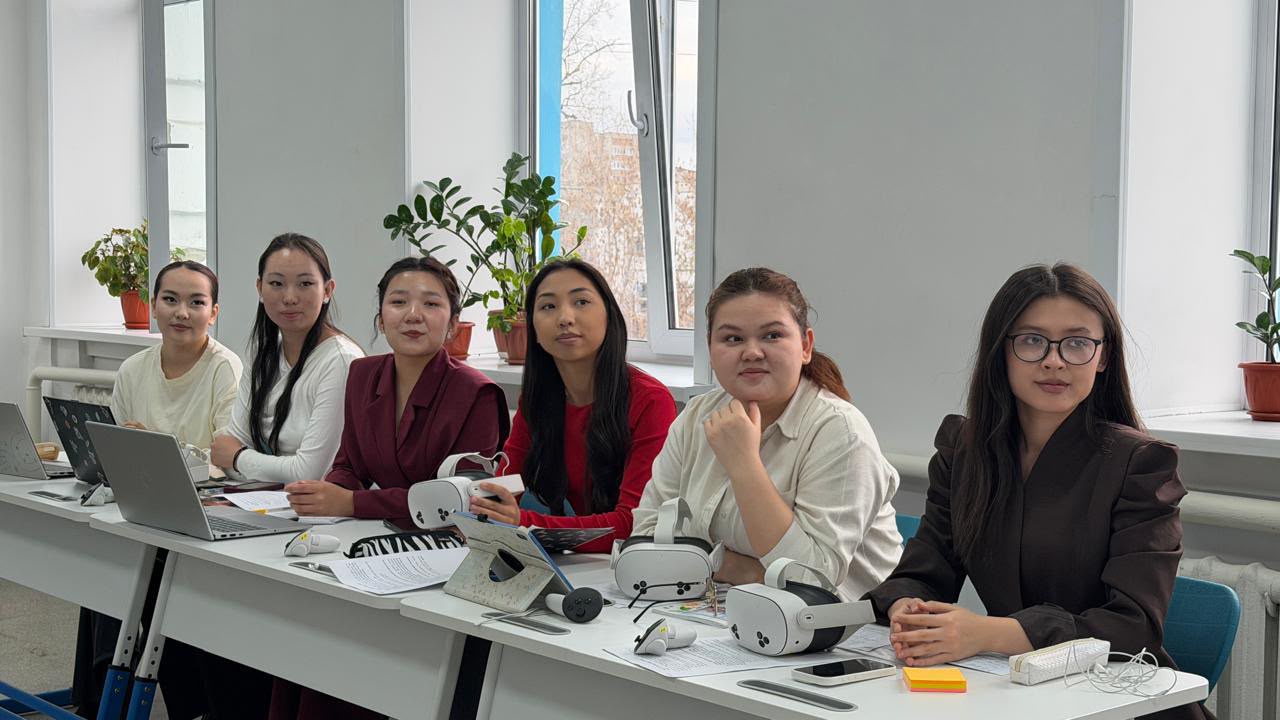
At Sarsen Amanzholov East Kazakhstan University, future biology teachers are learning to use artificial intelligence not only in theory but also in practice. One such class was held at the Department of Biology of the Higher School of IT and Natural Sciences for fourth-year students of the 6B01512 Biology and Natural Science educational program.
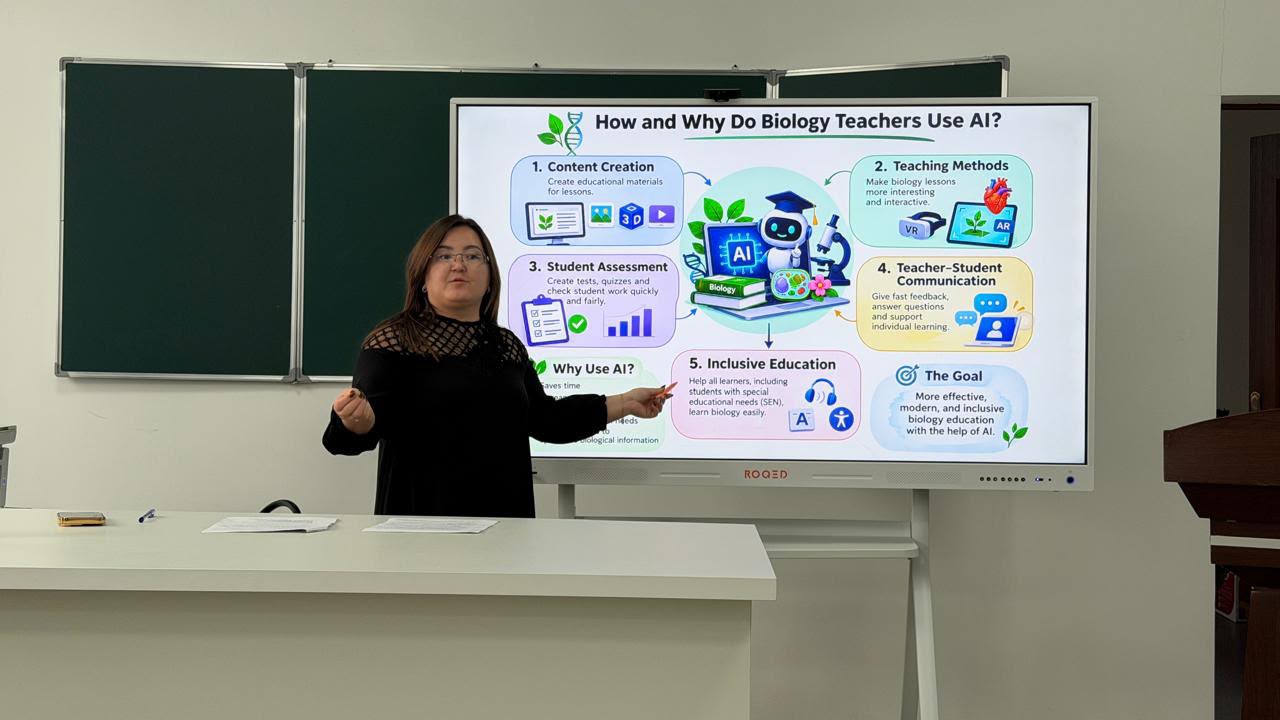
The open practical class, conducted in English, focused on the topic “The Use of Artificial Intelligence in Biological Education.” It was led by Zh.K. Kabatayeva, Head of the Department of Biology, Senior Lecturer, and Master of Biology.
The session focused on artificial intelligence tools that can be used in preparing and conducting biology lessons. Students explored not only their capabilities but also learned how to critically evaluate materials generated with their assistance.
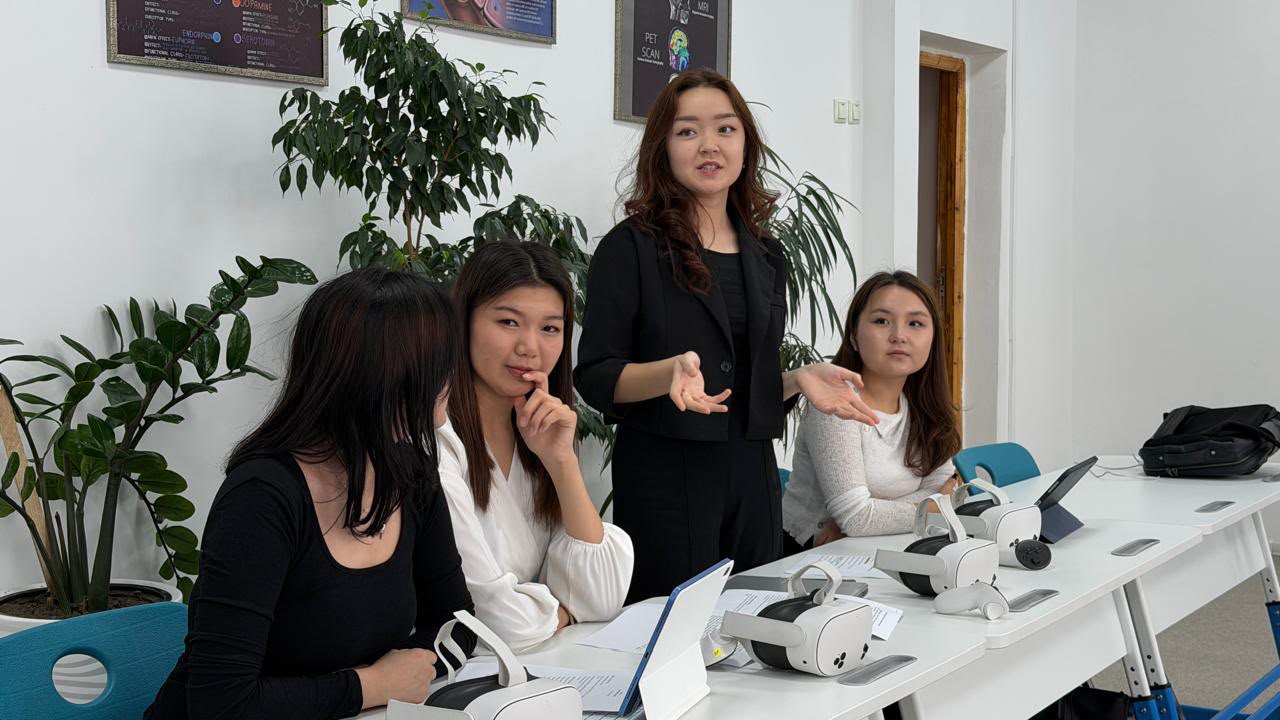
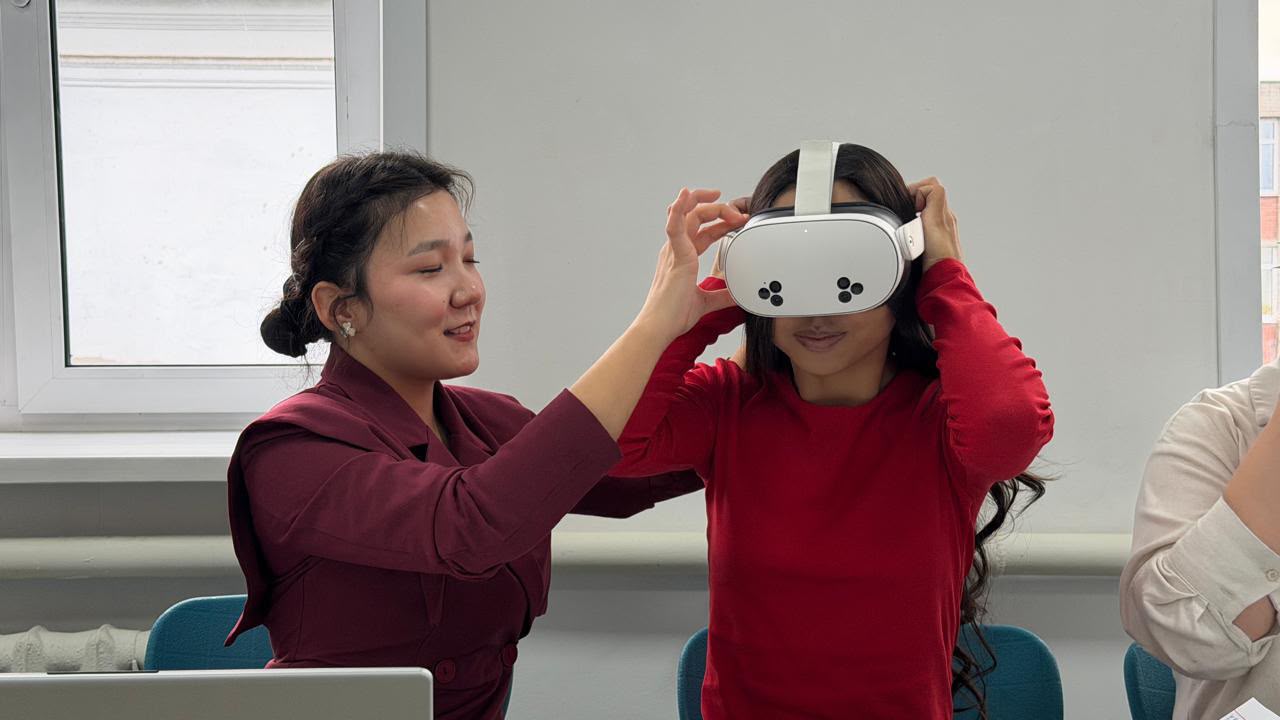
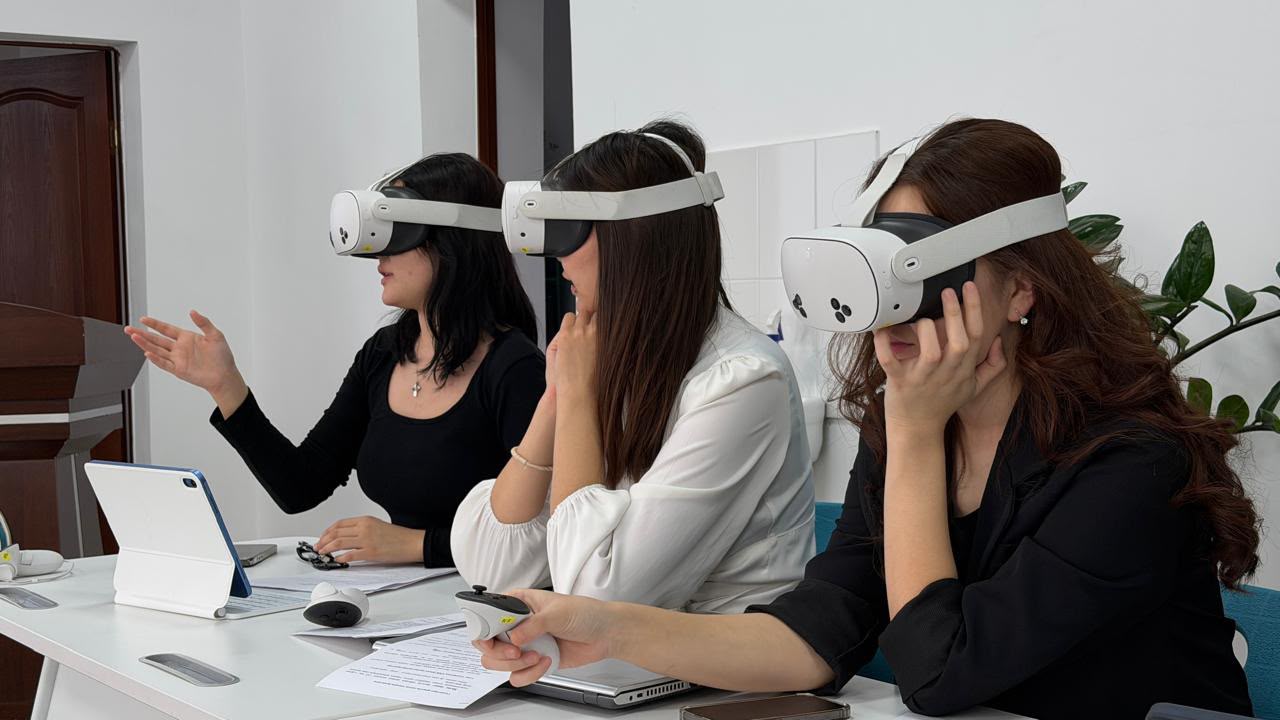
At the beginning of the class, participants discussed in English the basic concepts, types, and areas of application of artificial intelligence in education, as well as related ethical issues. Using VR headsets, they explored immersive materials illustrating how AI works and how it can be applied in the educational process.
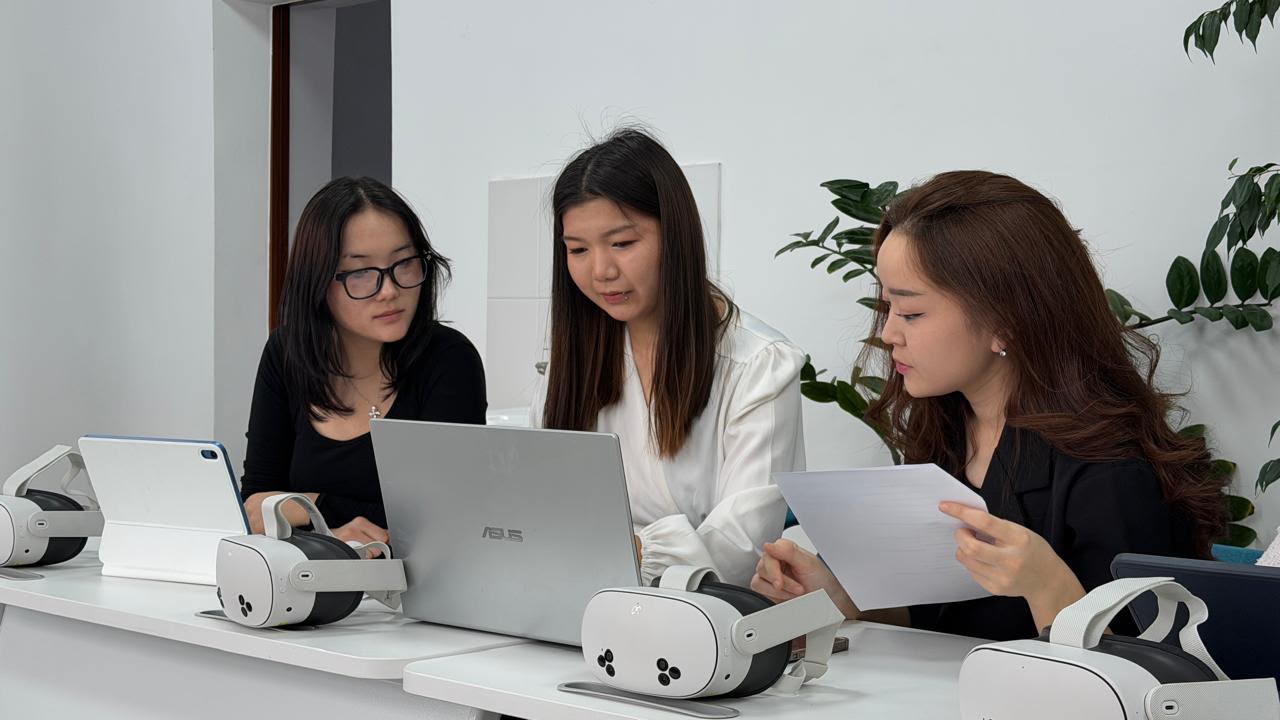
The students then divided into three groups and moved on to practical assignments.
The first group used the Kazakhstan-based Shyraq AI platform to develop a short-term biology lesson plan. Students demonstrated how they formulated prompts for the artificial intelligence system and then evaluated whether the generated material corresponded to the learning objectives and scientific requirements.
The second group created an educational video lecture using Synthesia AI. Participants assessed how clearly and effectively biological information was presented and compared the capabilities of Synthesia and ChatGPT in preparing educational content. Particular attention was paid to how video materials can help explain complex biological topics to school students.
The third group conducted a virtual laboratory experiment using the SciSim platform. Students measured their pulse rates, entered the results into the system, and analyzed the automatically generated conclusion. They assessed its scientific validity and compared the possibilities of a virtual experiment with those of a traditional laboratory activity.
The practical work was accompanied by group discussions, comparative analysis, and project presentations. At the end of the session, students discussed the limitations and potential risks associated with the use of artificial intelligence in biology teaching.
The main conclusion of the class was that artificial intelligence can become an effective assistant for teachers, but it cannot replace professional judgment. Any educational material created with AI requires verification and comparison with reliable scientific sources.
Such practical activities help future biology teachers develop digital and research competencies, learn to use modern technologies effectively, and apply English in their professional activities.