24 September 2026
GIS TECHNOLOGIES, ECOLOGY AND PUBLIC HEALTH: INTERNATIONAL SCIENTIFIC SEMINAR HELD AT AMANZHOLOV UNIVERSITY
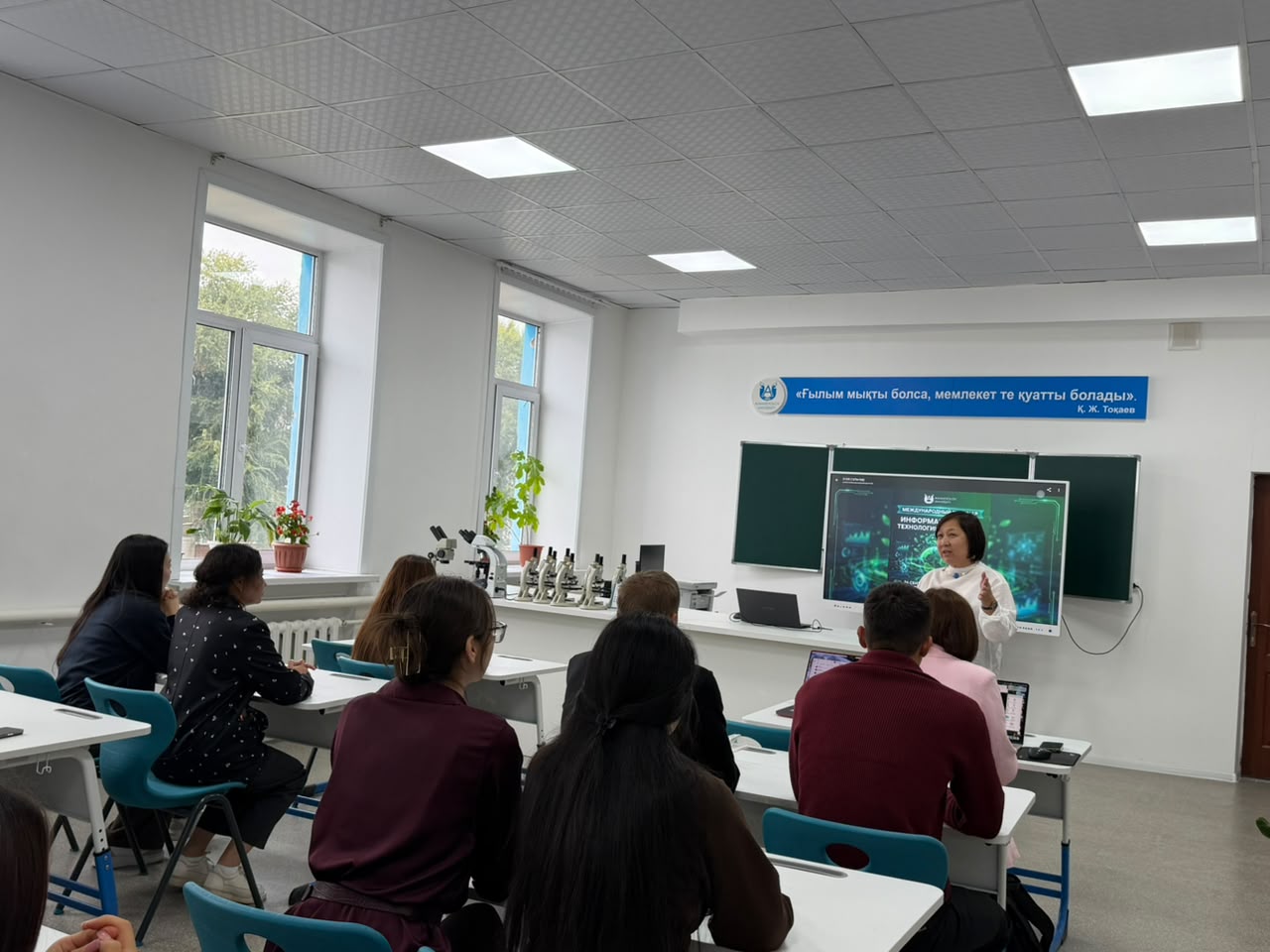
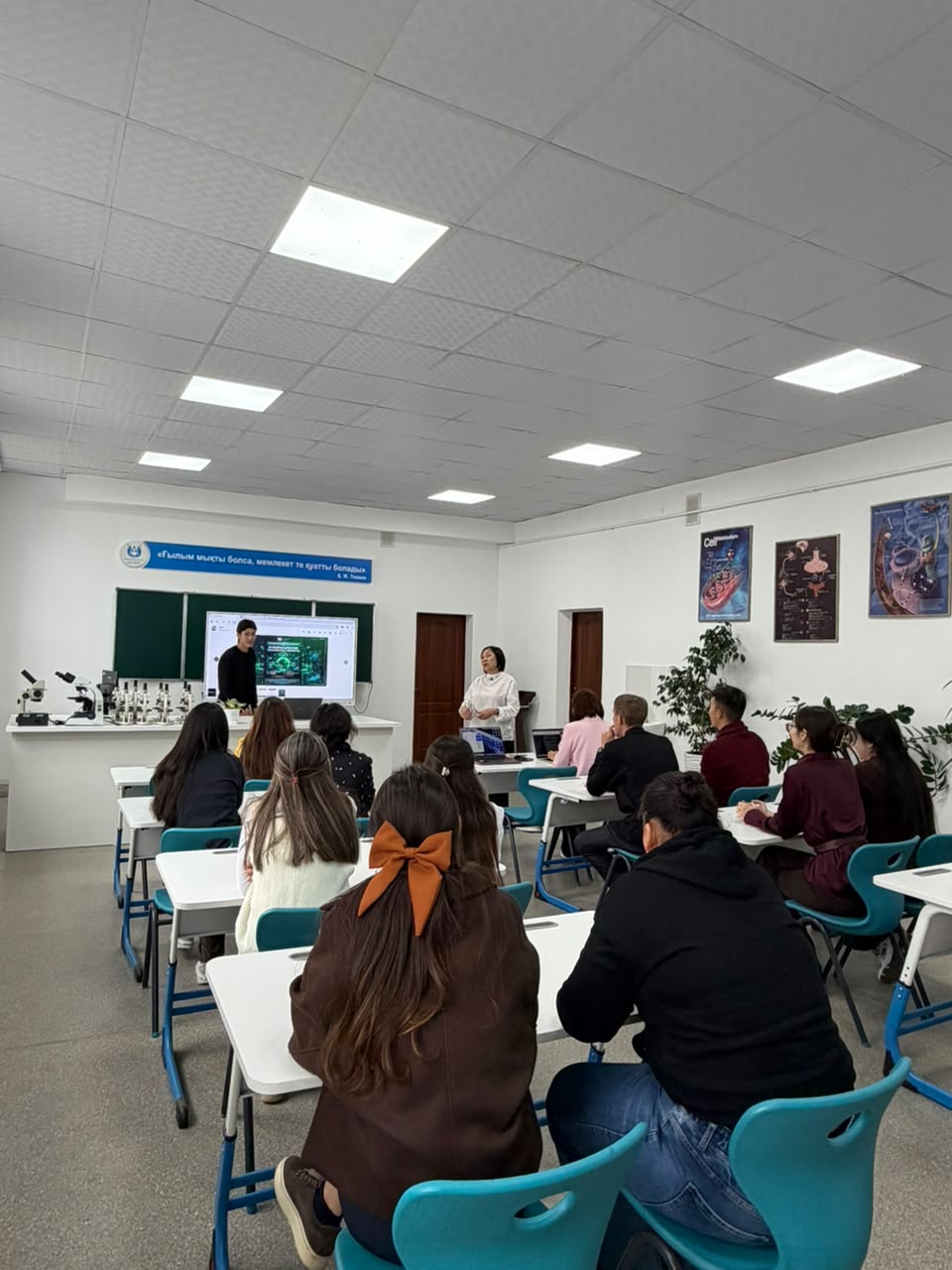
Sarsen Amanzholov East Kazakhstan University hosted the International Scientific Seminar “Information Technologies in Ecology.” The event was organized by the Higher School of IT and Natural Sciences together with the Department of Biology as part of the implementation of the grant-funded research project IRN AP23489325 “Modeling the Spatial and Temporal Dynamics of Public Health Indicators in East Kazakhstan Region Using GIS Technologies.”
The seminar brought together scientists, faculty members, researchers, master’s students, and undergraduate students. The scientific programme united representatives of universities from Kazakhstan and abroad and focused on modern approaches to studying environmental processes, spatial analysis of environmental and public health data, and the application of geographic information technologies in ecological research.
The seminar was opened by Gulnaz Yessimbekovna Sadykanova, Candidate of Biological Sciences and Research Professor at the Department of Biology of Sarsen Amanzholov East Kazakhstan University. In her welcoming remarks, she emphasized the importance of interdisciplinary cooperation and the use of modern digital tools for studying environmental processes and their impact on public health.
The first scientific presentation was delivered by Sanat Kumarbekuly, PhD, Associate Professor at the Faculty of Natural Sciences and Geography of Abai Kazakh National Pedagogical University in Almaty. His presentation was entitled “The Impact of Environmental Factors on Public Health: A Territorial Analysis.” The report presented approaches to the spatial assessment of relationships between environmental factors and public health indicators.
Gulnaz Yessimbekovna Sadykanova presented a report entitled “Ecological Zoning of East Kazakhstan Region Using GIS Technologies.” The study examined the potential of geographic information methods for the comprehensive assessment of the environmental situation and territorial differentiation within the region.
Ruslan Anatolyevich Ulengov, Candidate of Geographical Sciences and Associate Professor at Kazan Federal University, delivered a presentation entitled “Assessment of the Environmental Condition of Components of the Urban Environment of Kazan Using GIS Technologies.” The presentation examined the possibilities of using digital tools to analyze the condition of individual components of the urban environment.
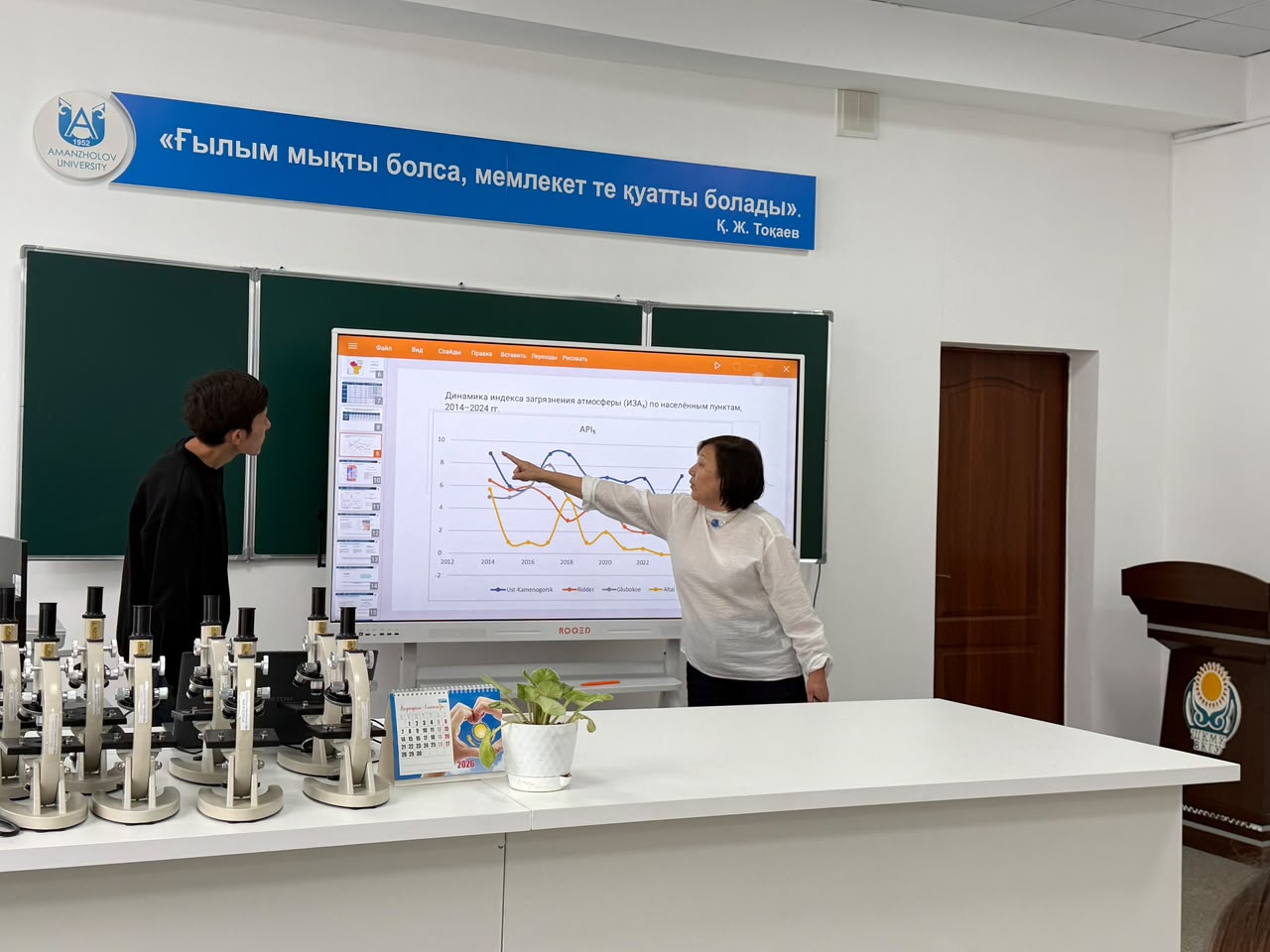
Yevgeny Petrovich Krupochkin, Candidate of Geographical Sciences, Associate Professor, and Head of the Department of Economic Geography and Cartography at Altai State University in Barnaul, Russian Federation, presented a report entitled “Spatial and Temporal Aspects of Studying Environmental Problems in Altai Krai: Theory, Methodology and Results.” The presentation focused on modern approaches to studying regional environmental problems while taking into account their spatial and temporal dynamics.
Zukhra Bolatbekovna Bagimbayeva, Master of Pedagogical Sciences and Lecturer at the Department of Biology of Sarsen Amanzholov East Kazakhstan University, presented the results of a study entitled “GIS Analysis of the Spatial and Temporal Dynamics of Morbidity in the Population of East Kazakhstan Region.” The report examined the possibilities of using GIS tools to analyze territorial patterns and changes in population morbidity indicators.
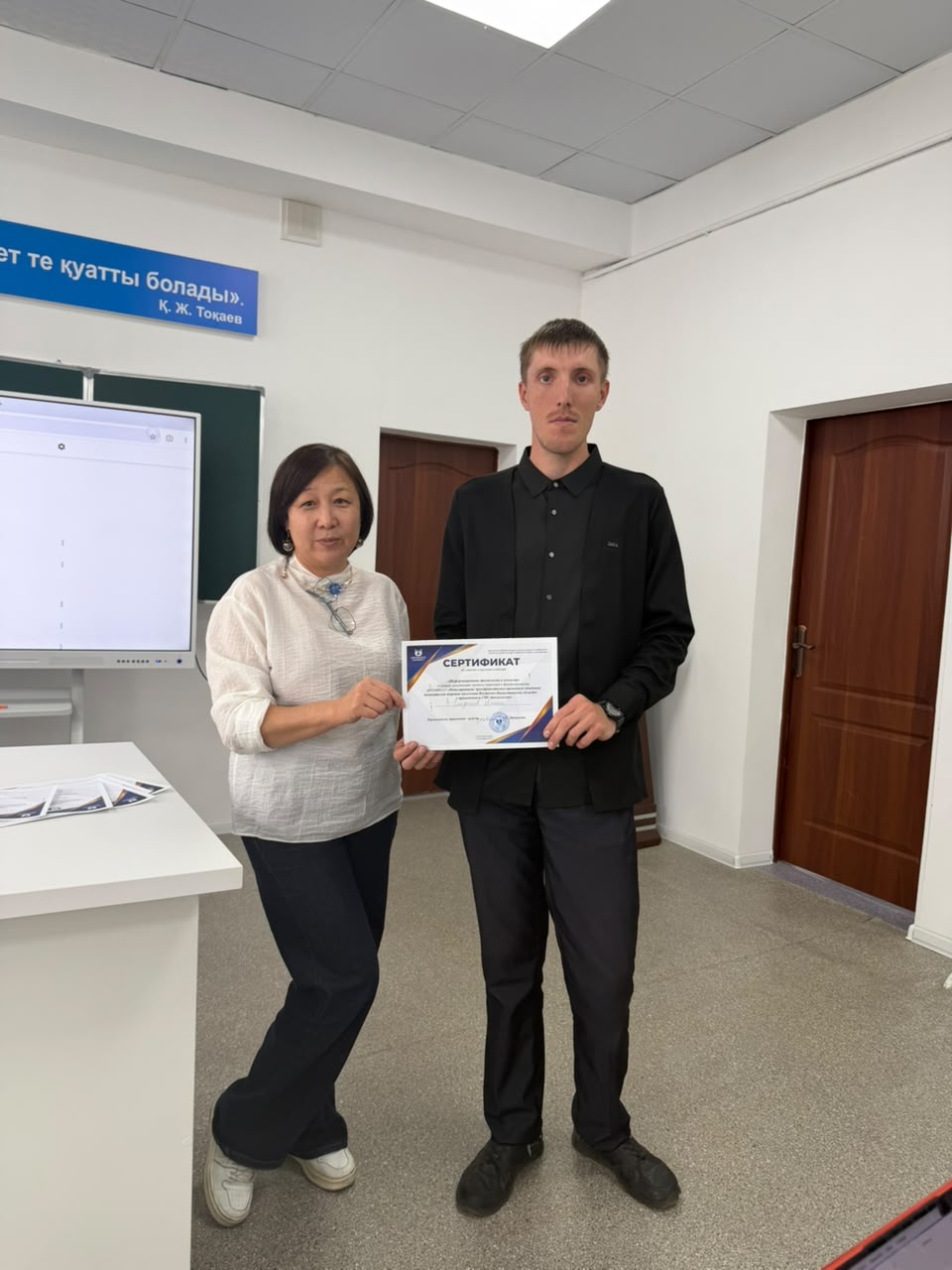
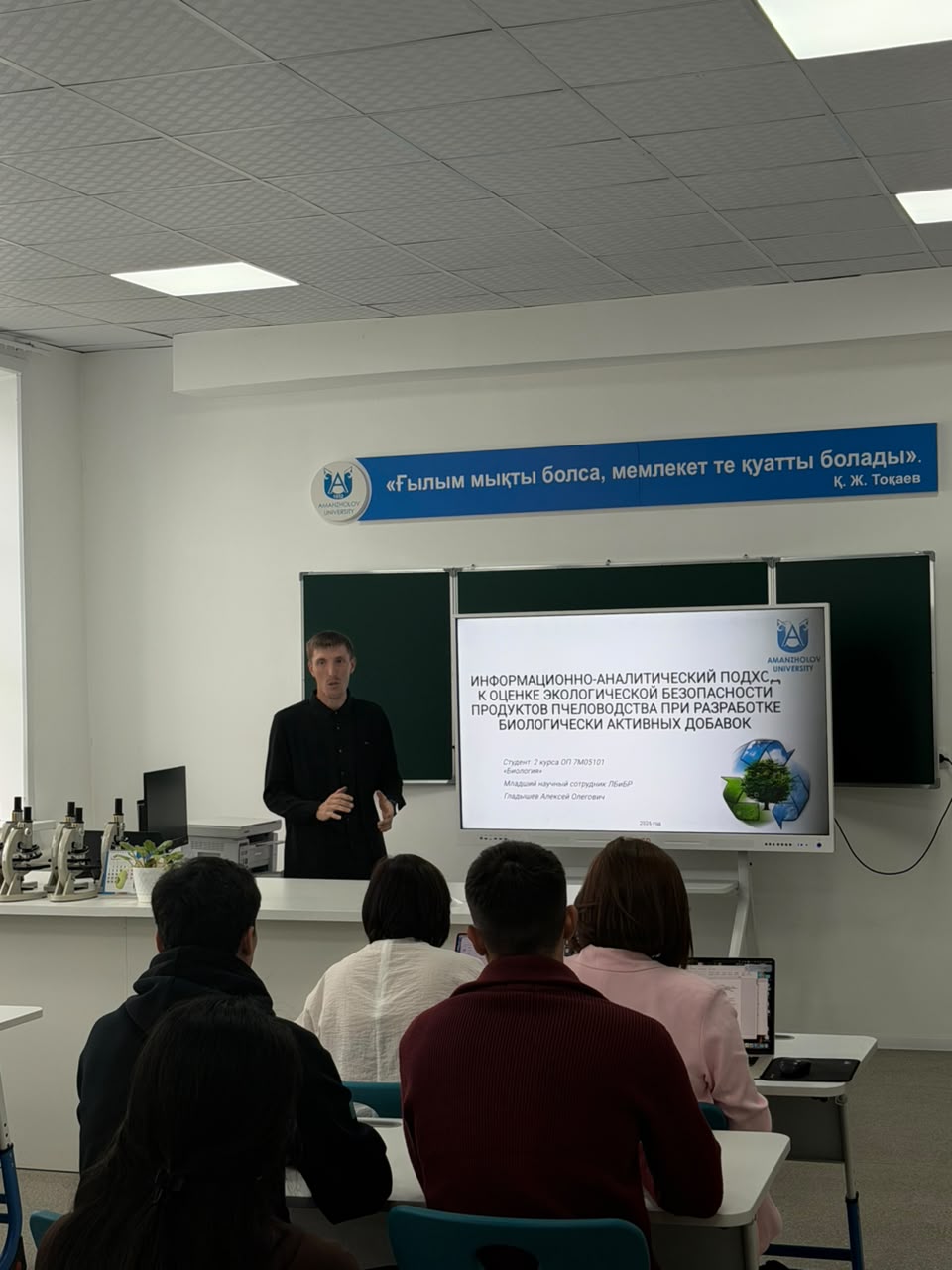
Gladyshev and Dolanbayeva, researchers at the National Scientific Laboratory for Collective Use, Laboratory of Plant Biology and Biotechnology, delivered a presentation entitled “An Information and Analytical Approach to Assessing the Environmental Safety of Beekeeping Products in the Development of Biologically Active Supplements.” The speakers presented approaches to using information and analytical methods to assess the environmental safety of beekeeping products and their application in the development of biologically active supplements.
The scientific part of the programme concluded with a presentation by Syrym Sydykov, a second-year master’s student of the 7M01505 Biology educational program. His report, “Spatial Differentiation of the Environmental Situation in Ust-Kamenogorsk Using GIS,” focused on the application of geographic information technologies to analyze the environmental situation in the city.
During the general discussion, participants reviewed the results of the presented studies and exchanged views on current issues in environmental science. Particular attention was paid to the possibilities of comprehensive analysis of environmental information, comparison of environmental monitoring data with spatial characteristics of territories and public morbidity indicators, as well as the prospects for using GIS technologies to study anthropogenic impacts on the environment.
The International Scientific Seminar became a platform for the professional exchange of knowledge and research experience among scientists, faculty members, and students. The event contributed to the development of interdisciplinary cooperation, expansion of academic contacts, and strengthening of collaboration between universities in Kazakhstan and international educational institutions.
Holding such scientific events creates opportunities to present research results, discuss modern methodologies, and identify new areas for joint research in ecology, biology, and geographic information technologies.