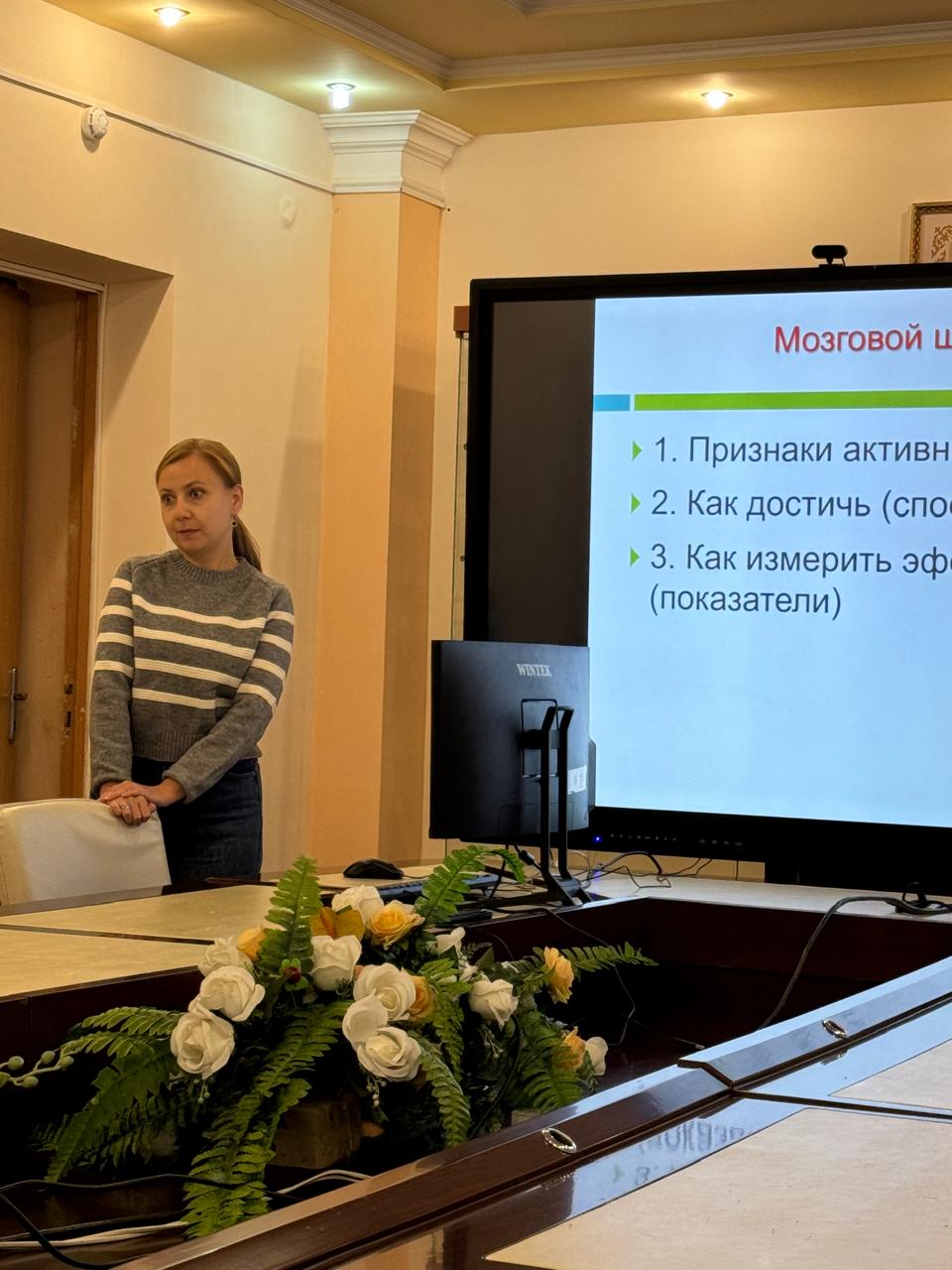
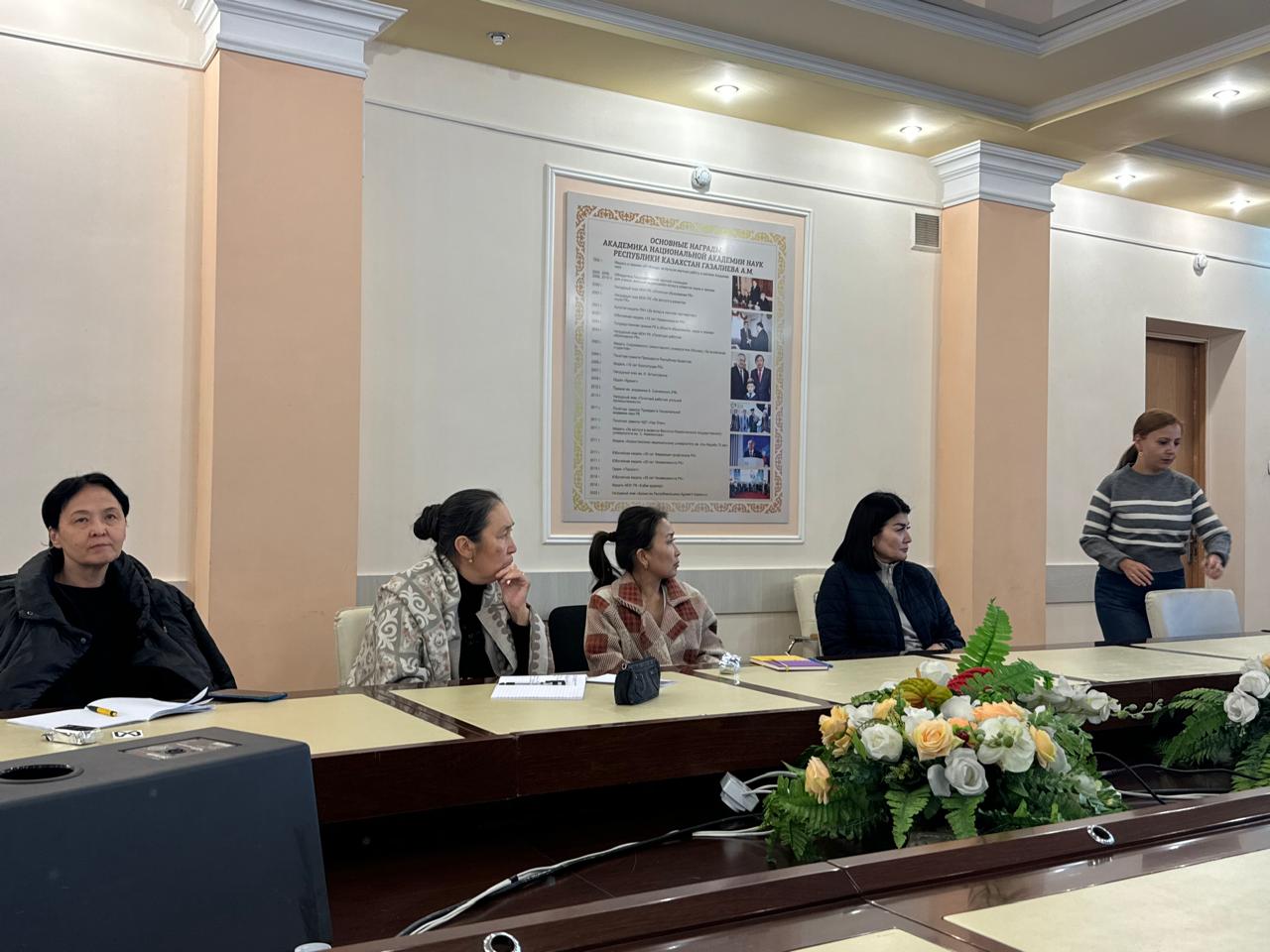
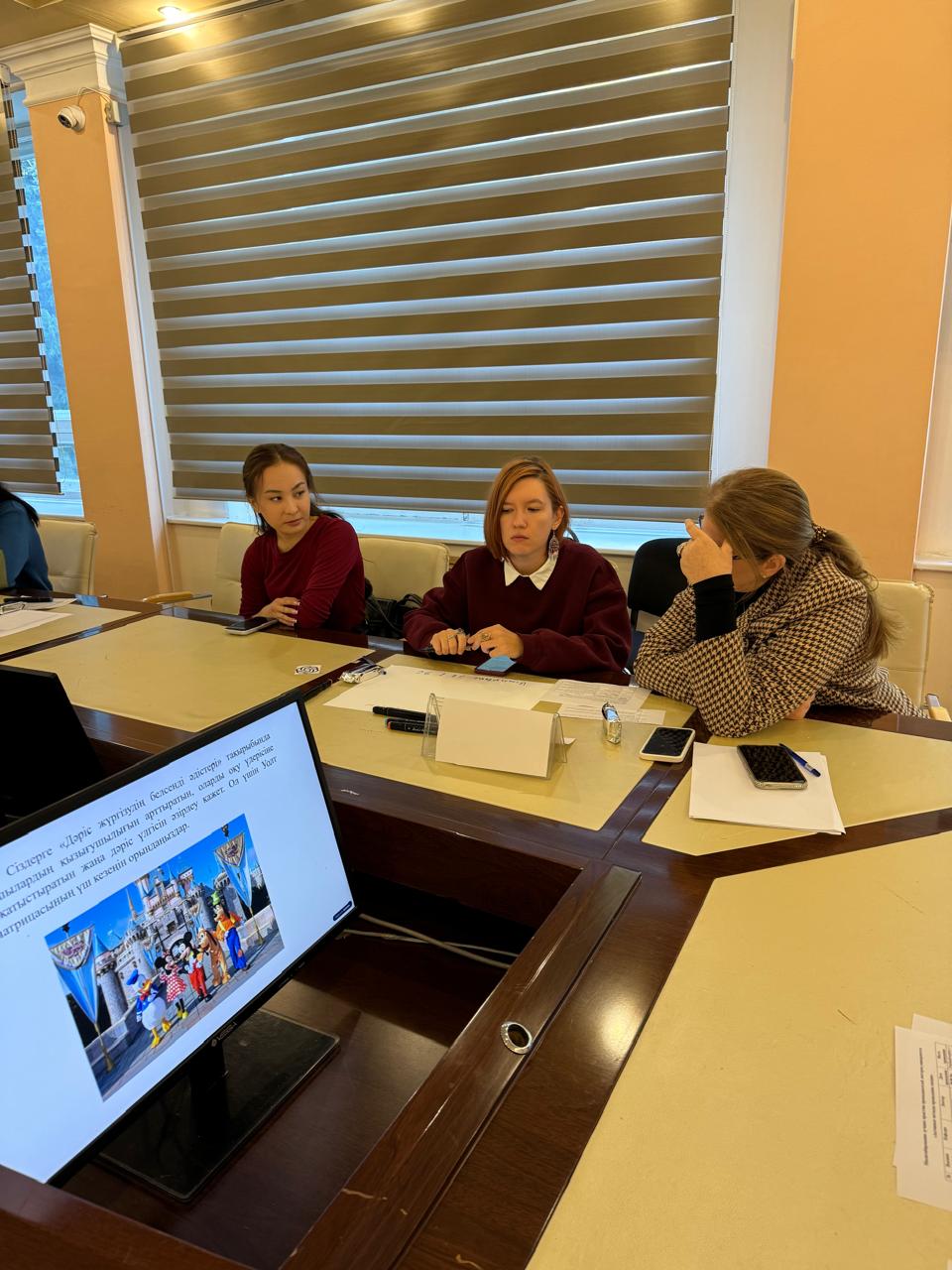
As part of the methodological seminar “Scaling Best Practices: Active Methods for Delivering Lectures,” faculty members continued to explore modern educational technologies and practical tools for organizing the learning process. This time, particular attention was paid to digital solutions, project-based technologies, and methods that can make lectures more dynamic, meaningful, and focused on active student participation.
Faculty members of the Department of Pedagogical Education and Management – Senior Lecturers N.K. Akitpayeva, F.S. Kenzhebekova, and A.V. Kosyntseva – transformed the classroom into a space for practical exploration and professional exchange. Participants not only learned about new approaches but also immediately tested them in practice, assessing their potential for use in their own teaching.
During the seminar, interactive platforms, instant feedback tools, and gamification elements were presented to help maintain students’ attention and engagement. Teamwork formats, brainstorming, and the case method attracted particular interest, as they make it possible to actively involve students in discussion and collaborative problem-solving even in large-group lectures. The practical part also focused on designing the structure of an interactive lecture: faculty members worked with tools that help combine academic content with visual materials, questions, discussion, and feedback.
The session concluded with an open microphone discussion and an exchange of professional ideas. Faculty members discussed ways to adapt the proposed tools to the specific features of different disciplines, shared their own experience, and considered possible challenges that may arise when introducing new formats.
The seminar demonstrated that the modern lecture is gradually moving beyond the traditional monologue format. Today, it is a space for professional dialogue, collaborative exploration, and active interaction, where students become not only listeners but also direct participants in the educational process. Such approaches create conditions for increasing student engagement and developing a modern educational environment at the University.