10 August 2026
INTERNATIONAL PROJECT ON GREATER ALTAI CLIMATE CHANGE DISCUSSED AT AMANZHOLOV UNIVERSITY
Sarsen Amanzholov East Kazakhstan University hosted an introductory discussion session under the international research project “Melting Mountains: Environment, Society, and the Vertical Climate Boundary of the Greater Altai (1950–2020).”
Scheduled to run from 2025 to 2029, the project aims to conduct a comprehensive assessment of how climate change impacts the environment, natural ecosystems, society, and traditional land-use practices across the Greater Altai territory. The research focuses on tracking long-term climate dynamics, assessing their effects on mountainous ecosystems, and examining the evolution of traditional environmental practices among local communities.
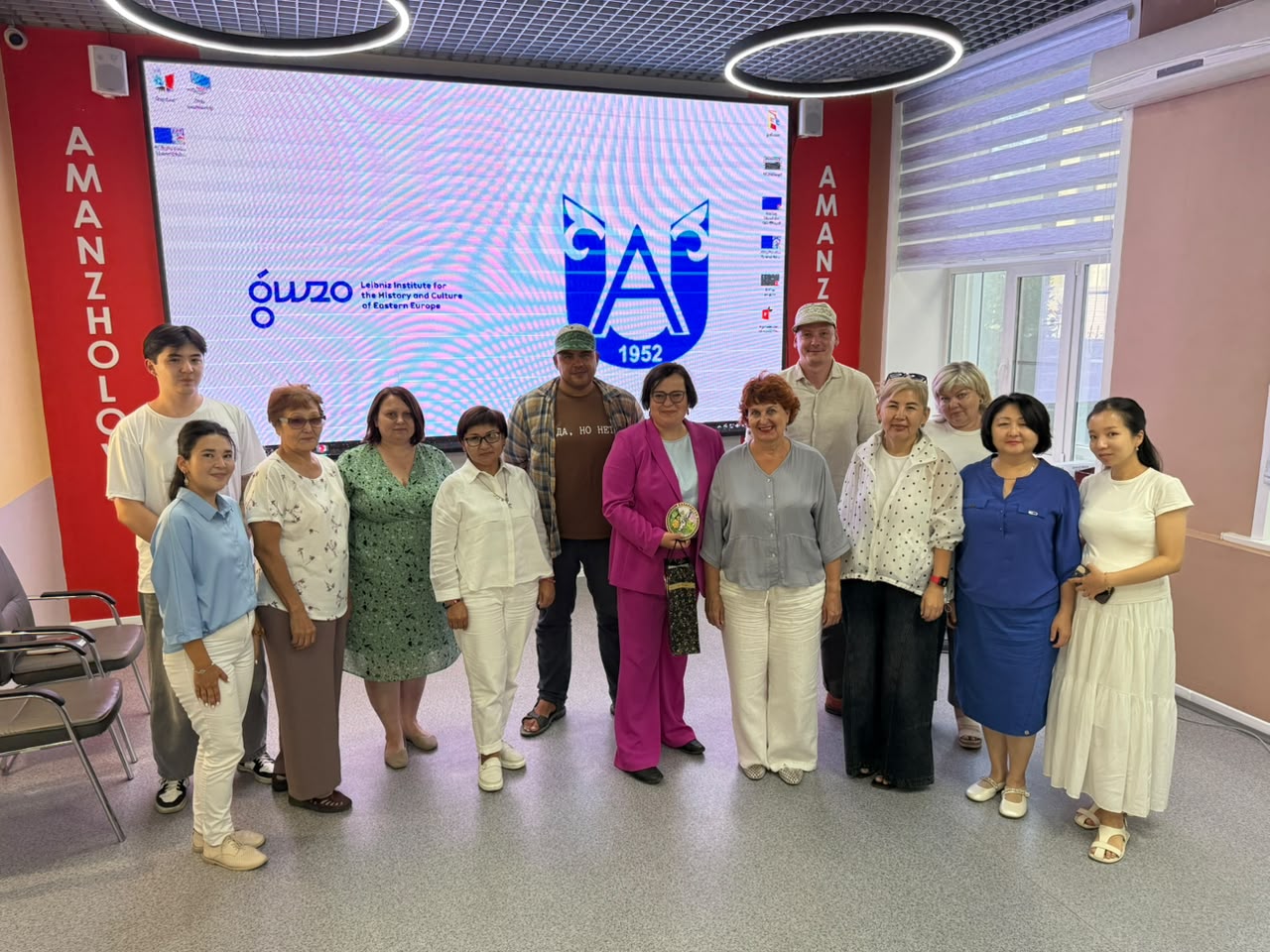
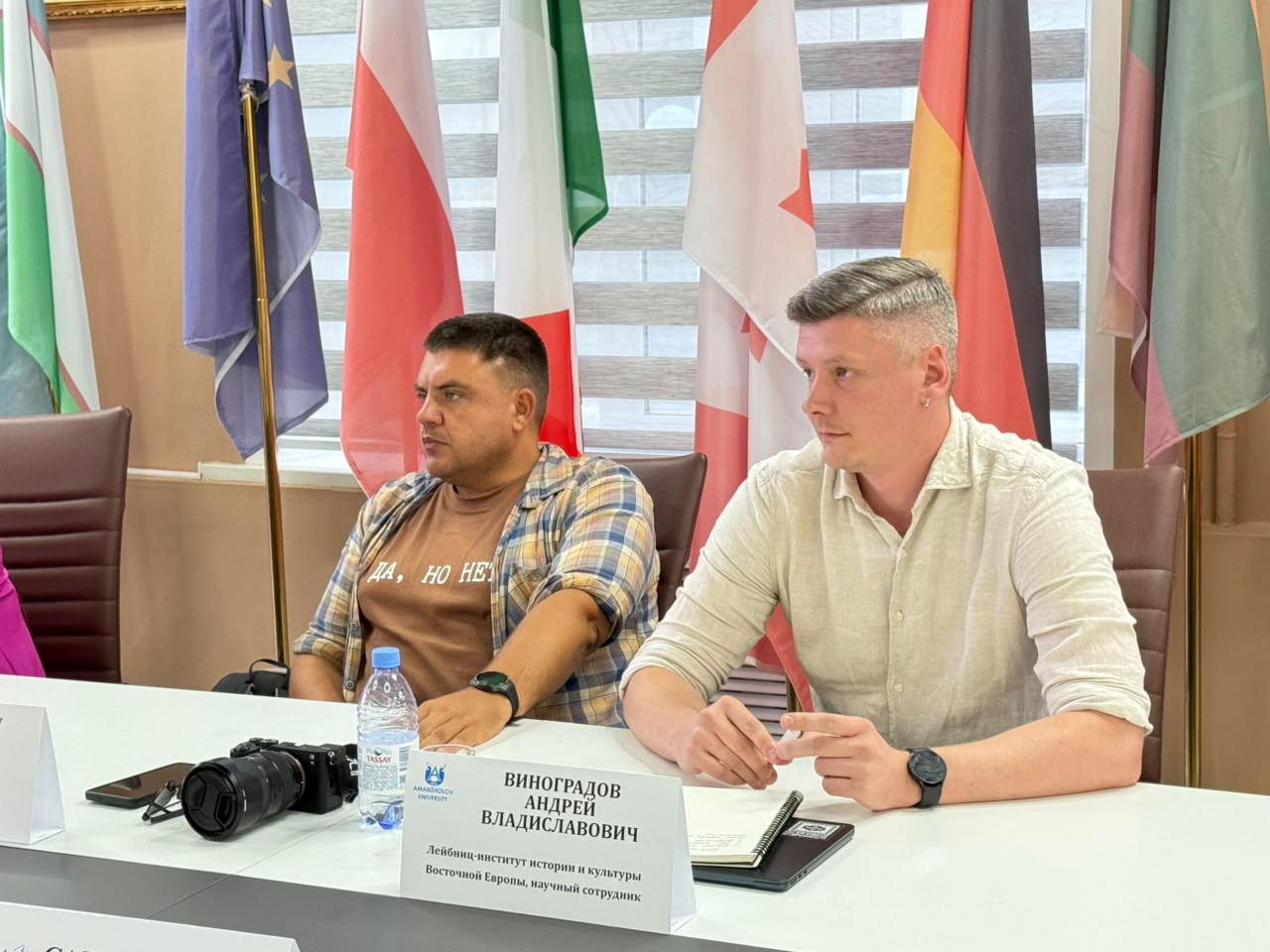
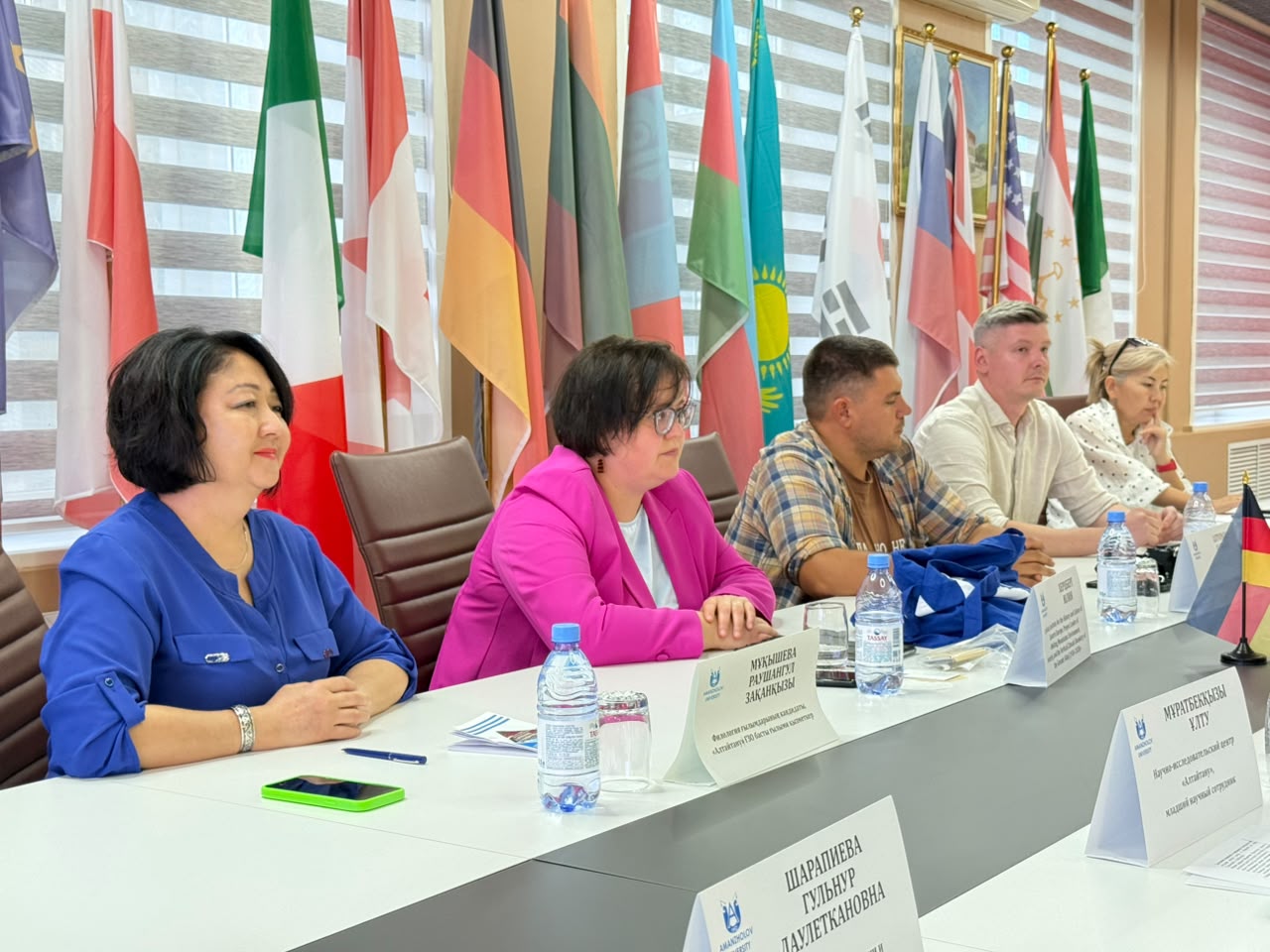
The meeting was attended by Acting Rector of Sarsen Amanzholov East Kazakhstan University Irina Vladimirovna Rovnyakova; Project Leader and Deputy Director of the Leibniz Institute for the History and Culture of Eastern Europe (GWZO) Julia Herzberg; Institute Researcher Andrey Vladislavovich Vinogradov; Lead Analyst at Arman Partners LLP Alexey Sergeyevich Litvinov; Director of the “Altaitanu” Research Center at Amanzholov University Maira Shurshitbaykyzy Tarlauabay; Junior Researcher Ultu Muratbekkyzy; alongside center staff and university faculty.
Research Profile of the International Partner
During the session, Julia Herzberg presented the organizational framework of the Leibniz Institute for the History and Culture of Eastern Europe and outlined its primary research trajectories.
Special emphasis was placed on the institute’s interdisciplinary approach, which integrates environmental, climate, and epidemiological history, archaeology, architectural history, spatial planning, economic history, technology transfer, and studies of conflict, peace, minority groups, and humanitarian developments.
The integration of historical inquiry with natural and biological sciences was highlighted as well. The institute employs advanced scientific methodologies in its archaeological work, including dendrochronological analysis and ancient DNA testing.
Additionally, emerging methodologies such as Citizen Science and Digital Humanities were presented as effective tools for investigating historical and sociocultural processes.
Initial Research Findings Presented
GWZO Researcher Andrey Vinogradov shared preliminary findings from the fieldwork conducted to date and detailed upcoming project stages.
In May–June 2025, 25 in-depth interviews were conducted in Kazakh and Russian across East Kazakhstan, covering Ust-Kamenogorsk, Katon-Karagay, Berel, Oryol, and Rakhmanovskie Klyuchi.
Respondents included shepherds, hunters, meteorologists, hydrologists, national park rangers, educators, and eco-tourism operators. Field observations were also carried out at seasonal livestock settlements, including winter pastures (kystau) and summer pastures (zhailau).
Archival investigation forms another core component of the project. Researchers reviewed regional historical periodicals, departmental records, pre-revolutionary documents, and historical photographic collections to trace environmental landscape shifts and adaptations in traditional land management.
Expanding the Geographic Scope
The next phase will extend the geographical scope of field research to the Bayan-Ölgii and Khovd aimags in Mongolia, as well as the Altai Prefecture in China. Planned activities include archival work in Kazakhstan and China, along with participation in an international summer school scheduled for 2027.
During the discussion, participants outlined subsequent project directions, collaborative frameworks, methodology, and key analytical deliverables.
Joint research within this international initiative aims to explore the ecological, historical, and cultural features of East Kazakhstan using modern scientific approaches, assess regional climate change vulnerabilities, and integrate regional findings into global academic discourse.
The project’s realization will advance the international research network of Sarsen Amanzholov East Kazakhstan University, strengthen regional studies, and promote in-depth scientific investigation into the natural and cultural heritage of the Greater Altai.