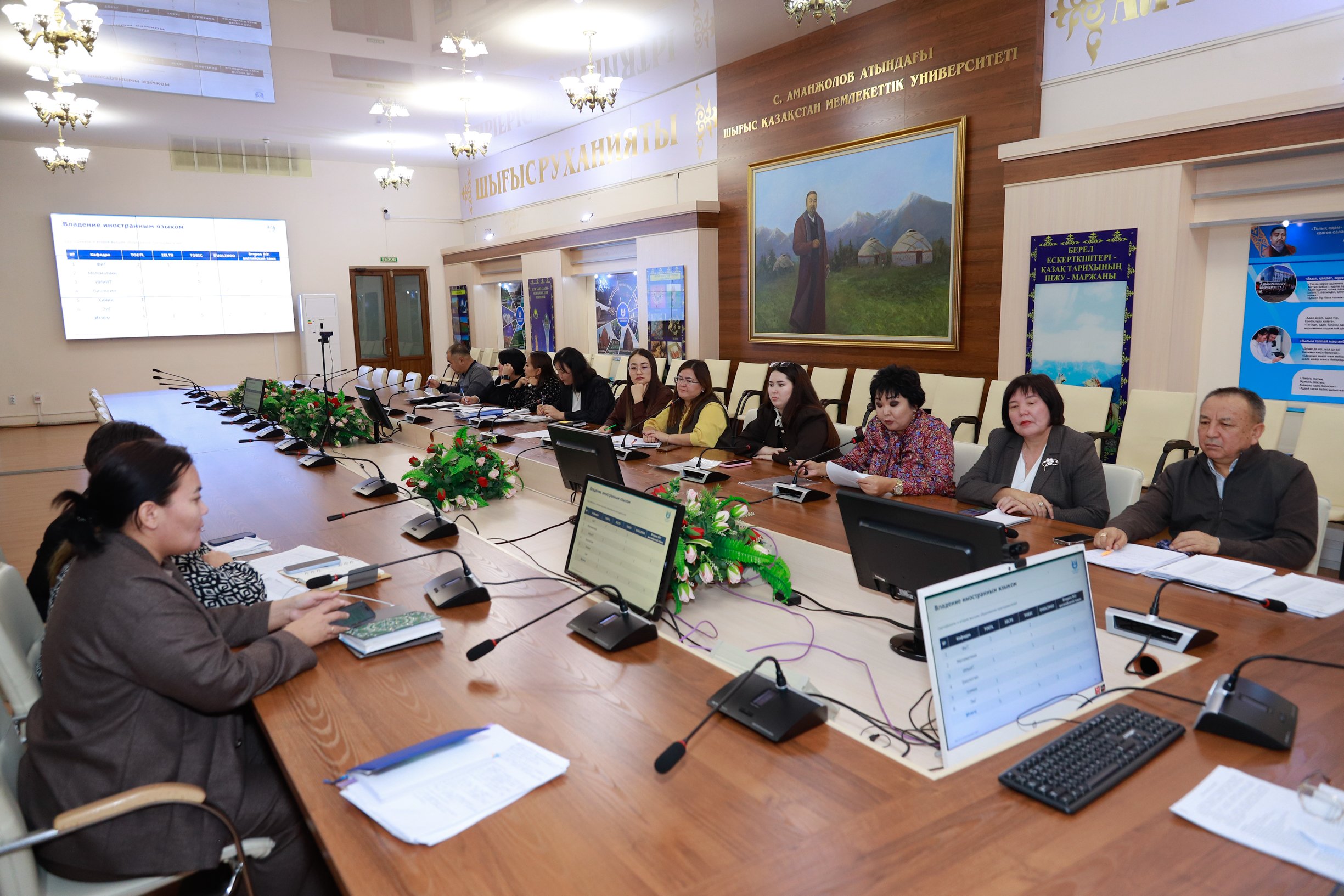
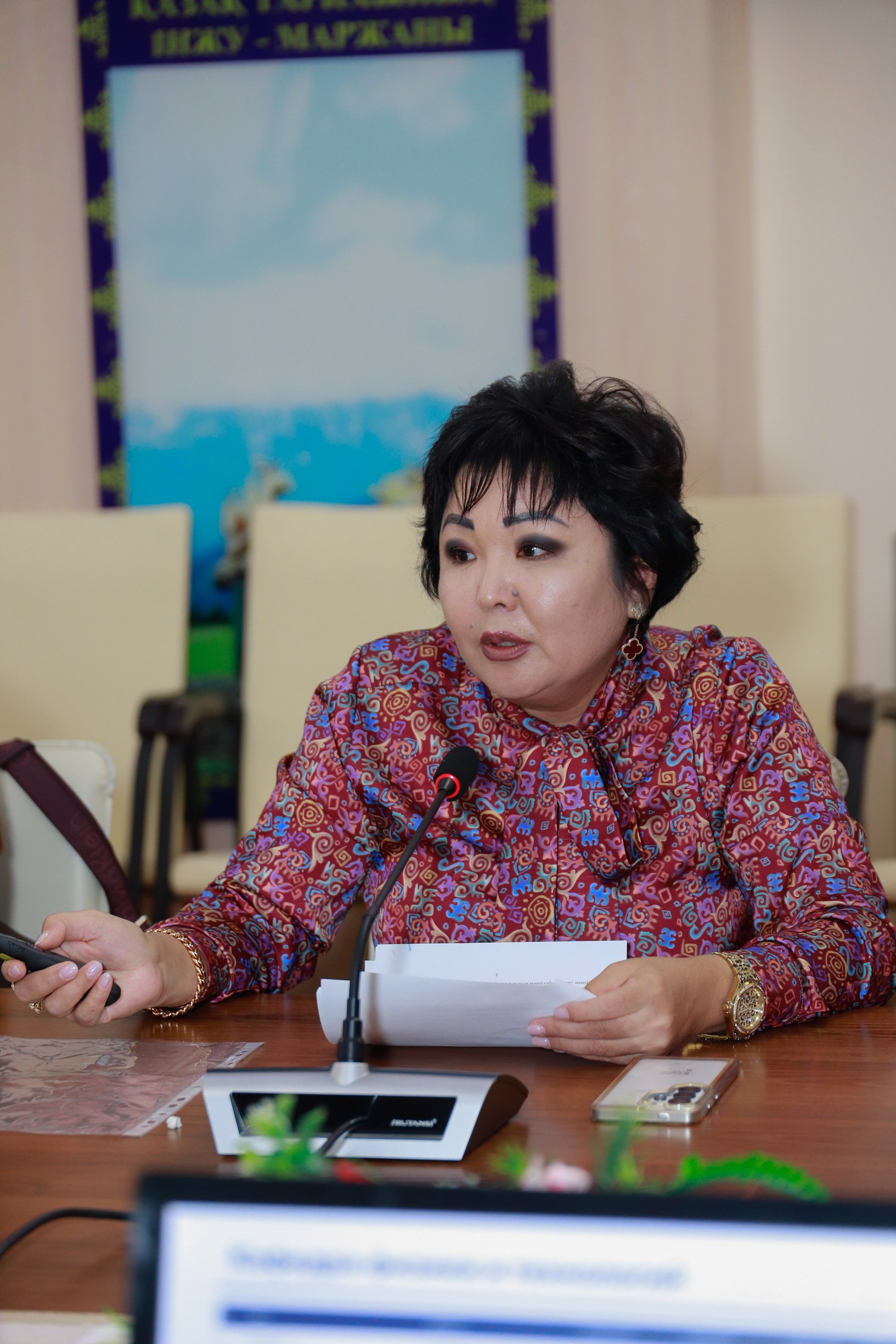
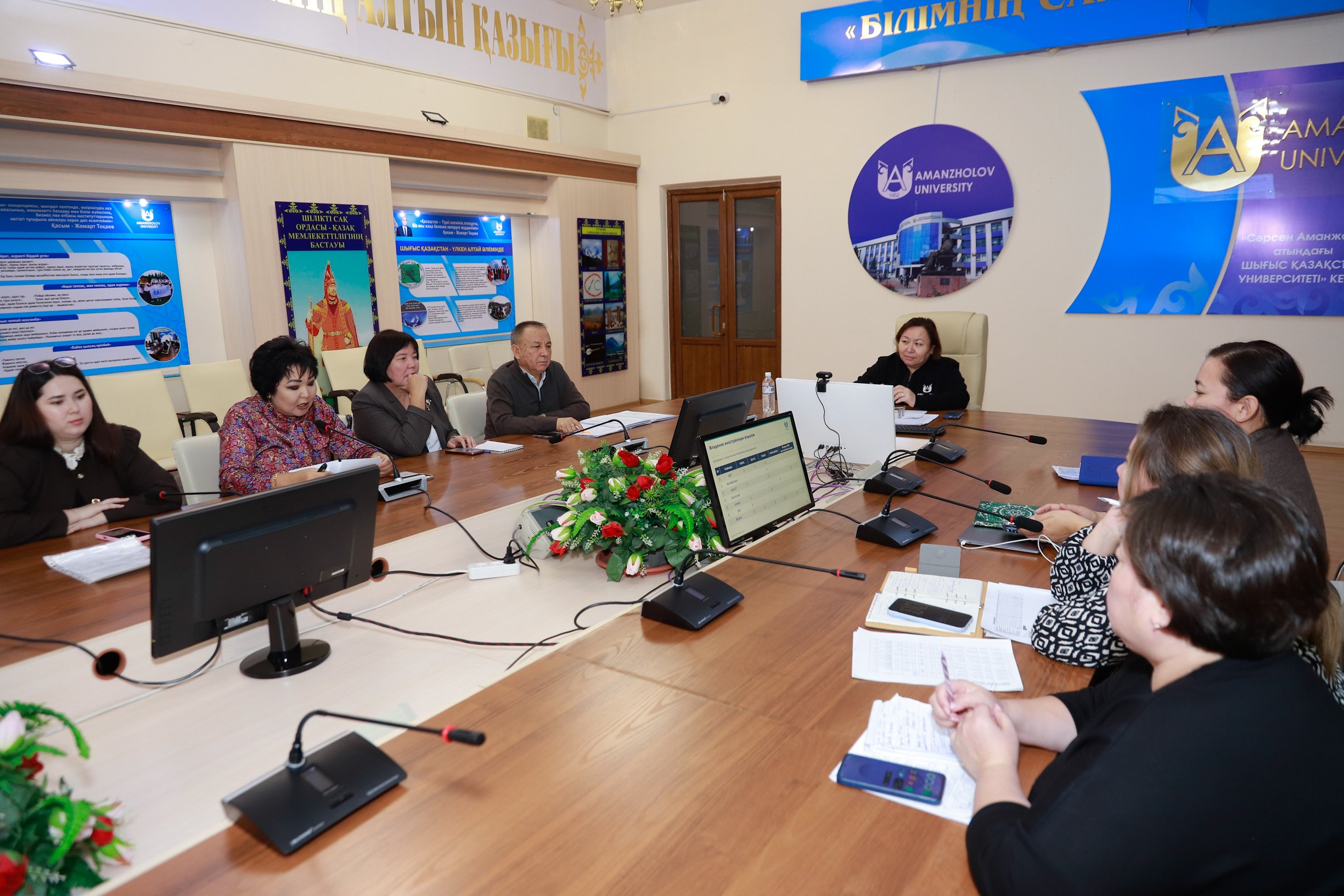
The Chairman of the Board – Rector Gulzhan Jarassova of Sarsen Amanzholov East Kazakhstan University held a working meeting with the management team of the Higher School of IT and Natural Sciences. The discussion focused on the results of the structural unit’s activities, modernization of educational infrastructure, the introduction of artificial intelligence, and the development of research potential.
The meeting was attended by the University’s Vice Rectors, Saltanat Adikanova, Dean of the Higher School of IT and Natural Sciences, the Deputy Dean for Academic Affairs, and heads of departments.
One of the key priorities discussed was the improvement of the material and technical infrastructure. In particular, participants considered upgrading computer equipment, modernizing specialized classrooms, and creating the conditions necessary for high-quality practical training of students.
Particular attention was also paid to the digital transformation of the educational process and the wider application of artificial intelligence technologies. Participants discussed the development of modern digital solutions, the integration of AI tools into the learning process, and ways to strengthen project-based activities within the departments.
The relevance of this area is closely connected with the strategic priorities outlined by President of the Republic of Kazakhstan Kassym-Jomart Tokayev in his Address to the people of Kazakhstan. The Head of State emphasized that mastering new technologies and artificial intelligence is an important condition for the country’s progress and competitiveness. In this regard, higher education institutions must not only integrate digital tools into education and research but also train qualified specialists capable of working effectively with emerging technologies.
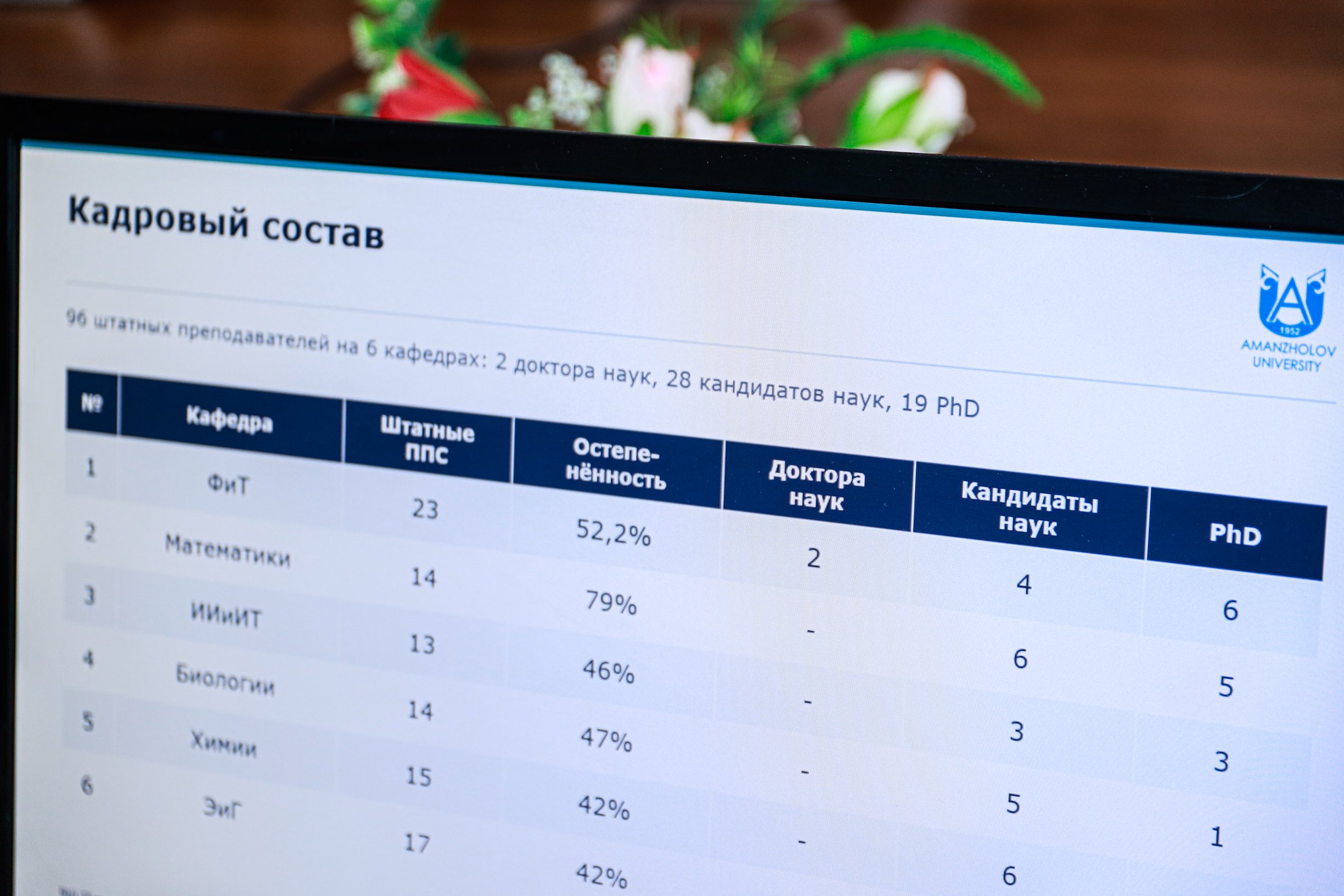
The meeting also addressed prospects for training specialists in engineering ecology and technosphere safety, expanding research activities, and involving students in scientific and practical projects from the first semesters of their studies.
Following the discussion, priority areas for further work were identified, including modernization of the educational environment, development of digital competencies, support for student initiatives, and strengthening the scientific potential of the Higher School.
Such working meetings make it possible to identify the current needs of structural units, coordinate strategic priorities, and make practical decisions aimed at improving the quality of education, advancing the University’s development, and strengthening its position in the international academic environment.